Entertainment
World Cup 2026: US-Iran Tensions, Local Travel Hurdles, Global Friction Shape Fan Atmosphere

By Ugbala Mercy
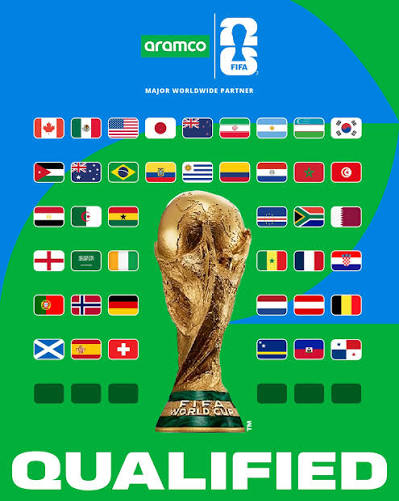
The 2026 FIFA World Cup is unfolding under an unusual shadow, as geopolitical tensions, domestic social issues, and strict travel logistics heavily influence how fans engage with the tournament both inside and outside the stadiums.
One of the most politically charged storylines surrounds renewed tensions between the United States and Iran. Against the backdrop of military escalation and diplomatic breakdown, Iran’s participation in the tournament has become more than a sporting matter.
While the Iranian national team prepares to compete on the pitch, debates around visa restrictions, travel limitations, and political symbolism are dividing supporters worldwide.
For some fans, supporting Iran has become an act of national pride and resistance. For others, particularly within diaspora communities, the situation is far more complicated.
Many Iranian supporters living abroad are caught between celebrating their team and protesting their government’s actions.
Online, this division has spilled into social media debates, where football discussions are increasingly intertwined with political identity.
The United States, as co-host, has also found itself at the center of criticism.
Reports of tighter border checks, visa denials for some officials, and heightened security concerns are creating a sense that the tournament is being shaped as much by politics as by football.
While FIFA insists that the World Cup remains a unifying global event, the reality on the ground suggests a more fractured experience for many fans.
These administrative and financial roadblocks are felt deeply by football enthusiasts on the ground in Nigeria, where local passion for the game clashes sharply with harsh economic and travel realities.
At Delta State University, Abraka, students keeping up with the tournament’s opening matches expressed deep frustration over the accessibility of the global showpiece.
Emmanuel Isaac, a 300-level student of Delta State University in the Department of Human Kinetics, noted that traveling to the host nations is an uphill battle for local supporters.
“It won’t be easy,” Isaac stated, pointing out that media reports continue to highlight skyrocketing hotel prices.
“I’ve read in newspapers about the news… the hotels are kind of expensive, and the visa [process] might also be a hindrance for them to partake in the World Cup tournament”.
Miracle Onomou, a 100-level student of Delta State University in the Department of Industrial Chemistry, emphasized how the broader economic situation dampens the spirits of ordinary fans who dream of watching live international football.
“The passion here is unmatched, but when you look at the exchange rate and the cost of flight tickets to North America, it feels completely out of reach for the average Nigerian student,” Onomou said.
She added that the structural barriers feel like an unfair exclusion of fans from developing nations.
Meanwhile, Oscar Okpara, a 300-level student of Delta State University in the Department of Computer Science, focused on the strict administrative bottlenecks.
“Getting a visa to the US or Canada right now is already notoriously difficult,” Okpara pointed out.
“When you add the heightened security and stricter border checks being reported because of global politics, it makes you wonder if everyday football lovers from our region are even being factored into FIFA’s vision of unity.”
At the same time, in South Africa, another issue is shaping fan culture in a different way: rising xenophobia. Foreign players, journalists, and visiting supporters have occasionally reported hostility, especially online, where debates around immigration, jobs, and national identity often spill into football conversations.
This environment has influenced how some South African fans engage with international teams and tournaments.
Support is no longer always based purely on footballing loyalty. In some cases, it is shaped by shared identity, migration politics, or local tensions, with certain teams receiving unexpected support or backlash depending on perceived political or cultural alignment.
Sports analysts say these parallel developments highlight a growing reality in global football: fans are no longer separating sport from politics as cleanly as before.
Instead, identity, geopolitics, social issues, and economic barriers are increasingly shaping who people support and how passionately they engage.
On social media, this effect is even more visible. Hashtags tied to the World Cup often trend alongside political debates, while clips of matches are quickly reinterpreted through national or ideological lenses. A single goal celebration can spark arguments that extend far beyond the game itself.
Despite FIFA’s long-standing message that football unites the world, the 2026 tournament is revealing how fragile that unity can be. Between US-Iran tensions, rising xenophobic sentiment in parts of Africa, and the steep economic hurdles facing everyday fans in developing nations, the World Cup is not just a sporting competition—it is also a reflection of a divided global moment.
As the tournament continues, one question is becoming more prominent: in a world where politics and economic barriers follow fans into the stadium and onto their phones, is football still powerful enough to bring everyone together?











By Blessing Alumona and Miracle Akpoyovwvayire
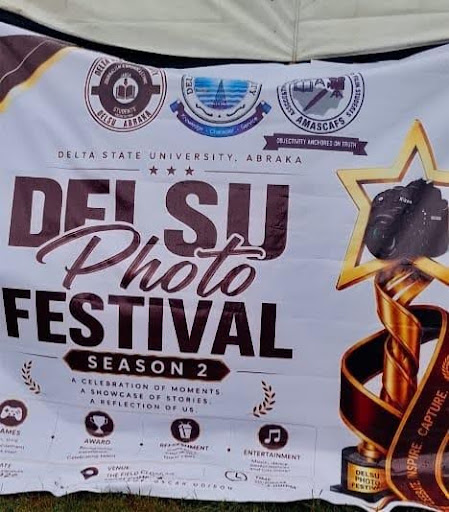
The second edition of the DELSU Photo Festival was held on July 17, 2026, in front of the university Sports Complex. Although the programme was originally scheduled to begin at 10:00 a.m., persistent rainfall delayed the event until about 2:00 p.m. A large canopy was provided to shield participants from the rain, while lively music entertained students as they arrived at the venue.
The event opened on a cheerful note with comedy and light-hearted remarks by Professor Odion Odiboh, creating an exciting atmosphere despite the weather. This was followed by the official opening address delivered by Comrade Regina Egbiamiye, President of the Department of Journalism. After her remarks, the pageantry segment commenced, with contestants representing the Departments of Mass Communication, Journalism, and Broadcasting showcasing their confidence and creativity. At the same time, judges assessed students’ photography projects while music kept the audience entertained.
One of the highlights of the festival was an interactive question-and-answer session that actively involved students and kept the audience engaged. Student union representatives, departmental executives, lecturers, and students participated throughout the programme, contributing to its lively and memorable atmosphere.
Speaking after the event, Faith Ogbotor, a 200-level Journalism student, described the festival as enjoyable and memorable. She said that although the heavy rainfall affected the programme, it did not prevent participants from having a rewarding experience.
READ ALSO: Poor Maintenance Of Student Hostels Raises Concern In Abraka
Another participant, Tejiri Mathias, a Mass Communication student, also commended the event but expressed concerns about what he described as partiality during some of the games. He suggested that improvements could be made in future editions to ensure fairness.
The festival concluded with the announcement of winners from the three departments. Four students emerged as winners from the Department of Broadcasting, twelve from the Department of Journalism, and twenty-two from the Department of Mass Communication. Each department also selected three overall outstanding winners through a voting process, and the successful participants received awards in recognition of their performances.
The celebration ended with music, dancing, and the distribution of refreshments to students, lecturers, and student executives. The joyful atmosphere and shared moments of celebration brought the 2026 DELSU Photo Festival Season 2 to a successful and memorable conclusion for everyone in attendance.
By Favour Otomewo
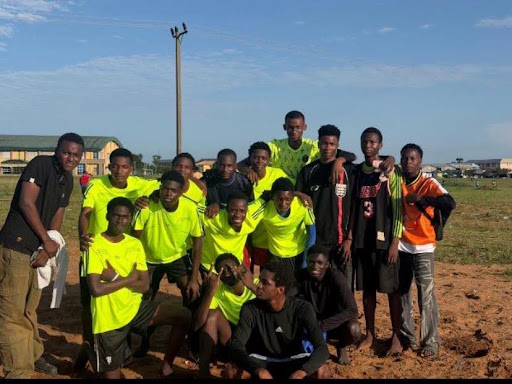
Students of the Department of Mass Communication at Delta State University (DELSU), Abraka, showcased their sporting talents during an exciting football match held at the university sports complex on June 25, 2026.
The friendly encounter, organised to promote unity and teamwork among students, attracted a large crowd of supporters from various departments. The match featured the Mass Communication team against a selected side from another department, with both teams displaying impressive skill, determination, and sportsmanship.
From the opening whistle, the game was fiercely contested as players battled for possession and created several scoring opportunities. The Mass Communication team took an early lead through a well-placed strike in the first half, sending their supporters into celebration.
The opposing team responded strongly after the break, equalising with a powerful shot that left the goalkeeper with little chance. However, the Mass Communication students maintained their composure and secured victory with a late goal, winning the match 2–1.
READ ALSO: Abraka Residents Advocate Entrepreneurship, Warn Against Gambling Amid Economic Hardship
Speaking after the game, the team captain, John Efe, praised his teammates for their commitment and teamwork, noting that the victory reflected the hard work they had put into their training sessions.
Students who attended the event described the match as entertaining and commended the organisers for creating an avenue for social interaction, healthy competition, and friendship among undergraduates.
The football encounter formed part of the department’s efforts to encourage student participation in sporting activities and strengthen relationships across departments within the university community.
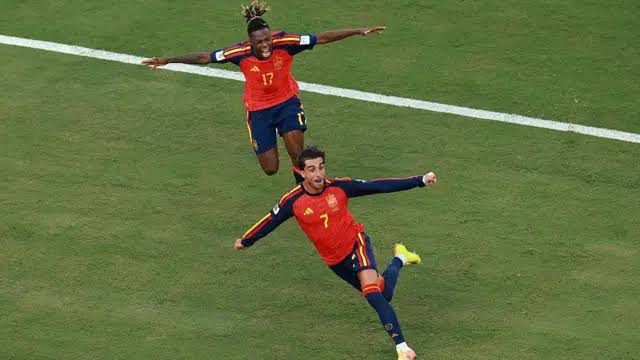
Spain are world champions again after Ferran Torres scored a late winner in extra time to defeat defending champions Argentina 1-0 in a tense 2026 FIFA World Cup final at New York New Jersey Stadium on Sunday.
The victory at MetLife Stadium, in front of 80,663 fans, gives La Roja their second World Cup title, 16 years after their 2010 triumph in South Africa.
Argentina, bidding to become the first nation since Brazil in 1958 and 1962 to win back-to-back titles, were reduced to 10 men late in regulation.
After 90 minutes ended goalless, the match turned in the closing minutes of normal time when Argentina midfielder Enzo Fernandez was sent off for a second yellow card following a tackle on Pau Cubarsi.
With the numerical advantage, Spain broke through late in extra time.
Ferran Torres slammed home to put Spain ahead with minutes remaining, sealing a 1-0 win and sparking wild celebrations from the Spanish bench.
Spain reached the final with a composed 2-0 semi-final victory over France in Dallas, extending a run that has seen them concede just one goal all tournament.
Argentina advanced with a dramatic 2-1 comeback win over England in Atlanta, with Lionel Messi assisting both goals in the 85th and 91st minutes.
The final marked the first ever World Cup decider between the reigning world champions and the current European champions, and pitted the tournament’s top-ranked teams.
It also featured a generational duel between 39-year-old Messi, who finished with 8 goals in the tournament, and 19-year-old Spanish prodigy Lamine Yamal.
Spain are now two-time world champions after winning in 2010. The Spanish women are also reigning world champions, having beaten England in 2023.
Argentina, champions in 1978, 1986 and 2022, fall just short in their bid for a fourth title. Messi was chasing a second straight World Cup after leading Argentina to glory in Qatar.
The match was played at New York New Jersey Stadium, home of the NFL’s Giants and Jets, and was broadcast live on FOX in English and Telemundo in Spanish in the U.S.
The final also featured FIFA’s first-ever World Cup halftime show, curated by Coldplay’s Chris Martin.
With the 2026 tournament, the first expanded to 48 teams, concluding in New Jersey, Spain leave as champions — and Argentina as runners-up in a final that lived up to its billing as a clash of Europe vs South America.
-
 Views Point3 weeks ago
OPINION: Agriculture, Nigeria’s Fading Goldmine
-

 Abraka Metro3 weeks ago
Experts Urge Students To Embrace AI With Open Hearts
-
 Education1 week ago
DELSU Announces Admission Into New Diploma Programmes For 2026/2027 Academic Session
-

 Education3 weeks ago
28-Years-Old Man Swindles JUPEB Students, Diverts N15 Million School Fees
-
 Abraka Metro4 weeks ago
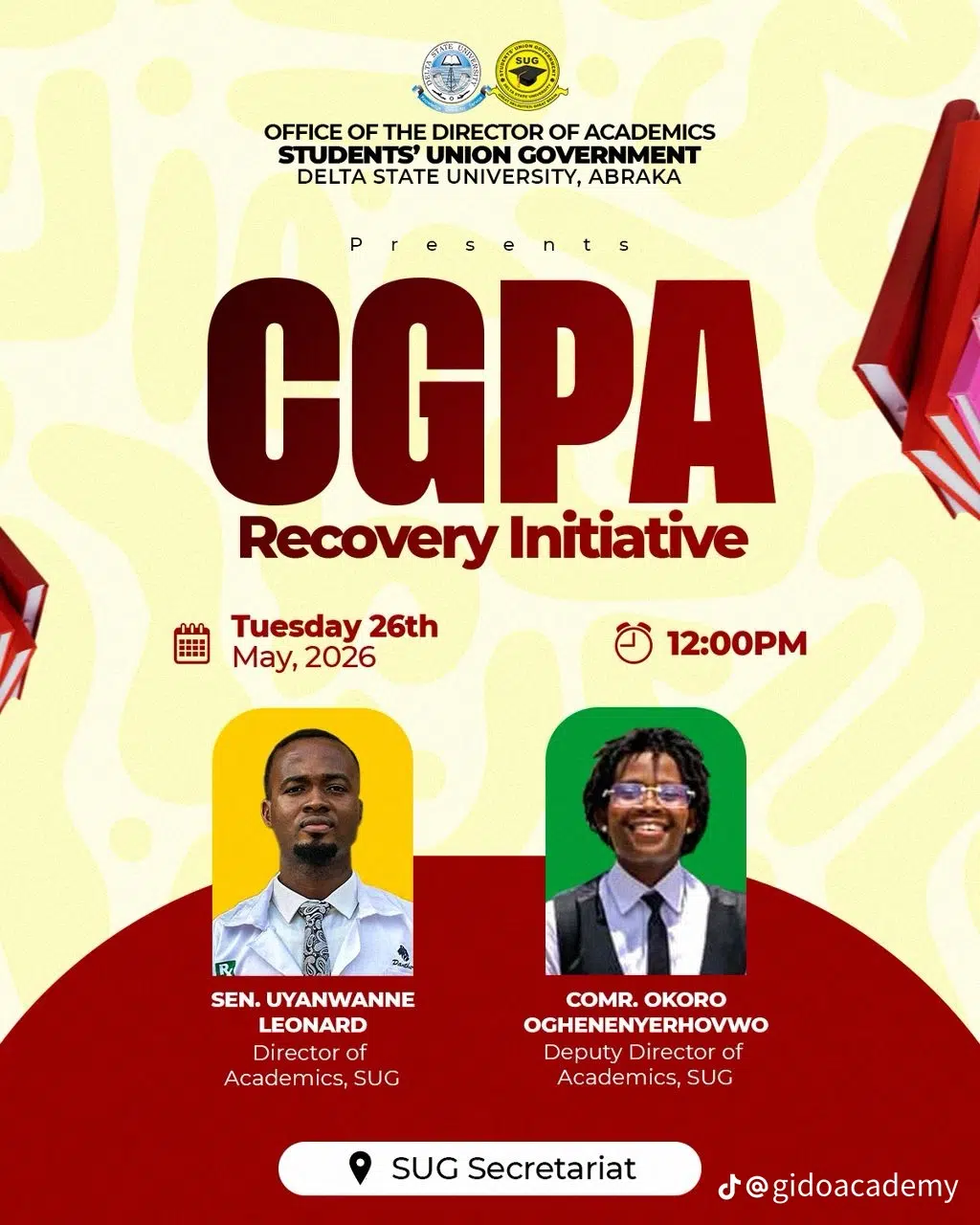
DELSU SUG Tackles Academic Decline with ‘CGPA Recovery Initiative’ for Junior Students
-
 Abraka Metro2 weeks ago
Rising House Rents Put Pressure on DELSU Students in Abraka
-
 Education2 weeks ago
Challenges Persist at DELSU Agricultural Farm Despite Student Training
-

 Education2 weeks ago
DELSU-SUG Begins Week-Long Celebration, Targets Campus Inclusiveness
-
 Education4 weeks ago
DELSU: Pharmacy Students Embrace Mentorship, Recreational Programmes to Combat Mental Health Challenges
-
 Abraka Metro4 weeks ago
Students demand Immediate Action As Kidnapping Spree Returns In Abraka
-

 Trending News1 week ago
Abraka Residents Advocate Entrepreneurship, Warn Against Gambling Amid Economic Hardship
-

 Abraka Metro3 weeks ago
DELSU-SUG Moves To Tame Growing Social Vices On Campus
-
 Abraka Metro4 weeks ago
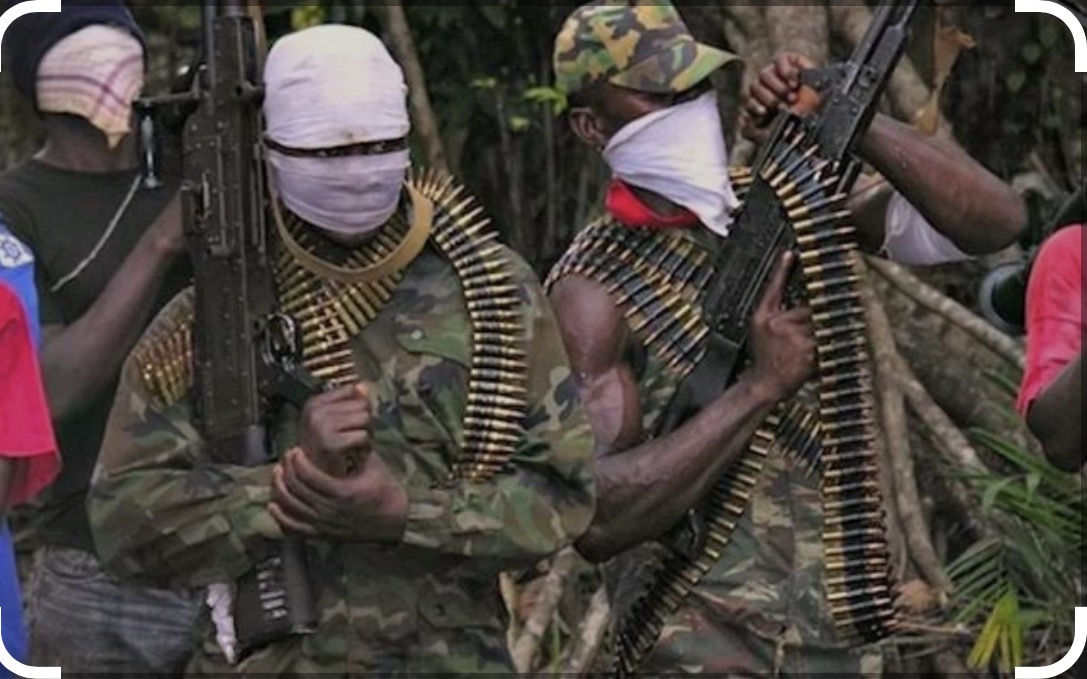
Students Express Worries Over Worsening Insecurity Ahead Of 2027 Polls
-

 Abraka Metro3 weeks ago
Fiber Optic Installation Begins At DELSU Site 2 As Students Seek Improved Service
-
 Trending News4 weeks ago
Doubts, Criticisms Trail Tinubu’s Acclaimed 10 Million Votes Amid Nigeria’s Rising Voter Apathy


