World News
The Unseen Grind: Nigeria’s “One Day, Three Jobs” Reality


By Kosisochukwu Esther Okolie
This relentless pursuit of multiple income streams highlights not only the entrepreneurial spirit of the Nigerian people but also the systemic issues that necessitate such extreme measures. It speaks to a need for greater economic opportunities, fair wages, and robust social safety nets. While the adaptability of individuals is commendable, the long-term solution lies in addressing the root causes that force citizens into such demanding routines, ensuring that a single day’s work can provide a dignified livelihood.
In the bustling heart of Nigeria, where ambition often outpaces opportunity, a significant portion of the population navigates a daily reality defined by “One Day, Three Jobs.” The sun, a relentless orb in the Nigerian sky, has barely begun its ascent, yet for millions, the day’s labor is already well underway. This isn’t the nine-to-five rhythm many are accustomed to; this is the unseen grind, a perpetual cycle of multiple jobs fueled by necessity and an unyielding will to survive. In Nigeria, where economic disparities are stark and opportunities can be scarce, the phenomenon of working two, three, or even more jobs is not a choice but a harsh reality for a significant portion of the population. As Nelson Mandela once profoundly stated, “It always seems impossible until it’s done.” This statement shows itself in the lives of countless Nigerians who embody this spirit by turning the impossible into their daily endeavors.
The dawn breaks not with leisure, but with the immediate call to action. For many, the first job is a race against time, often involving physically demanding tasks or essential services. Whether it’s the roadside vendor setting up their stall before the city truly awakens, the 9-5 workers navigating traffic, or the cleaner preparing offices for the day ahead, the initial hours are a blur of activity.
As the sun climbs higher, signaling the midpoint of the day, the transition to a second, perhaps more skilled or administrative role, takes place. This might involve office work, tutoring, or craft-making, showcasing a diverse range of talents and adaptability.
As dusk approaches, the energy levels may wane, but the struggle continues. The third job, often undertaken in the evening or through the night, can range from security services to food vending, or even freelance online tasks if access to technology permits. This relentless cycle, repeated day after day, highlights the extraordinary effort Nigerians put forth to sustain themselves and their families.
The great exhaustion that comes with such a demanding schedule is immense, yet it’s a burden many carry quietly. Sleep becomes a luxury, often sacrificed for the sake of earning that extra Naira. The mental toll is equally significant; the constant pressure to perform across different environments, manage time effectively, and remain present for each role requires an extraordinary level of focus and discipline. There’s a unique blend of stress and pride that permeates these lives – the stress of precarious income and the pride in their ability to persevere and provide.
This widespread practice underscores a systemic issue where a single, stable income is often insufficient to meet basic living costs. It speaks volumes about the entrepreneurial spirit deeply ingrained in Nigerian culture, a spirit that finds ways to innovate and adapt even when formal employment opportunities are scarce or inadequately compensated.
This multi-job phenomenon isn’t confined to a single demographic; it spans across various educational backgrounds and skill sets. Graduates find themselves being uber drivers or selling goods, while seasoned professionals might engage in part-time teaching or consulting after their primary work hours.
A 400 level student, from the department of Physiology , Cynthia Ofunure, shared her thoughts during an interview. “Being a student alone is a job on its own. Sometimes I have to skip classes to braid hair for my customers just so I can make ends meet”
“Me I be farmer for morning,bike man for afternoon and night,it’s hard make I no lie but I get family to feed” said Mr Maro a bike man who en route Obiaruku to Abraka and vice versa.
Ultimately, the story of “One Day, Three Jobs” is more than just an economic report; it’s a human narrative. It’s about the mother who works late into the night after a full day of work and childcare, the young man striving to fund his education through relentless labor, and the countless individuals who embody the Nigerian spirit of resilience.The struggle is real, but so is the unwavering hope and the deep-seated belief in a brighter tomorrow, fueled by the sacrifices of today.
This widespread practice underscores a systemic issue where a single, stable income is often insufficient to meet basic living costs. It speaks volumes about the entrepreneurial spirit deeply ingrained in Nigerian culture, a spirit that finds ways to innovate and adapt even when formal employment opportunities are scarce or inadequately compensated.
This multi-job phenomenon isn’t confined to a single demographic; it spans across various educational backgrounds and skill sets. Graduates find themselves being uber drivers or selling goods, while seasoned professionals might engage in part-time teaching or consulting after their primary work hours.
A 400 level student, from the department of Physiology , Cynthia Ofunure, shared her thoughts during an interview. “Being a student alone is a job on its own. Sometimes I have to skip classes to braid hair for my customers just so I can make ends meet”
“Me I be farmer for morning,bike man for afternoon and night,it’s hard make I no lie but I get family to feed” said Mr Maro a bike man who en route Obiaruku to Abraka and vice versa.
Ultimately, the story of “One Day, Three Jobs” is more than just an economic report; it’s a human narrative. It’s about the mother who works late into the night after a full day of work and childcare, the young man striving to fund his education through relentless labor, and the countless individuals who embody the Nigerian spirit of resilience.The struggle is real, but so is the unwavering hope and the deep-seated belief in a brighter tomorrow, fueled by the sacrifices of today.
Okolie Kosisochukwu Esther is a 200 lvl student of the department of Journalism and media studies In Delta State University Abraka
Email: esther7042@icloud.com





By Lorenta Biokoro
On Tuesday, July 14, 2026, the European Union proposed introducing a legal minimum age for children’s access to social media, citing growing scientific evidence that excessive use of digital platforms can negatively affect children’s mental health, safety, and overall development.
The proposal was announced during a video interview on Euronews’ TikTok page, where a senior European Union official stressed the need for stronger regulations to protect children from the harmful effects of social media.
“The more we learn, the more we see the impact on our children. The stronger the argument becomes for a social media start date,” the official said.
The official compared access to social media with other age-restricted activities such as driving and purchasing alcohol. According to the EU, just as young people must reach a certain age before obtaining a driver’s licence or buying alcohol, similar age limits should be considered for social media platforms.
The EU also noted that policymakers should focus on platforms that expose children to age-inappropriate or addictive features. Scientific studies, the official said, indicate that some digital platforms can affect children’s emotional well-being, concentration, and online safety if used without adequate safeguards.
The proposal recommends a phased approach that would allow children to gain access to different online services based on their age and level of maturity. The aim is to ensure that technological innovation continues to benefit society while protecting young users from potential risks.
Concluding the interview, the official emphasized the urgency of the proposal, stating:
“Childhood won’t wait, and once it’s gone, we can never give it back.”
The proposal reflects a growing international effort to ensure that advances in science and technology are used responsibly to protect children while promoting safe and healthy participation in the digital world.

The mother of Cape Verde goalkeeper Vozinha has secured a United States visa, allowing her to attend her son’s next FIFA World Cup match.
The development was announced by United States Democratic Leader Hakeem Jeffries, who said the visa process was resolved after he intervened.
Vozinha gained international attention after delivering an outstanding performance during Cape Verde’s historic World Cup debut against Spain, where he made seven saves to secure a goalless draw.
Following the match, the 40-year-old goalkeeper revealed that his mother had been unable to obtain a visa in time to travel to the United States.
READ ALSO: World Cup 2026: US-Iran Tensions, Local Travel Hurdles, Global Friction Shape Fan Atmosphere
The story attracted public attention, prompting Jeffries to contact US Secretary of State Marco Rubio and request assistance.
Jeffries said the State Department worked with Cape Verde authorities to resolve the issue and facilitate her travel arrangements.
He thanked officials from the US government, Cape Verde, and FIFA for their cooperation.
The development highlighted challenges faced by some international fans due to strict travel regulations surrounding major sporting events.
READ ALSO: COMMESSA Week ’26 Wraps Up Amid Renewed Call For Academics-Entertainment Balance

By Rosemary Eselemor
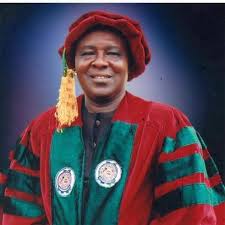
The Head of the Department of Cyber Security at Delta State University (DELSU), Abraka, Dr. John Atajeromavwo, has predicted that as data generation continues to increase globally, Machine Learning will remain a key driver of innovation, automation and intelligent decision-making across various sectors.
In an interview with Media Conversation, Atajeromavwo observed that Machine Learning is one of the most important branches of Artificial Intelligence (AI), calling on researchers and students to embrace these emerging technologies and contribute to global technological advancement.
Speaking on the relevance of Machine Learning in today’s digital world, Atajeromavwo explained that Machine Learning is a branch of Artificial Intelligence that focuses on developing algorithms capable of learning from data and making predictions or decisions without being specifically programmed for every task.
The scholar observed that unlike traditional computer programming where rules are manually defined, Machine Learning systems can automatically identify patterns in data, learn from experience and improve their performance over time.
READ ALSO: DELSU-SUG Moves To Tame Growing Social Vices On Campus
According to him, Machine Learning has become an essential component of modern computing and digital transformation.
The Head of Department explained that Machine Learning is already part of everyday life, even when many people are unaware of its presence, noting that activities such as online banking, online shopping, social media usage, and interactions with digital platforms often rely on Machine Learning algorithms to enhance security, improve efficiency, and personalize user experiences.
Recommendation systems, fraud detection tools, spam filters, and facial recognition technologies are among the most common applications.
Atajeromavwo further clarified that although Artificial Intelligence and Machine Learning are closely related both technological inventions differ in some ways, explaining that while Artificial Intelligence serves as the broader field that includes technologies such as expert systems, computer vision, and rule-based systems, Machine Learning specifically focuses on systems that learn automatically from data.
READ ALSO: Training Supervisor Explains Why DELSU Introduced Early Practical For Applied Arts Students
He further maintained that the Machine Learning life cycle follows a structured process which begins with understanding a problem and collecting relevant data, noting that the data is then cleaned and prepared before being used to train a model that could be evaluated, improved, and deployed to make predictions or decisions under continuous monitoring.
Advances in deep learning and neural networks have significantly improved the performance of Machine Learning systems, particularly in healthcare, where they are being used for disease detection and predictive diagnosis.
The Cyber Security expert also highlighted several sectors where Machine Learning is making a significant impact to include healthcare where it is used for diagnostic imaging, personalised medicine, drug discovery and predictive analytics, and finance where it is being used to supports fraud detection, credit scoring, algorithmic trading and risk management through real-time analysis of financial transactions.
While previous generations often viewed marriage as a major milestone of adulthood or even as a necessity, many women today are choosing different path.
-

 Education2 months ago
Breaking: DELSU Postpones Second Semester Examinations. See New Date
-
 Education3 months ago
DELSU Announces Admission Into New Diploma Programmes For 2026/2027 Academic Session
-
 Views Point3 months ago
OPINION: Agriculture, Nigeria’s Fading Goldmine
-
 Abraka Metro3 months ago
Experts Urge Students To Embrace AI With Open Hearts
-

 Education2 months ago
Breaking: DELSU Bans “Sign Out” Parties, Threatens 2-Semester Rustication For Violators
-

 Education3 months ago
28-Years-Old Man Swindles JUPEB Students, Diverts N15 Million School Fees
-
 Education2 months ago
DELSU Begins Postgraduate Admission for 2026/2027 Academic Session
-

 Entertainment3 months ago
World Cup 2026: US-Iran Tensions, Local Travel Hurdles, Global Friction Shape Fan Atmosphere
-

 Education2 months ago
DELSU Exam Monitors Apprehend Student With Allegedly Stolen Phones, Wig
-
 Abraka Metro3 months ago
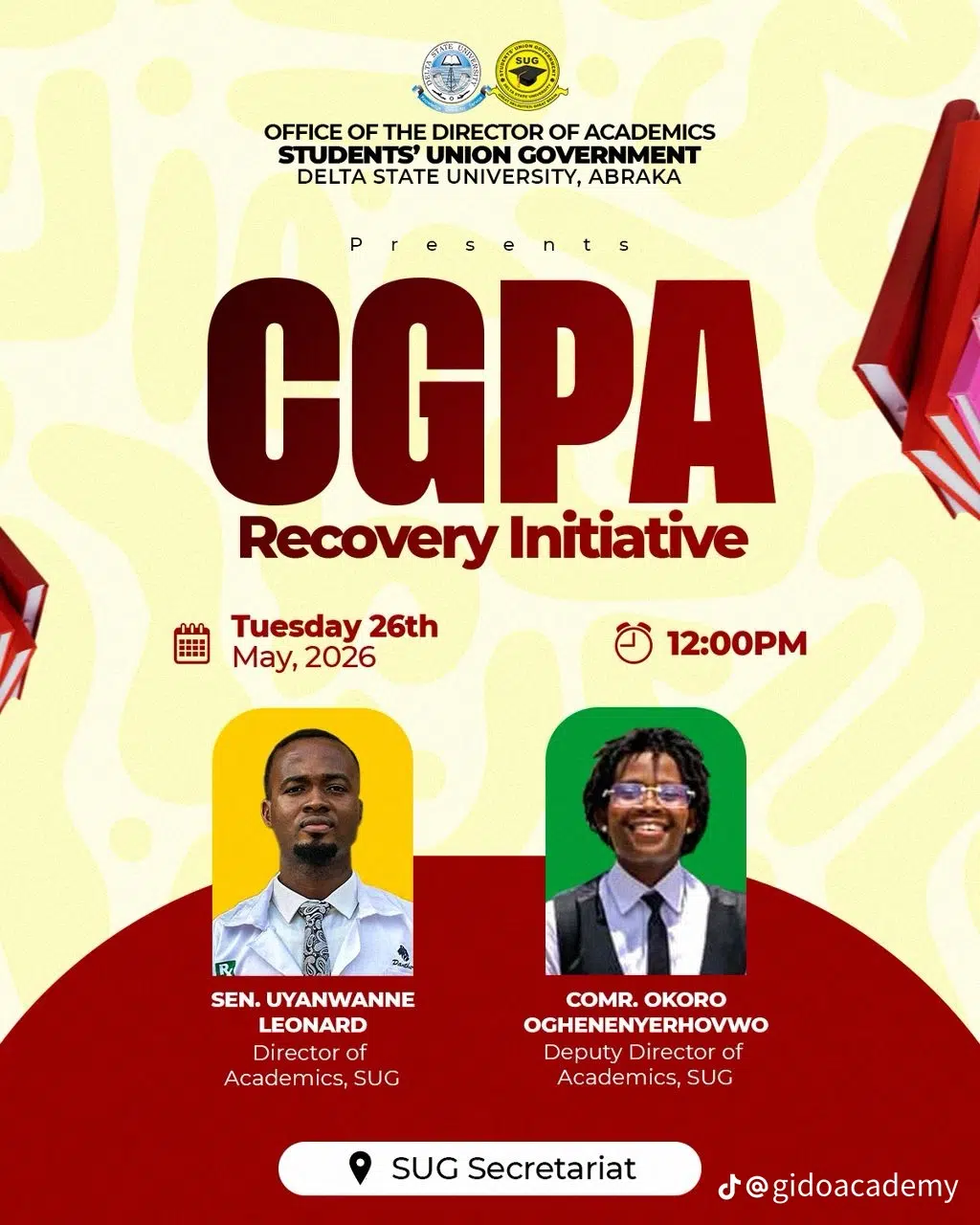
DELSU SUG Tackles Academic Decline with ‘CGPA Recovery Initiative’ for Junior Students
-

 Abraka Metro3 months ago
Rising Cost Of Living Forces Abraka Students To Adopt Survival Strategies
-
 Abraka Metro3 months ago
Rising House Rents Put Pressure on DELSU Students in Abraka
-

 Abraka Metro2 months ago
Elozino Ogege: Lecturers React As Court Sentences Killers Of DELSU First-Class Student To Death
-
 Education3 months ago
Challenges Persist at DELSU Agricultural Farm Despite Student Training
-

 Trending News3 months ago
Abraka Residents Advocate Entrepreneurship, Warn Against Gambling Amid Economic Hardship


