Health Corner
Humanitarian Crisis Deepens In Nigeria As Hunger, Conflict Displace Millions

By Favour Emu
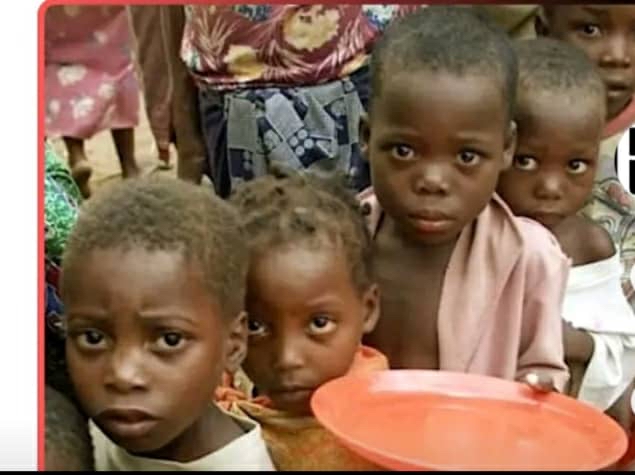
Nigeria is facing an escalating humanitarian emergency, with millions across the Northeast, Northwest, and North-Central regions battling acute food insecurity, malnutrition, displacement, and the effects of protracted conflict.
According to United Nations assessments for 2026, 5.9 million people need urgent humanitarian assistance.
Nearly 35 million Nigerians are at risk of acute hunger during the lean season between harvests — marking one of the country’s most severe food crises in nearly a decade.
The crisis traces back to the 2009 Boko Haram insurgency in Borno, Adamawa, and Yobe states, known as the BAY states. It has since expanded to include banditry, farmer-herder clashes, and communal violence.
The violence has displaced more than 3.7 million people, the majority women and children, while destroying livelihoods and cutting off access to farmland and markets.
Children remain the most vulnerable. UN projections indicate more than 6 million children could suffer acute malnutrition by September, including about 2 million cases of severe acute malnutrition requiring immediate life-saving treatment.
In the BAY states alone, 4.8 million people need emergency food and nutrition aid.
In northern states, over 17 million people are already experiencing crisis or worse levels of hunger, with Borno State among the worst hit.
Recent floods, economic hardship, and funding shortfalls have worsened the situation and pushed food insecurity above earlier forecasts.
Humanitarian agencies have launched a $516 million appeal to reach 2.5 million of the most severely affected people with food, healthcare, shelter, water, sanitation, and protection services. As of late June, the plan was about 47% funded.
Organizations including UNICEF, the World Food Programme, IOM, the Norwegian Refugee Council, and CARE continue operations despite major access challenges caused by insecurity.
Mr. Isaac Utowerie, a 35-year-old resident of Abraka, Delta State, warned that hunger and insecurity are forcing families to make difficult choices.
“The rate of hunger and insecurity will end up sending students out of school just to make ends meet,” he said.
Former presidential candidate Peter Obi also raised the alarm this week, citing the new UN report and urging immediate government intervention to avert what he called “a major national tragedy.”
A prSixteen years of conflict have left deep scars. Civilian casualties have risen sharply in recent years as attacks increasingly target communities, further undermining stability.
Broader challenges are compounding the crisis. More than 133 million Nigerians live in poverty, while disease outbreaks and climate-induced disasters continue to strain resources.
Officials and aid groups say improved security to enable farming, stronger local governance, and sustained international support are critical to prevent further deterioration.
With humanitarian needs outpacing available resources amid global funding pressures, agencies stress that continued monitoring and coordinated action will be essential in the months ahead.



By Peace Samuel
Civil society organisations have called for urgent and coordinated action to address the rising HIV burden in Delta State, where more than 51,000 people are reportedly living with the virus.
The call was made by the Delta State Coordinator of the Civil Society Organisation on Malaria Control, Immunisation and Nutrition (ACOMIN), Pastor Gregory Sifo, during a visit to the palace of the Ikejani-Enyi of Okpanam, Chief Felix Okafor, in Oshimili North Local Government Area.
Sifo said the figure placed Delta State second only to Benue in the number of people living with HIV among Nigeria’s states, warning that the situation required a collective response beyond government efforts.
He called for stronger collaboration among federal and state agencies, private organisations, foreign development partners and individuals to expand HIV testing and treatment programmes across the state.
According to him, increasing access to testing would encourage early detection, improve treatment outcomes and reduce the spread of the virus in communities.
The rising figures have also generated concern among young people, particularly students who have expressed fears about the continued spread of HIV.
Stephanie, a nursing student in Delta State, described the rising number of cases as “scary,” expressing concern that many people do not take the time to know their partners’ HIV status before engaging in sexual activity.
“It’s scary because a lot of people do not check their partners’ status before having sex, and this can contribute to the continued spread of the disease,” she said.
She urged individuals to take HIV testing seriously and to prioritise responsible sexual health practices, stressing that knowing one’s status could help reduce the spread of the virus.
Sifo said HIV prevention and treatment could no longer be left to the public sector alone, stressing the need for stronger partnerships among federal and state agencies, private organisations, foreign development partners and individuals.
Sifo said ACOMIN had previously supported the Ogbeobi Health Centre in Okpanam with medical supplies and HIV test kits, adding that the organisation was committed to strengthening its partnership with the community.
He disclosed that ACOMIN would seek a meeting with the Chairman of Oshimili North Local Government Area, Innocent Esewezie, to explore ways of establishing a stronger partnership on healthcare delivery.
The ACOMIN coordinator identified increased HIV testing, improved healthcare infrastructure and the recruitment of more trained health workers as key priorities for the organisation in Delta State.
He cited the recent conversion of the Obodogba Primary Healthcare Centre into a cottage hospital as an example of the kind of healthcare improvement that could be replicated in other communities.
Responding, Chief Okafor pledged to mobilise prominent sons and daughters of Okpanam, particularly those working in the healthcare sector abroad, to support the community with HIV test kits and other medical supplies.
The monarch also promised to brief the local government chairman on the visit and commended ACOMIN for engaging directly with communities in its healthcare advocacy efforts.
Meanwhile, Sifo also raised concerns about the shortage of nurses and other healthcare workers in primary healthcare centres across the state during a visit to the Delta State Local Government Service Commission in Asaba.
The Director of Nursing Services at the commission, Mrs Patricia Enagoma, confirmed that a formal request for the recruitment of additional nursing personnel had been forwarded to the state government.
Enagoma acknowledged that the shortage of healthcare workers was a statewide challenge and called on local government councils to support the state government in addressing the staffing gap.

By God’stime Oyeh
Health practitioner;Dr Jeffrey,have expressed concerns over the poor malaria prevention practices among students of Delta State University (DELSU), Abraka, warning that negligence could lead to an increase in malaria cases despite the disease being preventable.
A visit to the campus 2 student hostels revealed that while some students sleep under insecticide-treated mosquito nets and use mosquito repellents, many admitted they rarely take preventive measures blaming the hot weather.
“Sometimes the room is too hot,so I prefer to sleep without the net. I only buy drugs when I start feeling sick” some students reveals.
Further findings and interview with students reveals that stagnant water and poor environmental sanitation around some off-campus hostels contribute to mosquito breeding, increasing students’ exposure to malaria,thereby causing sicknesses.
Dr. Jeffrey stressed that prevention remains the most effective way to reduce malaria infections.
He advised students to sleep under insecticide-treated mosquito nets, keep their surroundings clean, eliminate stagnant water, wear protective clothing in the evenings and seek prompt medical attention when symptoms such as fever, headache and body weakness occurs.

By Goodness Agidy
A global shift to a single-dose HPV vaccine has made cervical cancer prevention cheaper and simpler, yet millions of Nigerian girls still lack reliable access to the shot, underscoring wider gaps in the country’s preventive medicine system.
Nigeria introduced the human papillomavirus (HPV) vaccine into its routine immunisation programme in October 2023, aiming to reach 7.7 million girls aged 9–14 in what was described as the largest single round of HPV vaccinations in Africa.
The rollout used a phased approach, 16 states in 2023 and 21 more in 2024, and since then about 17 million girls have received at least one dose, according to recent reports.
Health officials say the single-dose schedule is a major breakthrough.
The vaccine is highly effective at preventing infection from HPV types that cause at least 70 per cent of cervical cancers, and it is provided free at public primary health centres under support from Gavi, UNICEF and WHO.
From 2025, routine vaccination is expected to focus on 9‑year‑old girls, with older girls who missed the campaigns able to get the vaccine at health facilities.
But access remains uneven.
The national rollout targeted only public facilities, meaning people who rely on private clinics must pay out of pocket to receive the vaccine.
Misinformation, limited public engagement, and high costs for screening and treatment also hamper uptake and long-term programme scaling.
Around 17 million vaccinated girls is still far short of the estimated 60 million eligible, and below the World Health Organization’s target of 90 per cent coverage by 2030.
At the Delta State University Health Centre, staff said the campaign has been vigorously implemented despite the large turnout.
“Based on my assessment and my visit to the clinic, I think they are very serious about it. Despite the population that came for the vaccine, they attended to everyone; they are really serious about it,” said Mrs. Omorodion, who works in the health centre’s drug dispensary unit.
However, she cautioned against complacency.
“I don’t think Nigeria can celebrate zero fertility rate to cervical cancer, at least not now,” she said, pointing to persistent gaps in coverage, screening and treatment that keep the disease a major public health threat.
On the question of whether Nigeria is being sidelined in the global distribution of preventive medicine, Mrs. Omorodion said the issue is not international neglect.
“I don’t think Nigeria is not being prioritized in the availability of preventive medicine.
“If we say we want to contribute financially and human resources to world health bodies for Nigeria to receive greater attention, fine.
“But that’s not why we are not being prioritized,” she explained.
She identified domestic constraints, especially finance, governance and fraud, as the main barriers.
“The issues in the availability of preventive medicine, especially the HPV [vaccine], are finance, the people in charge and fraud,” she said.
“Financially we are capable; Nigeria is wealthy, but the money is being diverted to other resources.”
Advocates say the situation reflects a broader challenge: Nigeria often adopts effective preventive tools slowly and unevenly, with urban–rural and rich–poor divides shaping who benefits.
They are calling for stronger public awareness, better data systems and sustained funding to move from one-off campaigns to routine, equitable access.
-

 Education2 months ago
Breaking: DELSU Postpones Second Semester Examinations. See New Date
-

 Education3 months ago
DELSU Announces Admission Into New Diploma Programmes For 2026/2027 Academic Session
-
 Views Point3 months ago
OPINION: Agriculture, Nigeria’s Fading Goldmine
-

 Abraka Metro3 months ago
Experts Urge Students To Embrace AI With Open Hearts
-

 Education2 months ago
Breaking: DELSU Bans “Sign Out” Parties, Threatens 2-Semester Rustication For Violators
-

 Education3 months ago
28-Years-Old Man Swindles JUPEB Students, Diverts N15 Million School Fees
-
 Education2 months ago
DELSU Begins Postgraduate Admission for 2026/2027 Academic Session
-

 Entertainment3 months ago
World Cup 2026: US-Iran Tensions, Local Travel Hurdles, Global Friction Shape Fan Atmosphere
-
 Abraka Metro3 months ago
DELSU SUG Tackles Academic Decline with ‘CGPA Recovery Initiative’ for Junior Students
-

 Abraka Metro3 months ago
Rising Cost Of Living Forces Abraka Students To Adopt Survival Strategies
-

 Education2 months ago
DELSU Exam Monitors Apprehend Student With Allegedly Stolen Phones, Wig
-
 Abraka Metro3 months ago
Rising House Rents Put Pressure on DELSU Students in Abraka
-

 Abraka Metro2 months ago
Elozino Ogege: Lecturers React As Court Sentences Killers Of DELSU First-Class Student To Death
-
 Education3 months ago
Challenges Persist at DELSU Agricultural Farm Despite Student Training
-

 Trending News3 months ago
Abraka Residents Advocate Entrepreneurship, Warn Against Gambling Amid Economic Hardship


