
Trending News
Beyond the Smartphone: Are We More Connected or More Alone?, By Faith Ogbotor

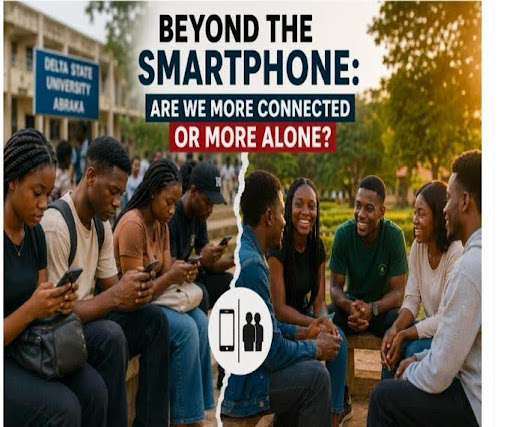
Walking through the campus of Delta State University (DELSU), Abraka, one scene is almost impossible to miss. Students sit together before lectures, yet many are focused on their smartphone screens instead of talking to one another. In classrooms, cafeterias, libraries, and hostels, smartphones have become constant companions.
Over the years, smartphones have transformed communication. Unlike in the past, when owning a mobile phone was considered a luxury, smartphones are now a necessity for many people. They have made it easier to communicate instantly, access information, study online, conduct business, and stay connected with family and friends. However, as technology continues to bring people closer virtually, many are beginning to question whether it is quietly pushing them apart in real life.
For Daniel Othegbemeh, a 200-level student of Journalism and Media Studies at Delta State University, smartphones are both beneficial and distracting.
“I spend almost the whole day on my phone unless my battery runs down, I don’t have data, I’m in class, or I’m sleeping,” he said.
Despite spending several hours online, Daniel admitted that he still experiences moments of loneliness.
“There are days when I feel down and think chatting with someone will make me feel better, but most times it doesn’t. I eventually lose interest in chatting,” he said.
He explained that he mainly uses his smartphone for chatting, watching movies, and following current events. Although he believes smartphones have strengthened his relationships with family and friends, he acknowledged that they have also created unhealthy digital habits.
“Some friendships exist almost entirely online. Sometimes I even feel like I owe someone a reply or a Snapchat streak,” he added.
Another student, Emmanuel Ighofose, a 100-level Philosophy student, shared a similar experience. He said he spends much of his free time browsing the internet, using artificial intelligence for academic work, promoting his business, and interacting on social media.
Although he appreciates the convenience smartphones provide, he believes they cannot completely replace face-to-face relationships.
“People spend less time talking to one another because everyone is focused on their phones,” he said, adding that he could hardly imagine staying away from his smartphone for an entire week.
Beyond the university environment, older generations have also observed changes in the way people communicate. Onyemenam Tarela Erica, a parent and Digital Technology teacher at Splendid Spring Demonstration School, Osubi, recalled that communication before the widespread use of smartphones relied mainly on face-to-face conversations, handwritten letters, and landline telephones.
“There were stronger community relationships in my generation. Today’s young people spend more time online than interacting with people physically,” she said.
According to her, smartphones have both strengthened and weakened family relationships.
“They help families stay connected, but they also reduce real conversations. Even in the same house, people often send messages instead of speaking to one another,” she said.
She believes young people are more connected digitally than ever before but often feel more isolated because they spend less time building meaningful relationships in person.
Offering an expert perspective, Mr. Emmanuel Egere Odje, a lecturer in the Department of English and Literary Studies at Delta State University, said the increasing use of smartphones is driven by several factors, including remote work, online learning, business activities, and the widespread use of social media.
He explained that while smartphones have made communication faster and strengthened long-distance relationships, excessive use can reduce meaningful human interaction.
“Social media can create feelings of loneliness because people may become isolated from those around them while spending hours online,” he said.
He also warned that excessive smartphone use could negatively affect critical thinking, sleep patterns, productivity, and self-esteem if left unchecked. According to him, maintaining a healthy balance requires setting aside time for offline activities, spending quality time with family and friends, participating in sports and social clubs, and reducing unnecessary screen time.
The smartphone has undoubtedly transformed the way people communicate, learn, work, and access information. It has broken geographical barriers and placed knowledge within easy reach. However, the experiences shared by students, parents, and educators suggest that genuine human connection cannot be fully replaced by a screen.
As smartphones continue to shape modern life, perhaps the more important question is not how connected we are online, but whether we are making enough time to connect with the people sitting beside us.
Author Bio
Faith Ogbotor is a student journalist and a 200-level undergraduate in the Department of Journalism and Media Studies at Delta State University, Abraka. She has a strong interest in feature writing and enjoys exploring social issues that affect students and society.













By Eddy Success
Thousands of Muslims across Nigeria gathered in mosques and designated prayer grounds to celebrate Eid al-Adha, one of the most significant festivals in Islam.
This reporter visited Erie Central Mosque, located along Akpakpava Road in Benin City, where worshippers joined other Muslims across the country in observing the festival. The celebration, marked by special congregational prayers, charitable acts, and the symbolic sacrifice of animals, commemorates Prophet Ibrahim’s (Abraham’s) willingness to obey Allah by sacrificing his son before Allah provided a ram in his place.
The day’s activities began early in the morning with Eid prayers led by Islamic scholars and Imams. During the sermons, worshippers were reminded of the importance of faith, obedience to Allah, humility, patience, and compassion for others. Religious leaders also encouraged Muslims to uphold honesty, justice, and peaceful coexistence in their daily lives.
Speaking after the prayers, the Chief Imam of the Benin Central Mosque emphasised that Eid al-Adha is not only a celebration but also an opportunity for self-reflection and service to humanity. He urged Muslims to extend kindness to the less privileged and to promote unity among people regardless of their religious or ethnic backgrounds.
READ ALSO: How Government Policies Continue To Shape Everyday Business In Nigeria
Following the prayers, many families performed the ritual sacrifice of rams, goats, or cows in accordance with Islamic teachings. The meat was shared among family members, neighbours, and people in need, reflecting the Islamic values of generosity and social responsibility.
Several charitable organisations and Islamic groups also organised food distribution programmes, free medical outreaches, and support for orphanages and vulnerable households. Volunteers visited hospitals and correctional facilities, offering gifts, prayers, and words of encouragement to patients and inmates.
Many worshippers expressed gratitude for the opportunity to celebrate the festival peacefully. Amina Yusuf, a Muslim resident of Benin City, described the occasion as a time of gratitude, sacrifice, and togetherness.
Another participant, Ibrahim Bello, said the festival serves as a reminder that true devotion to Allah is demonstrated through obedience, sacrifice, and care for others.
READ ALSO: DELSU Photo Festival Season 2 Celebrates Creativity Despite Heavy Rainfall
Security agencies maintained a visible presence at major prayer grounds to ensure the safety of worshippers, while traffic officials managed the movement of people and vehicles throughout the celebration.
As the festivities concluded, Islamic leaders called on citizens to continue promoting peace, tolerance, and national unity. They encouraged Muslims to uphold the teachings of Islam by showing love, respect, and generosity within their communities throughout the year.
The successful observance of Eid al-Adha once again highlighted the role of the Islamic faith in fostering spiritual growth, charitable giving, community service, and harmonious coexistence among Nigerians.

By Weyinmi Oghoejafor
For millions of Nigerians, the economy is experienced long before it is discussed in newspapers or on television. Every visit to the market, every bus ride, every electricity bill, and every purchase reflects the current state of the country’s economy. Business owners, workers, students, and families all feel the effects of government policies that influence prices, employment opportunities, and the overall cost of living.
Across major cities and rural communities, traders say operating a business has become increasingly challenging. Rising fuel prices have increased the cost of transporting goods from farms and factories to markets. Shop owners who depend on generators because of unreliable electricity spend more on diesel and petrol, forcing many to raise the prices of their goods in order to remain in business.
Market surveys indicate that consumers are becoming more cautious with their spending as inflation continues to reduce purchasing power. Many families now prioritise essential needs such as food, transportation, medicine, and education while cutting back on non-essential purchases. This shift in consumer behaviour has affected sales for many small businesses.
Small and medium-sized enterprises (SMEs) remain the backbone of Nigeria’s economy. From neighbourhood POS operators and food vendors to fashion designers, mechanics, tailors, barbers, and online retailers, these businesses provide employment and income for millions of people. However, many entrepreneurs say that access to affordable loans, stable electricity, and good roads would enable them to expand their operations and employ more workers.
Economists explain that government policies on taxation, public spending, exchange rates, and monetary policy play a significant role in determining the business environment. Investments in roads, railways, ports, agriculture, education, and digital infrastructure can lower business costs, improve productivity, and attract both local and foreign investors. Consistent policies also give businesses the confidence to plan for long-term growth.
Despite the current economic challenges, young Nigerians continue to demonstrate resilience and innovation. Many have embraced digital entrepreneurship by selling products through platforms such as WhatsApp, Instagram, TikTok, and Facebook. Others have established businesses in agriculture, poultry farming, fish farming, graphic design, software development, photography, content creation, logistics, and phone repairs. These ventures not only generate income but also contribute to national economic development.
Financial analysts believe that reducing inflation, improving electricity supply, strengthening security, and supporting small businesses through affordable financing would significantly improve the country’s business environment. They also recommend greater transparency, policy consistency, and increased investment in education and skills development to prepare young people for a changing economy.
As Nigeria continues to pursue economic reforms, citizens remain hopeful that practical policies and responsible governance will create a stronger and more resilient economy. Business owners say that when operating costs are reduced, businesses can expand, employ more people, and offer products at more affordable prices. Many agree that sustainable economic growth depends on collaboration among the government, the private sector, and citizens working together toward the common goal of national development.

By Blessing Alumona and Miracle Akpoyovwvayire
The second edition of the DELSU Photo Festival was held on July 17, 2026, in front of the university Sports Complex. Although the programme was originally scheduled to begin at 10:00 a.m., persistent rainfall delayed the event until about 2:00 p.m. A large canopy was provided to shield participants from the rain, while lively music entertained students as they arrived at the venue.
The event opened on a cheerful note with comedy and light-hearted remarks by Professor Odion Odiboh, creating an exciting atmosphere despite the weather. This was followed by the official opening address delivered by Comrade Regina Egbiamiye, President of the Department of Journalism. After her remarks, the pageantry segment commenced, with contestants representing the Departments of Mass Communication, Journalism, and Broadcasting showcasing their confidence and creativity. At the same time, judges assessed students’ photography projects while music kept the audience entertained.
One of the highlights of the festival was an interactive question-and-answer session that actively involved students and kept the audience engaged. Student union representatives, departmental executives, lecturers, and students participated throughout the programme, contributing to its lively and memorable atmosphere.
Speaking after the event, Faith Ogbotor, a 200-level Journalism student, described the festival as enjoyable and memorable. She said that although the heavy rainfall affected the programme, it did not prevent participants from having a rewarding experience.
READ ALSO: Poor Maintenance Of Student Hostels Raises Concern In Abraka
Another participant, Tejiri Mathias, a Mass Communication student, also commended the event but expressed concerns about what he described as partiality during some of the games. He suggested that improvements could be made in future editions to ensure fairness.
The festival concluded with the announcement of winners from the three departments. Four students emerged as winners from the Department of Broadcasting, twelve from the Department of Journalism, and twenty-two from the Department of Mass Communication. Each department also selected three overall outstanding winners through a voting process, and the successful participants received awards in recognition of their performances.
The celebration ended with music, dancing, and the distribution of refreshments to students, lecturers, and student executives. The joyful atmosphere and shared moments of celebration brought the 2026 DELSU Photo Festival Season 2 to a successful and memorable conclusion for everyone in attendance.
-
 Views Point3 weeks ago
OPINION: Agriculture, Nigeria’s Fading Goldmine
-

 Abraka Metro3 weeks ago
Experts Urge Students To Embrace AI With Open Hearts
-

 Education1 week ago
DELSU Announces Admission Into New Diploma Programmes For 2026/2027 Academic Session
-

 Education3 weeks ago
28-Years-Old Man Swindles JUPEB Students, Diverts N15 Million School Fees
-

 Entertainment2 weeks ago
World Cup 2026: US-Iran Tensions, Local Travel Hurdles, Global Friction Shape Fan Atmosphere
-
 Abraka Metro4 weeks ago
DELSU SUG Tackles Academic Decline with ‘CGPA Recovery Initiative’ for Junior Students
-

 Abraka Metro2 weeks ago
Rising House Rents Put Pressure on DELSU Students in Abraka
-
 Education2 weeks ago
Challenges Persist at DELSU Agricultural Farm Despite Student Training
-

 Education2 weeks ago
DELSU-SUG Begins Week-Long Celebration, Targets Campus Inclusiveness
-
 Education4 weeks ago
DELSU: Pharmacy Students Embrace Mentorship, Recreational Programmes to Combat Mental Health Challenges
-
 Abraka Metro4 weeks ago
Students demand Immediate Action As Kidnapping Spree Returns In Abraka
-

 Trending News1 week ago
Abraka Residents Advocate Entrepreneurship, Warn Against Gambling Amid Economic Hardship
-

 Abraka Metro3 weeks ago
DELSU-SUG Moves To Tame Growing Social Vices On Campus
-
 Abraka Metro4 weeks ago
Students Express Worries Over Worsening Insecurity Ahead Of 2027 Polls
-

 Abraka Metro3 weeks ago
Fiber Optic Installation Begins At DELSU Site 2 As Students Seek Improved Service


