Trending News
Technology Revolution Changes the Face of Education in Nigeria


By Biokoro Lorenta
Nigeria’s education sector is undergoing a significant transformation as technology continues to reshape teaching, learning, and research across schools, colleges, and universities. The increasing adoption of digital tools, online learning platforms, and artificial intelligence (AI) has changed how students and educators access, share, and apply knowledge.
In recent years, educational institutions have embraced technology to improve academic activities and enhance learning outcomes. Students now rely on smartphones, laptops, tablets, and internet-enabled devices to access study materials, conduct research, communicate with lecturers, and collaborate with classmates. Digital libraries and online databases have also become valuable resources, reducing dependence on traditional textbooks and printed materials.
Education experts say the integration of technology into classrooms has expanded access to quality education and created more flexible learning opportunities. Through virtual learning platforms, students can attend lectures, participate in discussions, submit assignments, and access recorded lessons without being physically present in a classroom. This has been particularly beneficial for learners in remote areas who previously had limited access to educational resources.
Artificial intelligence has emerged as one of the most influential innovations in modern education. AI-powered applications assist students with research, explain complex concepts, generate ideas for projects, summarize lengthy texts, and support problem-solving across various disciplines.
Speaking on the growing role of technology in education, Neri Ayo Joy, a Biochemistry student, said digital tools have made learning more convenient by providing quick explanations of difficult topics.
“Technology has simplified learning. We can easily access educational materials through our smartphones and computers, making it easier to understand complex concepts and complete academic tasks,” she said.
The importance of technology became even more evident during the COVID-19 pandemic when educational institutions across the world suspended physical classes. To ensure continuity in learning, many schools adopted online teaching platforms that enabled students to attend classes remotely. Although the transition presented several challenges, it demonstrated the critical role technology plays in sustaining education during emergencies.
Despite its numerous benefits, experts have identified several obstacles limiting the effective use of technology in Nigeria’s education sector. Poor internet connectivity, inadequate electricity supply, the high cost of digital devices, and limited digital infrastructure continue to affect many students, particularly those in rural communities.
There are also concerns about the misuse of technology. Cybercrime, misinformation, plagiarism, and excessive dependence on digital tools have prompted education stakeholders to advocate stronger digital literacy programmes that promote responsible and ethical technology use.
Miss Ifebhor Miracle, a Public Administration student, said technology has become an indispensable part of her academic life.
“I use technology to search for the meanings of difficult words, carry out research, and complete assignments. Applications such as Google and ChatGPT have made learning faster and more convenient,” she said.
She added that digital tools have improved her study habits, enhanced her understanding of course materials, and enabled her to complete academic tasks more efficiently.
Education stakeholders believe that increased investment in digital infrastructure, reliable internet services, stable electricity supply, and technology training for both students and educators will further strengthen the quality of education in Nigeria. They argue that as technology continues to evolve, embracing innovation will be essential to preparing students for the demands of the modern workforce and the global digital economy.




By Ese Umukoro
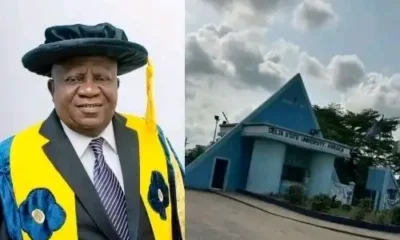
Delta State University (DELSU), Abraka, has inducted its 14th set of professional teachers.
In his speech during the induction ceremony which took place recently at the 750 Lecture Theatre A, Site III, the Vice-Chancellor of DELSU, Prof. Samuel Asagba, charged the inductees to be truly professional in the discharge of their duties as teachers.
Represented by the Deputy Vice Chancellor (Administration), Prof. Edmund Atakpo, the VC also advised the inductees to be ambassadors of ethics, integrity, and the right attitude as they approach the work space.
He equally admonished them to embrace digital technologies as the present day students are digital natives who are smart.
READ ALSO: ‘No Increase in School Fees Schedule’, DELSU SUG Assures Students
Asagba encouraged the new inductees to carry themselves in high esteem and serve humanity dutifully.
Earlier in her speech, the Dean of Faculty of Education in the institution, Prof. Florence Ugoji, had welcomed guests at the ceremony and informed the inductees that they were the vanguards of the nation’s education who would shape minds and influence destinies, urging them to teach with diligence and integrity.
The Dean further told the new teachers to carry the spirit of excellence and make their students believe in their dreams.
She appreciated parents of the inductees for their sacrifices and the university management for its role in the training of the new teachers.
Ugoji, who recently delivered the 123rd in the series of DELSU inaugural lectures, informed the inductees that their Teachers Registration Council of Nigeria’s (TRCN) license was a public trust that they would teach with integrity and professionalism.
On her part, the Registrar and Chief Executive of the TRCN, Dr Ronke Soyombo, congratulated the inductees and charged them to be good teachers who will make their subjects easy for their students.
Represented by Mr. Nsima Edet, the TRCN Director of Public and Private Partnership, appreciated DELSU management for sustaining the professionalisation of its graduate teachers.
She told the inductees that teaching was not just a job but a national assignment as the Federal Government (FG) has placed the professionalisation of teachers at the centre of its education policy.
The Registrar challenged the new inductees to embrace digital technologies which has become part of their teaching environment.
Soyombo thereafter administered the oath taking and inducted the new graduate teachers.
Other dignitaries present at the event included the Deputy Vice Chancellor (Academic), Prof. Hilary Owamah, Deputy Vice Chancellor (Research and Innovation), Prof. Douglasson Omotor, represented by the Director of Research and Innovation, Prof. Anthony Ojieh, DELSU Registrar, Mrs Rufina Ufiofio, represented by Mrs Peace Irogbo, DELSU Bursar, Mrs Otimeyin Ekakitie-Omajuwa, represented by Mr. Martins Denedo, University Librarian, Dr. Josephine Onohwakpor, Dean of DELSU Postgraduate School, Prof. Christian Ewhrudjakpor, Dean of Faculty of the Social Sciences, Prof. Sam Ogege, Director, Ceremonials, Information and Public Relations (CIPR), Prof. Enajite Ojaruega, represented by the Deputy Director, CIPR, Dr. Ese Umukoro, Associate Dean, Faculty of Education, Prof. Eric Oghonu, DELSU Public Relations Officer (PRO), Mr. Henry Eseka, staff and students of the Faculty of Education.
Others were the State Coordinator of TRCN, Mrs. Paulina Adjarho, Education Officer of TRCN, Mr. John Ukah, Faculty of Education representative to TRCN, Dr. Patience Okoro, Faculty of Education Officer, Mr. Frank Ineneji, the inductees, family and friends of the inductees.
In a public noticed obtained by Media Conversation, the university said the initiative is designed to provide an alternative pathway for candidates seeking admission into their courses of choice without waiting endlessly for JAMB.

By David Amogbokpa
The Students Union Government (SUG) of Delta State University, Abraka, has assured students that there will be no increase in the approved school fees following a meeting with the university management on Tuesday, November 3, 2026.
In a new statement released after the meeting, the SUG urged students to disregard rumours suggesting an increase in school fees, assuring them that the approved fees remain unchanged.
The union also announced that students can now apply for university accommodation without necessarily paying their school fees first, although room allocation will remain competitive.
Debunking the the rumours about the 70% school fees payments, they further clarified that the former 70/30 payment arrangement has been discontinued, but students who cannot afford to pay in the first semester will still be allowed to pay in the second semester and sit for their first semester examinations.
READ ALSO: DELSU VC Urges Parents To Supervise Adolescent Children as Ugoji Delivers 123rd Inaugural Lecture
Other resolutions include the introduction of a wallet feature on the student portal to help students save gradually towards their school fees.
The management also assured that students applying for the Nigerian Education Loan Fund (NELFUND) will be allowed to write their examinations without discrimination.
The SUG called on students to remain calm and rely on official information rather than unverified reports.
The situation started when students reportedly logged into their portals and discovered an additional mandatory fee of ₦13,300, alongside an increase in their school fees. The development has left many students worried about how to cope with the new charges, especially with the current economic situation in the country.
Trending News
DELSU VC Urges Parents To Supervise Adolescent Children as Ugoji Delivers 123rd Inaugural Lecture


By Ese Umukoro
Vice Chancellor of Delta State University (DELSU), Abraka, Prof. Samuel Asagba, has charged parents to supervise their adolescent children in order to help them successfully navigate that stage of their lives.
Asagba, who was represented by the Deputy Vice Chancellor (Administration), Prof. Edmund Atakpo, gave the charge during the University’s 123rd inaugural lecture delivered by Prof. Florence Ugoji, recently at the 750 Lecture Theatre A, Site III of the University.
He also commended the inaugural lecturer for her excellent delivery of the inaugural lecture which called on all stakeholders get involved in the development of adolescent minds.
Asagba in conclusion stated that the lecture was a call on all staff of the University, particularly lecturers to help in shaping the adolescent minds who are the majority of the University’s students.
Earlier in her lecture titled, “The Adolescent Mind Under Siege: Unmasking the Roots and Rise of Social Vices to Reclaim the University Space”, Ugoji had opined that universities are centres of knowledge that nurture young minds, shape values, and prepare future leaders.
However, she observed that university campuses today are witnessing negative behaviours once considered rare such as cybercrime, substance abuse, academic dishonesty, risky sexual behaviours and other forms of misconduct.
The Professor of Counselling and Adolescent Psychology further argued that adolescents today are under intense pressure of family instability, peer influence, social media exposure, and economic uncertainties, adding that the purpose of her lecture was to understand the psychological and social forces that drive such behaviours in adolescents, rather than condemning the adolescent minds.
Ugoji, stated that adolescent minds are also faced with pressures of identity formation, academic expectations, social relationships, and an emerging independence.
The above pressures shape their behaviours which in turn affect both their individual personalities and the wider university community.
These pressures have resulted in cybercrime, as the Chairman of Nigeria’s Economic and Financial Crimes Commission (EFCC), Olanipekun Olukayode in 2026 lamented that over 60% of Nigerian universities’ students are into cybercrime.
READ ALSO: Students Adjust To Portal Upgrade Under DELSU VC Administration
Other effects are cultism and violence, ritual practices, kidnapping, substance abuse, risky sexual behaviours that can lead to negative health outcomes, living under constant pressure, depression, struggle to define oneself, among others. She then contended that to reclaim the university space and turn adolescent minds into positivity, all stakeholders including parents, lecturers, administrators, policy makers, religious institutions, and even students must work in synergy.
Ugoji concluded by stressing that reclaiming the university space was not a theoretical idea but practicable and necessary, noting that the challenges and the solutions were both real and what was required was commitment, coordination and consistency.
Other highlights of the 123rd inaugural lecture were decoration of the inaugural lecturer with the prestigious medal of Inaugural Lecturers of DELSU by the Vice Chancellor, special musical renditions, photo sessions of the inaugural lecturer with principal officers of the university as well as with family and friends, a cocktail reception hosted by the Vice Chancellor in honour of the inaugural lecturer, as well as special reception organised by the inaugural lecture for his invited guests within and outside the university.
Other dignitaries present at the 123rd inaugural lecture included the Deputy Vice Chancellor (Academic), Prof. Hilary Owamah, Provost of Oleh Campus, Prof. Augustine Atonuje, DELSU Registrar, Mrs Rufina Ufiofio, represented by Senior Deputy Registrar, Mr Emmanuel Okoro, DELSU Bursar, Mrs Otimeyin Ekakitie-Omajuwa, DELSU Librarian, Dr (Mrs) Josephine Onohwakpor, Provosts, Deans, Directors, staff and students of the university.
Also in attendance were the Rector of Delta State Marine Polytechnic, Burutu, Prof. Emmanuel Okoro, wife of the Vice Chancellor, Southern Delta University, Ozoro, Professor (Mrs) Ufuoma Awhefeada, immediate past Chairman of Dennis Osadebay University Governing Council, Professor Robert Ikomi, former Deputy Vice Chancellor (Academic), Prof. Ochuko Anomoharan, members of DELSU College of Chaplains, friends and family members of the inaugural lecturer.
In a public noticed obtained by Media Conversation, the university said the initiative is designed to provide an alternative pathway for candidates seeking admission into their courses of choice without waiting endlessly for JAMB.
-
 Education4 months ago
Breaking: DELSU Postpones Second Semester Examinations. See New Date
-
 Education4 months ago
DELSU Announces Admission Into New Diploma Programmes For 2026/2027 Academic Session
-

 Views Point5 months ago
OPINION: Agriculture, Nigeria’s Fading Goldmine
-
 Abraka Metro5 months ago
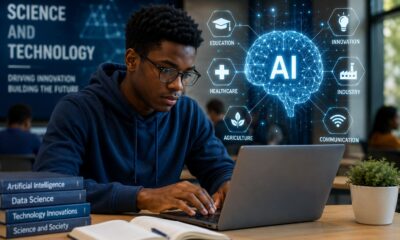
Experts Urge Students To Embrace AI With Open Hearts
-

 Education4 months ago
Breaking: DELSU Bans “Sign Out” Parties, Threatens 2-Semester Rustication For Violators
-
 Education4 months ago
DELSU Begins Postgraduate Admission for 2026/2027 Academic Session
-

 Education5 months ago
28-Years-Old Man Swindles JUPEB Students, Diverts N15 Million School Fees
-

 Entertainment4 months ago
World Cup 2026: US-Iran Tensions, Local Travel Hurdles, Global Friction Shape Fan Atmosphere
-

 Education3 months ago
DELSU Exam Monitors Apprehend Student With Allegedly Stolen Phones, Wig
-
 Education4 months ago
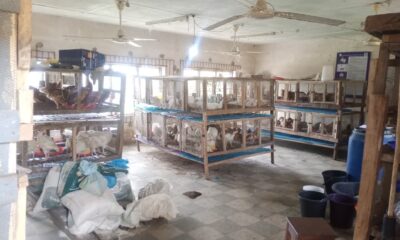
Challenges Persist at DELSU Agricultural Farm Despite Student Training
-

 Abraka Metro4 months ago
Rising Cost Of Living Forces Abraka Students To Adopt Survival Strategies
-
 Abraka Metro5 months ago
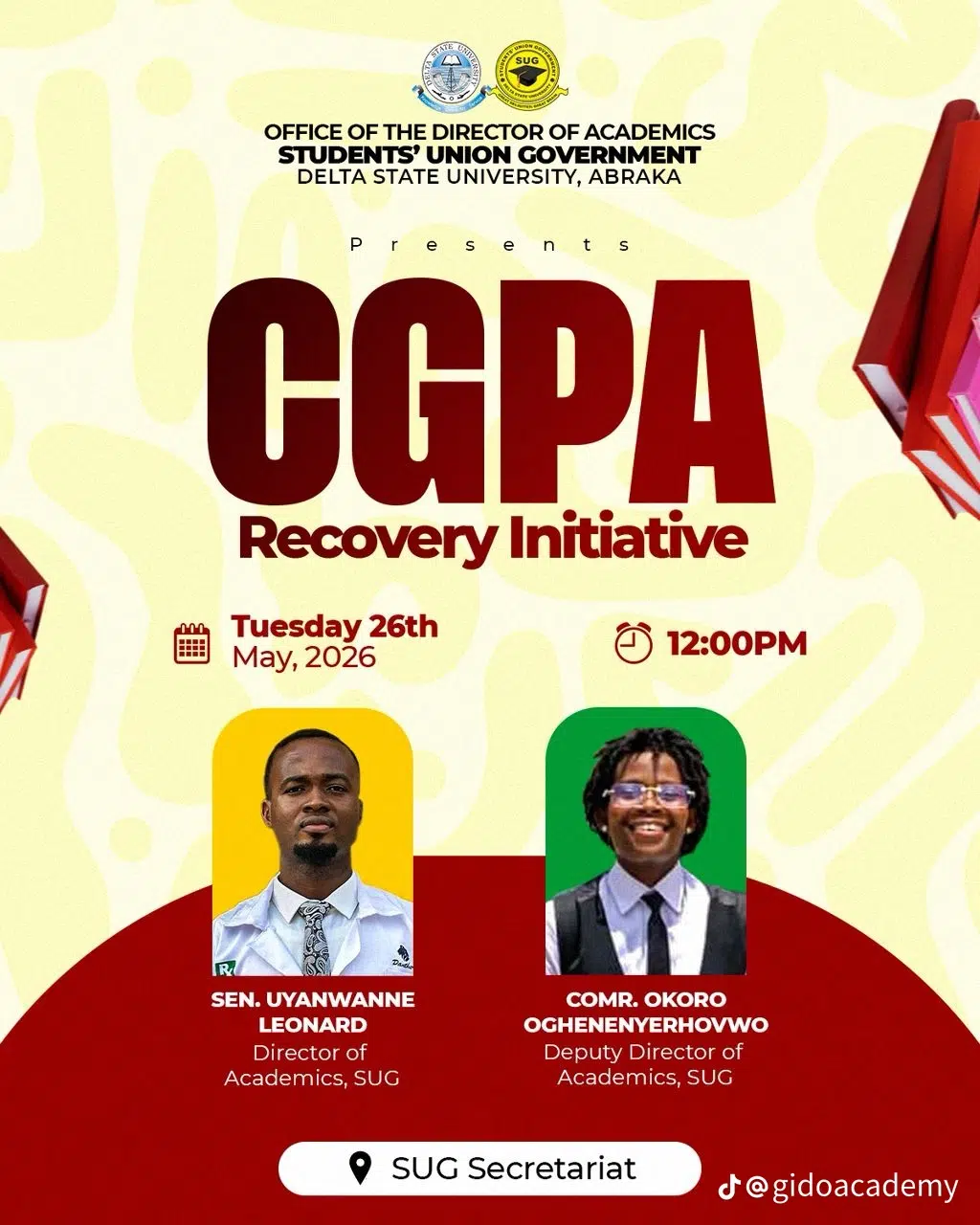
DELSU SUG Tackles Academic Decline with ‘CGPA Recovery Initiative’ for Junior Students
-
 Abraka Metro4 months ago
Rising House Rents Put Pressure on DELSU Students in Abraka
-

 Trending News4 months ago
Abraka Residents Advocate Entrepreneurship, Warn Against Gambling Amid Economic Hardship
-

 Abraka Metro4 months ago
Elozino Ogege: Lecturers React As Court Sentences Killers Of DELSU First-Class Student To Death


