Abraka Metro
THE ABRAKA REFUSE CRISIS: Poor Waste Management Threatens Public Health and Community Development

By Anointed Kenneth
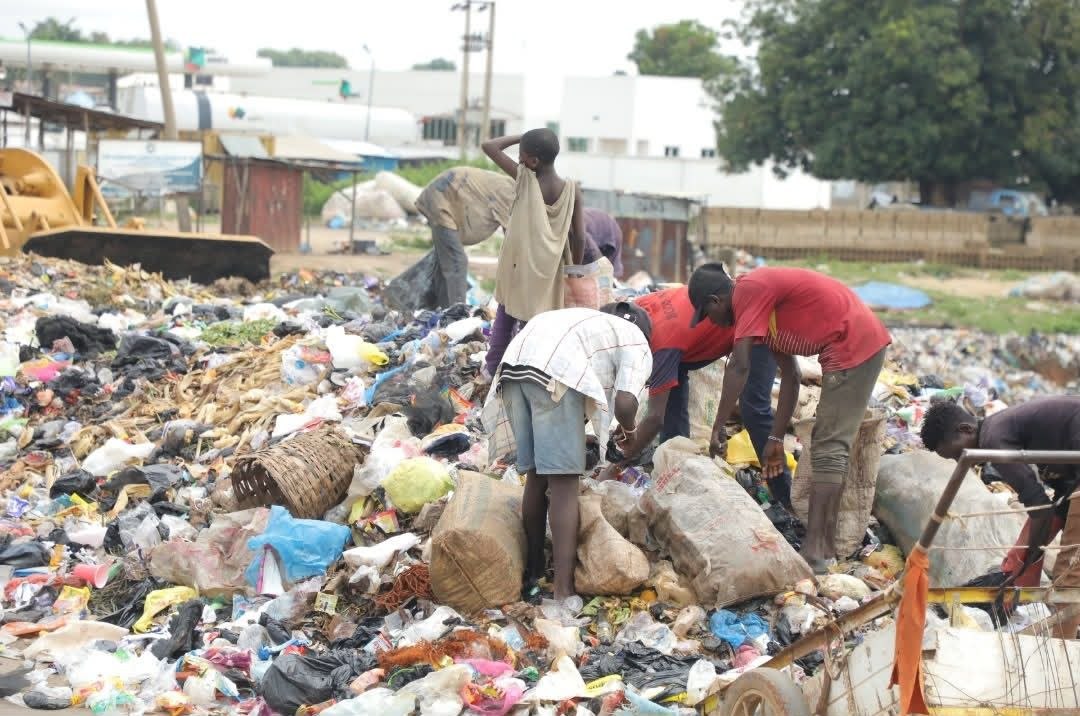
Poor waste management has become a growing environmental concern in Abraka, Delta State, as residents and students continue to grapple with indiscriminate refuse disposal, blocked drainage systems, and the resulting health and environmental risks.
Abraka, home to the main campus of Delta State University (DELSU), hosts a large population of students and residents whose daily activities generate substantial volumes of waste. However, many community members say the town’s waste disposal infrastructure has struggled to keep pace with its growing population.
A visit to several parts of the community revealed heaps of refuse dumped along road medians, open spaces, and street corners, particularly in densely populated student areas. During the rainy season, improperly disposed waste often blocks drainage channels, leading to flooding and stagnant water in some neighbourhoods.
Environmental health experts warn that poor sanitation and blocked drains can increase the risk of mosquito breeding and the spread of water- and vector-borne diseases if not properly managed.
Speaking on the issue, Kenneth Destiny, Treasurer of the Department of Biochemistry and a 200-level student of Delta State University, described the waste situation as a matter requiring urgent attention.
“The waste management problem in Abraka is becoming more serious every day. In many student areas, refuse is dumped indiscriminately, making the environment unhealthy and unpleasant. During the rainy season, blocked drainage systems worsen flooding and make movement difficult for students. If proper measures are not taken, it could affect not only our health but also the image of Abraka as a university town,” she said.
She urged students to adopt proper waste disposal practices while calling on relevant authorities and waste management operators to improve refuse collection services across the community.
Some shop owners and business operators also expressed concern that accumulated refuse discourages customers and affects the overall appearance of the town.
The Delta State Waste Management Board (DSWMB) has consistently advised residents against dumping refuse in unauthorized locations and drainage channels, noting that environmental sanitation laws prohibit indiscriminate waste disposal and provide sanctions for offenders.
Despite these regulations, many residents believe that inadequate refuse collection services, limited public waste bins, and the cost of private waste disposal continue to contribute to illegal dumping in parts of the community.
Environmental stakeholders say tackling the challenge will require a combination of improved waste collection infrastructure, sustained public awareness campaigns, stricter compliance with sanitation regulations, and stronger collaboration between government agencies, private waste management operators, community leaders, and residents.
Residents have also called for the installation of additional waste collection points in student-populated areas and more regular evacuation of refuse to promote cleaner surroundings.
As a university town that attracts students, parents, researchers, and visitors from across the country, many believe maintaining a clean environment is essential to protecting public health, enhancing the community’s image, and supporting sustainable development.
Community members expressed hope that sustained investment in waste management infrastructure and greater public participation in environmental sanitation would help create a cleaner, healthier, and more attractive Abraka for residents and visitors alike.






A former Vice-Chancellor of Delta State University, Abraka, Prof. Victor Peretomode, has proposed a tripartite governance model to sustain excellence in the institution.
Peretomode proposed the model at DELSU’s 12th valedictory lecture held on Thursday, September 24, 2026, at the university’s 750 Lecture Theatre, Site III.
The lecture was titled, “DELSU and the Burden of Expectation: The Challenges of Being Delta State’s Premier University and Rethinking Governance for Sustainable Excellence.”
He said as the state’s premier university, DELSU carries triple burdens — aspirational, political and operational — which translate into expectations such as expanding access to university education for Deltans, accommodating qualified indigenes, advancing state-specific development priorities and producing morally sound and employable graduates.
READ ALSO: DELSU Exam Monitors Apprehend Student With Allegedly Stolen Phones, Wig
Peretomode, a Professor of Educational Administration and Higher Education, said the challenges could be addressed through his proposed “Peretomode Tripartite Model of Governance for Sustainable Excellence,” anchored on three pillars: Leadership Integrity, Funding Predictability and Quality Assurance.
He observed that DELSU has come far, but its journey is far from complete, adding that the burden of expectation it carries is not a weight to be feared, but a responsibility to be fulfilled.
In his remarks, Governor Sheriff Oborevwori, Visitor to the university, described Peretomode as an academic who contributed immensely to the development of university education in the state.
Oborevwori, who was represented by the Commissioner for Higher Education, Prof. Nyerhovwo Tonukari, said the state would still need Peretomode’s wealth of experience as he bows out of service and assured of continued support for DELSU.
On his part, the Vice-Chancellor of DELSU, Prof. Samuel Asagba, lauded Peretomode’s achievements as former VC, noting that his policies, though considered harsh at the time, have placed the university in its present enviable state.
Asagba wished the valedictory lecturer the best in his future endeavours.
Highlights of the event included the launch of two books authored by the valedictory lecturer and a musical rendition by the Department of Music.
Peretomode joined DELSU in 1992 as Senior Lecturer in the Department of Educational Management and Foundations, became a Professor in 1996 and served as its 7th substantive Vice-Chancellor from 2014 to 2019.
The lecture was attended by the Vice-Chancellor of University of Delta, Agbor, Prof. Eric Eboh, Vice-Chancellor of Southern Delta University, Ozoro, Prof. Sunny Awhefeada, DELSU Deputy Vice-Chancellor (Administration), Prof. Edmund Atakpo, DELSU Deputy Vice Chancellor (Academic), Prof. Hilary Owamah, DELSU Deputy Vice-Chancellor (Research and Innovation), Prof. Douglasson Omotor, Deputy Vice-Chancellor, University of Delta, Agbor, Prof. Patrick Ijeh, Provost of Oleh Campus, Prof. Augustine Atonuje, DELSU Registrar, Mrs Rufina Ufiofio, DELSU Bursar, Mrs Otimeyin Ekakitie-Omajuwa, DELSU Librarian, Dr Josephine Onohwakpor, Provosts, Deans, Directors, staff and students of the university.
Also in attendance were the Rector of Delta State Polytechnic, Otefe-Oghara, Prof. Emmanuel Ufuophu-Biri, Rector, Delta State Marine Polytechnic, Burutu, Prof. Emmanuel Okoro, Delta business tycoon, Chief Tunde Smooth, Executive Director of Project, DESOPADEC, Chief (Dr) Ebenezer Okorodudu, former DELSU Governing Council Chairman, Prof. Sam Oyovbaire, former Dennis Osadebey University Governing Council Chairman, Prof. Robert Ikomi, members of DELSU College of Chaplains, friends and family members of the valedictory lecturer, including his wife, Dr (Mrs) Otaroghene Peretomode.
The release comes barely 24 hours after the state-owned institution released its first batch of admission for the incoming session.

By Ese Umukoro
The serene community of Delta State University (DELSU), Abraka was thrown into mourning on Friday, 28th August, 2026, as the remains of Late Prof. Emmanuel Oghenebrorien Akarah, popularly known as, Don Spino, was committed to mother earth.
Speaking during the commendation service at Atscan Hall, Site II of the University, the Vice Chancellor of DELSU, Prof. Samuel Asagba, lamented that he received the sad news of the demise of the deceased on 8th of May, 2026 as a rude shock.
Asagba recalled the personal memories he shared with Akarah as a friend, eulogising his forthrightness, outspokenness and doggedness.
He stated that Don Spino contributed his quota to the growth of the University in different capacities since he was employed into the services of DELSU, adding that his legacy would not be forgotten in the history of DELSU because of his impact on both staff and students.
The Vice Chancellor thereafter led the University community to observe a minute’s silence in honour of the deceased.
READ ALSO: Students Adjust To Portal Upgrade Under DELSU VC Administration
In his commendation earlier, the Head of Department of Human Kinetics, Recreation and Sports Science, Prof. Ochuko Nabofa, eulogised Don Spino, calling him a colleague, a friend, a scholarly collaborator and ultimately an in-law.
Nabofa recollected how himself and the late Don Spino shared ideas, challenged each other intellectually and worked together in the pursuit of knowledge.
Nabofa concluded that Don Spino’s death has left a void in the Department of Human Kinetics, Recreation and Sports Science, in DELSU and in the lives of those who knew him.
He said the bond was further strengthened when in February this year, Don Spino’s cousin, Hon. (Double Chief) Godday Ewenuvie, got married to his younger sister whom he raised as a daughter, thus making them in-laws.
In her oration, the Dean of Faculty of Education, Prof. Florence Ugorji, said Don Spino was a man of the people whose life impacted positively on all who came across him.
Represented by Prof. Canice Ikeorji, the Dean further lamented that the deceased was an asset to the faculty and prayed for the repose of his soul.
Chairman of the Academic Staff Union of Universities (ASUU-DELSU), Comrade Paul Opone, bemoaned the loss of Don Spino.
In his tributes, Opone recalled the contributions of Don Spino during congresses and how he fought for the Union during its period of crisis.
The union Chairman stated that the passing of Don Spino was a challenge to him and the Union as it would be difficult to get his replacement.
Opone thereafter led members of the Union in singing the solidarity song for a fallen comrade.
The commendation service also witnessed the filing past the casket of Don Spino led by the Vice Chancellor before the remains of Don Spino were taken to Uruekpo Quarters in Evwreni kingdom for interment.
Late Professor Emmanuel Oghenebrorien Akarah joined the services of DELSU in 1995 as Graduate Assistant and rose to the rank of Professor in 2021.
Earlier, a Service of Songs in his honour was held at the DELSU’s Sports Complex on Wednesday, 26th August, 2026.
Dignitaries present at the commendation service included the Vice Chancellor of DELSU, Professor Samuel Ogheneovo Asagba who was represented by the Deputy Vice Chancellor (Administration), Prof. Edmund Atakpo, the University Registrar, Mrs Rufina Ufiofio, represented by Mr Emmanuel Okoro, the University Librarian, Dr (Mrs) Josephine Onohwakpor, Director of Ceremonials, Information and Public Relations, Prof. Enajite Ojaruega, Chairman of ASUU-DELSU, Comrade Paul Opone, Deans of Faculties, Heads of Departments, the University Public Relations Officer, Mr Henry Eseka, family members of the deceased, Professors, staff, students, and others from within and outside the university community.
Those present during the funeral at Evwreni kingdom included the Vice Chancellor of Southern Delta University, Ozoro, Prof. Sunny Awhefeada, Deputy Vice Chancellor (Administration), Prof. Edmund Atakpo, immediate past Provost of Oleh campus, Prof. Elo Ibagere, Directors including the Director of Centre for Entrepreneurial Studies (CES), Prof. Onoriode Emoyan, Deans of Faculties including the Dean of Arts Faculty, Prof. Nelson Edewor, Heads of Departments, politicians, business moguls, friends, family members of Don Spino and other mourners.
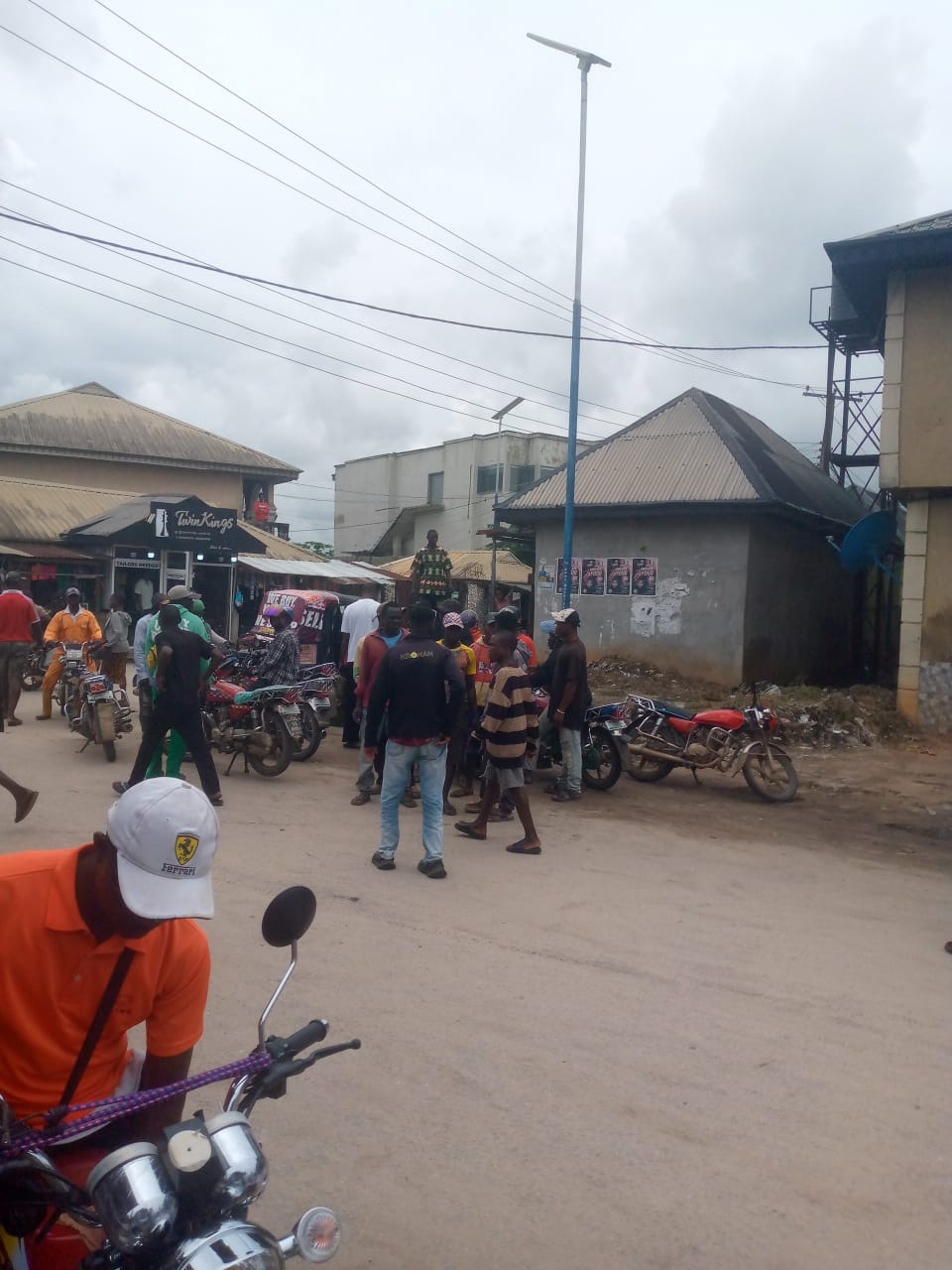
By God’stime Oyeh
An accident involving a GLK 350 and a commercial motorcyclist happened around 11:30 a.m., reportedly after a case of wrong-lane driving.
According to eyewitnesses, the motorcyclist, popularly known as an “Aboki” bikeman, was coming from the Campus 2 area when he was allegedly hit by the GLK 350 car.
The little damage to the car caused some tension at the scene as both parties tried to explain what happened.
Eyewitnesses said the motorcyclist seemed to be at a disadvantage during the confrontation with the car driver- who was clearly trying to oppress the motorcyclist which led vigilantes and other bystanders to step in and calm things down before it got out of hand.
Things reportedly got more heated when some area boys arrived and tried to help settle the issue. The GLK 350 driver defended himself and shared his version of events, but some witnesses felt his explanation didn’t quite match what they saw happen.
As arguments continued and tempers rose,and with the car driver still wanting to oppress the motorcyclist, the Vigilantes took it upon themselves to caution him since he wasn’t trying to make peace…the matter was eventually taken to the police station for proper investigation and resolution.
-
 Education2 months ago
Breaking: DELSU Postpones Second Semester Examinations. See New Date
-
 Education3 months ago
DELSU Announces Admission Into New Diploma Programmes For 2026/2027 Academic Session
-
 Views Point3 months ago
OPINION: Agriculture, Nigeria’s Fading Goldmine
-

 Abraka Metro3 months ago
Experts Urge Students To Embrace AI With Open Hearts
-

 Education2 months ago
Breaking: DELSU Bans “Sign Out” Parties, Threatens 2-Semester Rustication For Violators
-
 Education3 months ago
28-Years-Old Man Swindles JUPEB Students, Diverts N15 Million School Fees
-
 Education2 months ago
DELSU Begins Postgraduate Admission for 2026/2027 Academic Session
-

 Entertainment3 months ago
World Cup 2026: US-Iran Tensions, Local Travel Hurdles, Global Friction Shape Fan Atmosphere
-
 Education2 months ago
DELSU Exam Monitors Apprehend Student With Allegedly Stolen Phones, Wig
-
 Abraka Metro3 months ago
DELSU SUG Tackles Academic Decline with ‘CGPA Recovery Initiative’ for Junior Students
-

 Abraka Metro3 months ago
Rising Cost Of Living Forces Abraka Students To Adopt Survival Strategies
-
 Abraka Metro3 months ago
Rising House Rents Put Pressure on DELSU Students in Abraka
-

 Abraka Metro2 months ago
Elozino Ogege: Lecturers React As Court Sentences Killers Of DELSU First-Class Student To Death
-
 Education3 months ago
Challenges Persist at DELSU Agricultural Farm Despite Student Training
-

 Trending News3 months ago
Abraka Residents Advocate Entrepreneurship, Warn Against Gambling Amid Economic Hardship


Onome Joshua Ogheneovo
July 28, 2026 at 7:16 pm
I feel the government should construct a very big reservoir for waste management. This place is where all waste of the town can be thrown with unlimited space