Abraka Metro
Solar Revolution: How High Fuel Cost and Grid Failures Are Forcing Braka Traders, Homeowners To Dump ‘NEPA’

By Ayowe Ifeoma
A quiet energy revolution is sweeping through the university town of Abraka, Delta State.
Driven by prolonged grid instability from the Benin Electricity Distribution Company (BEDC)—locally referred to as ‘NEPA’—and the skyrocketing cost of petrol, local business owners and landlords are increasingly abandoning the national grid in favor of solar energy.
For decades, small-scale enterprises and residential areas in Abraka, particularly around the Delta State University (DELSU) campuses, relied on a costly mix of irregular public power and noisy petrol generators.
However, recent economic realities have turned what was once a luxury technology into a survival strategy for the community’s commercial nervous system.
Along the busy River Road axis, a stretch heavily populated by student apartments and provisions stores, the steady hum of generators is slowly being replaced by the silent glint of rooftop photovoltaic panels.
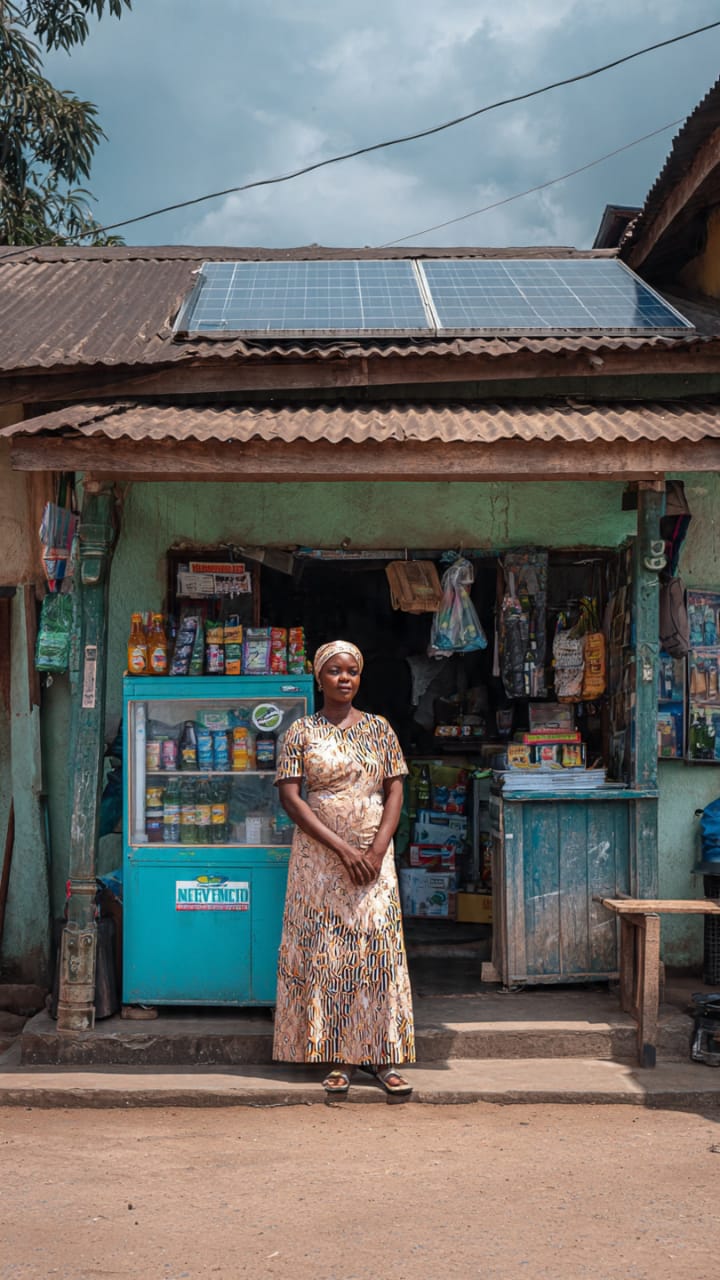
Mrs. Victoria Ahinevburie, a long-time Abraka resident who runs a cold-drinks and provisions store serving the student community, shared how the economic crunch forced his hand.
“Running a business here was becoming a losing battle,” Victoria explained.
“We used to pray for even three hours of grid light a day just to keep deep freezers cold.
“When that failed, we relied on petrol. But with the way fuel prices are rising day by day, you end up pouring all your hard-earned profit into a generator tank just to stay afloat.”
Frustrated by the continuous financial drain,Victoria saved up late last year to install a hybrid solar inverter system, deploying four panels and two heavy-duty deep-cycle batteries to power both his shop and his residential apartment located just behind the premises.
The impact, she noted, was immediate.
“The peace of mind is entirely different.
“Before, my heart would beat anytime I stocked up on dairy products or ice cream because of the fear of spoilage.
“Now, from morning till evening, the sun does the work.
“My drinks are constantly cold, and student customers prefer coming here because they are guaranteed cold beverages.”
The shift is also reshaping domestic life in the university community.
Beyond the commercial benefits, homeowners note that transitioning to solar has significantly improved the quality of life for families and tenants.
“At home, the atmosphere has changed,” Victoria added.
“My children can now read their books comfortably at night without the choking smoke and constant noise of an ‘I-pass-my-neighbor’ generator.
“It has given us a level of independence we never thought possible.”
Despite the growing enthusiasm, the mass adoption of solar energy in Abraka faces a significant barrier: the high upfront cost of installation.
For many low-income households and petty traders operating around the university gates, the capital required to purchase quality inverters, panels, and batteries remains out of reach.
Acknowledging this challenge, Victoria described the transition as a “long-term sacrifice” that pays off over time.”
That is the only heavy part—the initial cost.
Setting up a system that can comfortably carry heavy appliances like a deep freezer or a water pumping machine is not small money,” he explained.
“But what I tell other traders is that solar is a one-time pain, while depending on the current grid supply is a continuous headache.
“If you can save to do it bit by bit, it is far cheaper than buying fuel every single day.”
She further urged solar installation companies to introduce flexible, installment-based payment plans tailored to small-scale rural and semi-urban entrepreneurs to make the technology more accessible.
When asked if a sudden stabilization of the public power supply would entice her to dismantle her rooftop panels and return to the national grid, Victoria was dismissive.
“Disconnect? Never,” she laughed.
“Even if BEDC gives us 24-hour light today, my solar system remains the primary source, and the grid will become the backup.
“In a university town like this, your business must stay online constantly.
“You cannot tie the destiny and survival of your business to an unpredictable grid that trips off the moment it threatens to rain.”
As the economic pressure of fossil fuels persists, the trend in Abraka indicates that the local community is no longer waiting on public utilities to fix the power sector.
Instead, they are turning to the abundant Delta sun to light up their homes and secure their economic future.






By John Okomideghe
Religious leaders in Abraka have called on students to take their education seriously, warning them against distractions that could affect their academic performance and future ambitions.
The call was made during a youth programme at a church in Abraka, where students were advised to make education a priority and develop habits that would help them succeed academically.
Speaking with our correspondent after the programme, Pastor Daniel Okoro, a youth coordinator, said students needed proper guidance because many young people were faced with different distractions, including excessive use of social media, peer pressure and poor time management.
“Education is something every young person should take seriously.
“As religious leaders, we try to remind our youths that what they do today can affect their future.
“They should learn to manage their time and give enough attention to their studies,” he said.
According to him, religious leaders do not only have the responsibility of teaching religious values but also of guiding young people in making responsible decisions.
He explained that during youth meetings, students are often encouraged to set academic goals, attend lectures regularly, complete their assignments and avoid activities that could negatively affect their studies.
A student of Delta State University, Abraka, who identified herself as Esther, said the advice she receives from religious leaders has helped her understand the importance of balancing her religious activities with her academic responsibilities.
“Sometimes, when we are distracted or tired of studying, the advice from our leaders reminds us why we started.
“They encourage us to work hard and not allow temporary problems to make us give up on our education,” she said.
Another student, Emmanuel, said religious leaders also encourage students to seek help when they experience academic difficulties instead of keeping their problems to themselves.
The influence of religious leaders on students is also noticed by some residents of Abraka.
Mrs. Grace Okiemute, a resident of the community, said religious institutions could contribute positively to the development of young people by providing them with proper guidance.
“Young people need people who can guide them.
“When religious leaders encourage students to stay focused and make good decisions, it can have a positive effect on the community,” she said.
Apart from regular sermons and youth meetings, some religious organisations in the area organise programmes where students are encouraged to discuss their academic challenges.
These programmes may include mentorship sessions, career talks and discussions on discipline and responsible behaviour.
Pastor Okoro further advised parents and guardians not to leave the responsibility of educating their children entirely to schools and religious organisations.
He urged parents to communicate regularly with their children and pay attention to their academic progress.
He also encouraged students to understand that academic success requires consistency rather than last-minute preparation.
“Students should not wait until examinations are close before they begin to study.
“Small efforts made consistently can make a big difference,” he added.
While religious leaders can provide motivation and guidance, students also have a personal responsibility to make use of the opportunities available to them.
Teachers, parents and community members all have roles to play in helping young people remain focused on their education.
For many students in Abraka, where academic activities form an important part of community life, the encouragement from religious leaders serves as an additional source of motivation.
Their message remains simple: students should remain disciplined, avoid unnecessary distractions and work toward building a better future through education.

By Ifeoma Agetu
Panic gripped the student community of Delta State University (DELSU), Abraka, on Tuesday afternoon as a sudden fire outbreak ripped through a cluster of commercial kiosks right outside the busy Site 1 ‘Small Gate’ entrance.
The incident, which began at approximately 1:15 PM during peak lecture hours, completely destroyed at least four makeshift shops where students routinely purchase snacks, stationery, and laundry services.
According to eyewitness accounts, the fire was triggered by a power surge from a nearby electricity pole immediately after the public power supply was restored.
Within minutes, thick black smoke billowed into the air, visible from the campus main library and surrounding lecture theatres, sending hundreds of students and local commercial motorcycle riders scrambling to create distance from the scene.
“I was just inside the campus archway heading towards the mass communication department when I heard people screaming ‘Fire! Fire!’ from the Small Gate,” recalled Oghenetega, a 200-level Economics student who witnessed the initial chaos.
“By the time I rushed closer, the entire roof of the photocopying shop was completely covered in flames.
“The breeze was very strong, so it carried the fire to the next kiosk in seconds.
“Everyone just started running because nobody knew if there was a cooking gas cylinder inside those shops that could explode.”
As the fire raged, student volunteers and local traders bravely mobilized a makeshift emergency response, using buckets of water and detergent mixed with sand from nearby construction sites to suppress the flames before they could reach the main university perimeter wall.
The absence of a dedicated emergency firefighting unit stationed on or near the Abraka campus became glaringly obvious during the hour-long struggle, as victims stood by helplessly watching their livelihoods turn to ashes.
The Small Gate serves as one of the primary foot-traffic arteries for undergraduates living in off-campus private hostels, making the lunchtime disaster highly disruptive.
While campus security personnel quickly cordoned off the area to prevent looting and maintain order, the emotional toll on the affected shop owners was heavy.
“Everything I use to feed my children is gone,” lamented a popular vendor known affectionately as Mama Blessing, who operated a retail provisions shop at the spot.
“The deep freezer, the drinks, the snacks I just bought yesterday—all gone.
“If not for the brave students who poured sand, the fire would have crossed the gutter into the residential houses opposite the gate.”

By Olatutu Ogbaro
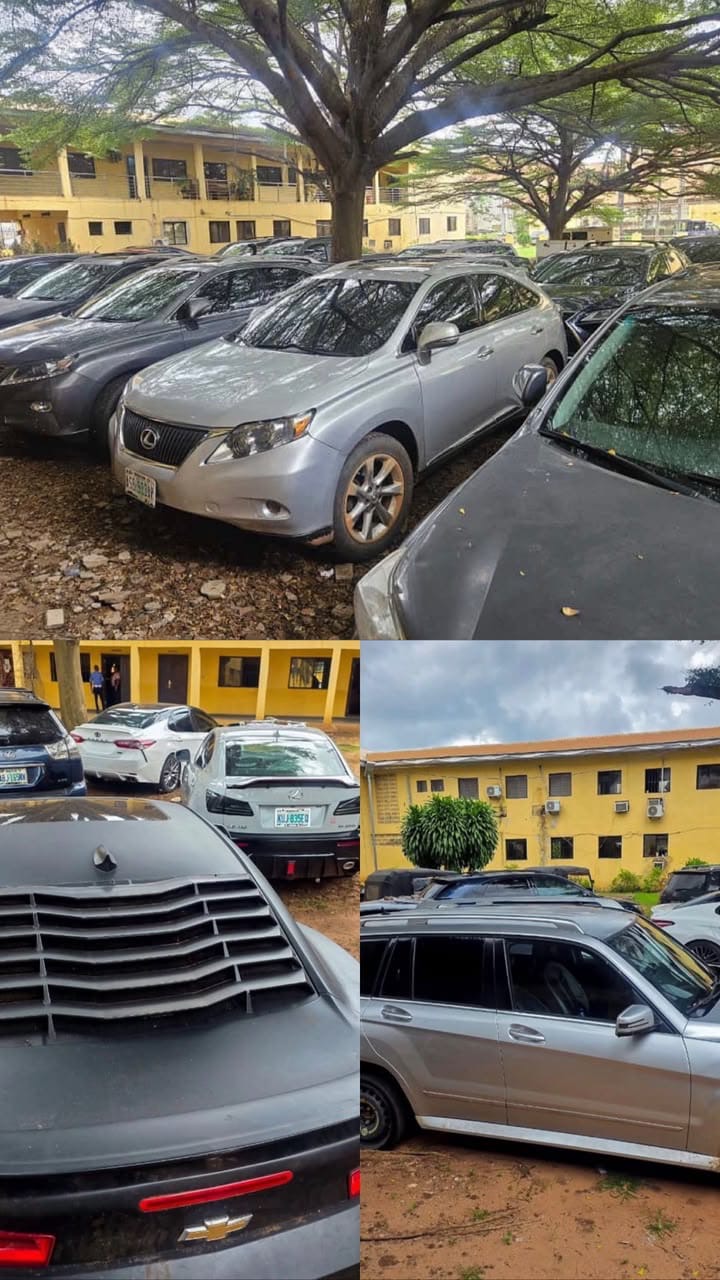
The Delta State Police Command has impounded 21 vehicles in Abraka in a crackdown on documentation offences and suspected proceeds of crime following an intelligence-led raid.
The operation, carried out on Tuesday, 21st July 2026 at about 1500 hours, was led by the Deputy Commissioner of Police, Department of Operations.
The vehicles include a silver Mercedes-Benz, a black Chevrolet Camaro, a Toyota Camry, a Lexus SUV, and a blue tricycle with number plate “26 433.” Other private cars were also among those seized.
The Commissioner of Police, C.P Yemi Oyeniyi said the operation targeted vehicles with incomplete documents, unregistered cars, and those suspected to be linked to cybercrime.
Officers also checked for illegal tint and other traffic offences.
Abraka is home to Delta State University. The town has seen more police patrols in 2026 due to high student and business activity and growing concerns over crime.
The Delta Command said it will continue intelligence-led patrols on campuses, in markets, and on major roads to improve security and enforce traffic laws.
Mr Stanley,a commercial driver in Abraka,said:
“The police are just doing their job, but we need clearer information on how to collect our vehicles.”
As of press time,Police Public Relations Officer, Delta State Command, SP Bright Edafe, has not released details on arrests or the procedure for vehicle recovery.
Residents have been advised to ensure they have valid vehicle papers, insurance, and tint permits to avoid being affected in future operations.
-
 Education3 weeks ago
Breaking: DELSU Postpones Second Semester Examinations. See New Date
-
 Education4 weeks ago
DELSU Announces Admission Into New Diploma Programmes For 2026/2027 Academic Session
-
 Views Point1 month ago
OPINION: Agriculture, Nigeria’s Fading Goldmine
-

 Abraka Metro1 month ago
Experts Urge Students To Embrace AI With Open Hearts
-

 Education1 week ago
Breaking: DELSU Bans “Sign Out” Parties, Threatens 2-Semester Rustication For Violators
-

 Education1 month ago
28-Years-Old Man Swindles JUPEB Students, Diverts N15 Million School Fees
-

 Entertainment1 month ago
World Cup 2026: US-Iran Tensions, Local Travel Hurdles, Global Friction Shape Fan Atmosphere
-
 Education2 weeks ago
DELSU Begins Postgraduate Admission for 2026/2027 Academic Session
-
 Abraka Metro2 months ago
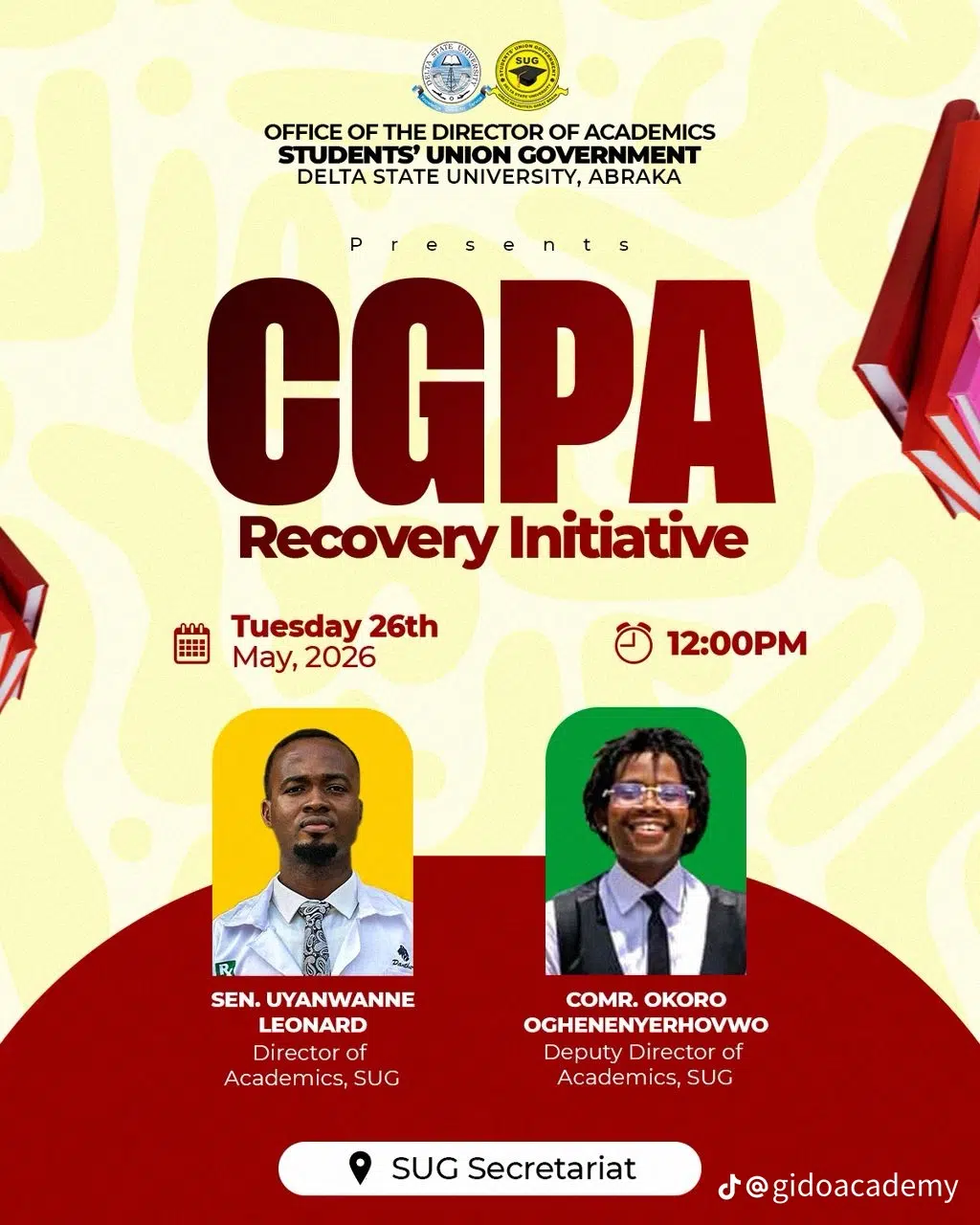
DELSU SUG Tackles Academic Decline with ‘CGPA Recovery Initiative’ for Junior Students
-
 Abraka Metro1 month ago
Rising House Rents Put Pressure on DELSU Students in Abraka
-

 Abraka Metro2 weeks ago
Elozino Ogege: Lecturers React As Court Sentences Killers Of DELSU First-Class Student To Death
-
 Education1 month ago
Challenges Persist at DELSU Agricultural Farm Despite Student Training
-

 Education1 month ago
DELSU-SUG Begins Week-Long Celebration, Targets Campus Inclusiveness
-

 Trending News1 month ago
Abraka Residents Advocate Entrepreneurship, Warn Against Gambling Amid Economic Hardship
-
 Education2 months ago
DELSU: Pharmacy Students Embrace Mentorship, Recreational Programmes to Combat Mental Health Challenges


