Views Point
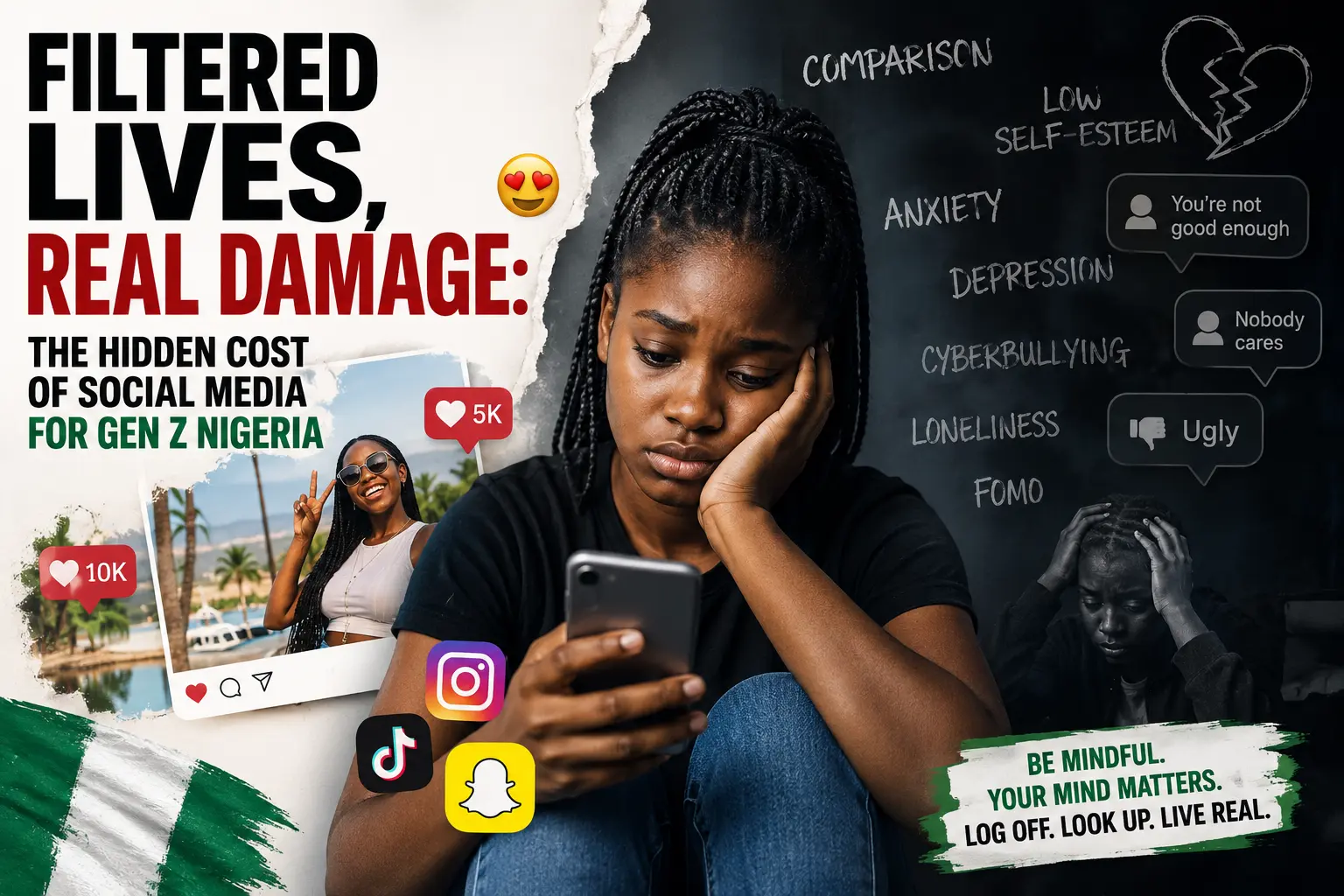
Filtered Lives, Real Damage: The Hidden Cost of Social Media For Gen Z Nigeria

You wake up, roll over, and before your feet even touch the floor, you’re already behind.
For many of Nigeria’s Gen Z, social media is no longer just an app—it has become the mirror through which they judge themselves. Open Instagram, TikTok, or Snapchat, and the script is almost always the same: flawless skin, the latest iPhones, luxury vacations, and the ever-popular “soft life” in Lagos. Everyone appears richer, happier, and more confident.
But behind the filters, carefully edited photos, and trending videos, a quieter reality is unfolding. There is the anxiety that creeps in before bedtime, the fleeting validation that disappears after a few likes, the cyberbullying hidden in direct messages, and the constant pressure to measure up to the lives displayed online. For many Nigerian youths, social media has evolved from a source of entertainment into a comparison trap where unrealistic lifestyles are celebrated and, in many cases, fabricated.
The Glass-Screen Mirror
Social media has become a new kind of mirror for Generation Z. Unlike a glass mirror, which simply reflects reality, this one is made of screens. It does not show people as they are; instead, it projects who they believe they should be. It creates unrealistic expectations of beauty, success, wealth, and popularity, leaving many users feeling inadequate.
Several students shared how social media has affected their self-esteem.
“I used to delete posts if they didn’t get up to 100 likes within minutes,” says Precious, a 21-year-old Mass Communication student at Delta State University (DELSU). “It felt like if people weren’t reacting to my posts, then my life wasn’t significant or interesting enough.”
Many students become attracted to the glamorous “soft life” lifestyle and gradually lose focus on their academic goals. Across Nigerian campuses such as Delta State University (DELSU), Abraka, and the University of Lagos (UNILAG), students scroll through feeds filled with peers displaying expensive cars, luxury vacations to Dubai, designer fashion, and carefully curated “soft life” or “baby girl” aesthetics.
Slowly, they begin to believe their own lives are not exciting enough.
A filter may smooth the skin, but it cannot smooth the emotional cracks it leaves behind. Increasingly, many Gen Z users have come to believe that perfection is a performance and that self-worth can be measured by likes, comments, views, and followers—numbers they cannot fully control. Friendships and relationships are also being shaped by online validation. Social media platforms promise connection, but they often deliver pressure, insecurity, and emotional exhaustion instead.
“We see students coming in with anxiety, sleep difficulties, and low self-esteem. In many cases, these problems can be traced back to the constant comparison with what they see online. They think everyone else is doing better than they are or has life figured out. They begin to question their own worth.”
The desire to “belong” pushes many young people to purchase expensive items they cannot afford simply to impress their online followers. When the expected validation fails to come, disappointment can quickly develop into stress, anxiety, or even depression.
Not All Damage
Despite its negative effects, social media is not entirely harmful. It remains a powerful tool for education, creativity, entrepreneurship, networking, and communication. Many young Nigerians have successfully built careers, businesses, and personal brands through digital platforms.
The difference lies in how the platforms are used.
Following educational and inspiring content, limiting exposure to comparison-driven accounts, separating online identity from self-worth, and intentionally taking breaks from social media can significantly improve mental well-being. Building genuine friendships, engaging in offline activities, and spending time with family and community are equally important.
The Truth Behind the Filter
Social media can be both a tool and a trap. It has the power to connect people, but it also encourages unhealthy comparisons.
For Nigeria’s Generation Z, one truth remains clear: not everything seen online is real. Most social media posts present carefully selected moments rather than complete realities. Behind the glamour often lies imperfection, struggle, and uncertainty.
Perhaps the greatest reminder for young people today is this: perfection is an illusion. Authenticity is far more valuable than appearances, and imperfection is not failure—it is simply part of being human.







Trending News
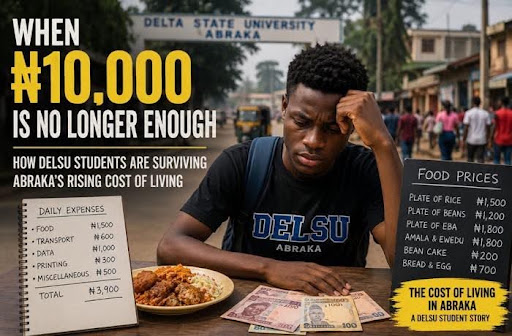
When ₦10,000 Is No Longer Enough: How DELSU Students Are Surviving Abraka’s Rising Cost of Living

By Faith Omafuakpore
For students who rely on monthly allowances from parents and guardians, budgeting has become less about saving and more about survival.
On paper, ₦10,000 may still seem like a reasonable amount of money. In reality, however, it disappears almost as quickly as it arrives.
For many students of Delta State University (DELSU), ₦10,000 was once enough to comfortably cover several days—or even a week—of living expenses in Abraka. In 2026, that same amount barely stretches as far as it once did.
With rising food prices, increasing transportation costs, soaring accommodation fees, and the general increase in the cost of living, students are constantly forced to make difficult financial decisions. The question is no longer how to spend money wisely, but how to make limited funds last.
Across Abraka, inflation has transformed student life.
Meals that sold for between ₦500 and ₦700 just a year ago now cost between ₦1,200 and ₦2,000, depending on the location, portion size, and type of meal. Everyday essentials—from toiletries to cooking ingredients—have also become significantly more expensive.
“When people hear ₦10,000, they think it’s a lot,” says Edith, a second-year Anatomy student.
“But after buying food and data, you hardly have anything left.”
Her experience reflects the reality of many DELSU students whose allowances can no longer keep pace with rising prices.
Despite its reduced value, ₦10,000 can still meet some basic student needs.
It can provide approximately five to seven modest meals at student-friendly restaurants, provided no extra drinks or side dishes are added. For students who cook, the amount can purchase basic groceries such as rice, noodles, eggs, bread, sachet water, vegetables, and cooking ingredients that may last several days if carefully managed.
The money may also cover transportation between off-campus residences and lecture halls for a few days, internet subscriptions for academic work, photocopying lecture materials, and other minor academic expenses.
For students who budget carefully, every naira must serve a purpose.
The limitations become painfully obvious when larger expenses arise.
Accommodation remains one of the greatest financial burdens. Rent in many parts of Abraka has increased dramatically, with some single rooms now costing well above ₦150,000 per year. For many students, ₦10,000 represents only a small fraction of what is needed to secure housing.
The amount is also insufficient to make any meaningful contribution toward school fees, which vary across faculties and departments but generally amount to tens of thousands of naira each academic session.
Unexpected expenses—including medical emergencies, textbooks, laboratory materials, departmental dues, project costs, and practical fees—can consume far more than ₦10,000 in a single day.
As a result, what once seemed like a useful amount of money has become inadequate for meeting students’ growing financial needs.
The effects of inflation extend far beyond students’ wallets.
Financial pressure has changed the way many students live and study. Some now skip meals to save money, while others take on part-time jobs or run small businesses alongside their academic responsibilities. Many have reduced social activities, not by choice but by necessity.
Although these coping strategies help students survive, they often come at a cost. Balancing work with academic demands can reduce study time, increase fatigue, and negatively affect academic performance.
By the end of many weeks, students find themselves borrowing money from friends or calling home for additional financial support.
“I now write down every expense,” says Maureen, a final-year Mass Communication student.
“If I don’t plan my spending, the money is gone before I even realize it.”
Her experience illustrates how budgeting has become an essential survival skill rather than simply a financial habit.
Faced with rising living costs, DELSU students have developed practical strategies to stretch every naira.
Many now prepare their own meals instead of eating at restaurants, purchase food items in bulk, share accommodation with roommates, and maintain strict weekly budgets. Others walk considerable distances instead of paying for transportation, choosing to endure long treks in order to save money for more pressing needs.
Within student hostels, conversations are increasingly centered on survival tips—from identifying the most affordable food vendors to discovering where groceries can be bought at lower prices. Information about discounts and cheaper alternatives is exchanged almost as frequently as lecture notes.
These strategies may not eliminate the effects of inflation, but they demonstrate the resilience and resourcefulness of students determined to complete their education despite difficult economic conditions.
For today’s DELSU student, ₦10,000 can still provide meals, transportation, internet access, and a few essential daily necessities—but only for a limited time. It falls far short of covering major expenses such as accommodation, tuition, textbooks, or emergencies.
As the cost of living continues to rise, surviving in Abraka requires far more than money. It demands careful planning, financial discipline, resilience, and constant sacrifice.
The experiences of students reveal a broader concern about the affordability of higher education in Nigeria. When a significant portion of a student’s energy is devoted to worrying about the next meal, transportation fare, or rent payment, learning inevitably suffers.
As Abraka continues to evolve alongside Nigeria’s economic realities, one important question remains: How much more can students be expected to stretch before the struggle to survive begins to undermine the very education they came to pursue?

By Precious Bamidele
I had just resumed classes after being away for a little over a week. As expected, lectures had continued in my absence, and my classmates had accumulated pages of notes. By the time I attended my first class that morning, I felt overwhelmed by everything I believed I had missed.
Perhaps I should say it differently. There wasn’t actually an impossible amount of work waiting for me. What overwhelmed me was not the workload itself but the story I had already begun telling myself. Before I had even opened a notebook, I had convinced myself that the semester was a mountain too steep to climb.
After class, I admitted to one of my coursemates that I had no idea where to begin with one particular course. In my mind, it had already become a Herculean task. I expected sympathy—perhaps even confirmation that the course was notoriously difficult.
Instead, she smiled and simply said,
“You can do it now. It’s not that bulky.”
At first, I almost dismissed the comment. How could she possibly think it wasn’t bulky? Had we looked at the same course outline?
Yet those few words stayed with me for the rest of the day.
That evening, I opened the course material again, but this time with a different mindset. Instead of repeating the story of how impossible it seemed, I approached it with the quiet confidence borrowed from my friend’s words: “It’s not that bulky. I can do it.”
Hours later, I had completed the material. Twice. I remember pausing for a moment, almost amused by the irony. Wasn’t this the same course that had nearly brought me to tears that morning?
The material had not changed. The number of pages had not reduced. The lectures had not become easier. The only thing that had changed was the lens through which I viewed the task.
That experience forced me to think beyond my own study table. University campuses are curious places. Alongside knowledge, they often circulate fear.
Long before students enter an examination hall, they have already heard countless predictions of failure. Certain courses acquire terrifying reputations before students even open the first page of the recommended textbook. Conversations in lecture halls, cafeterias, hostels, and group chats are often filled with statements like: “Nobody passes that course.” “Even final-year students couldn’t understand it.” “Just pray to pass.”
These comments are usually made casually—sometimes even jokingly. Yet words have a remarkable way of becoming expectations, and expectations often shape performance.
Imagine if my friend’s response had been different that morning. Supposing she had said, “That course is terrible. Even senior colleagues warned us about it. Don’t expect to do well.”
Would I have studied that evening? Perhaps not. Perhaps my fear would have become larger than the task itself.
Perhaps I would have postponed reading—not because the course was impossible, but because someone else’s fear had quietly become my own.
That possibility reveals something important. Fear is often borrowed before it is experienced. Many of the anxieties we carry are not born from reality but inherited from the words, assumptions, and expectations of those around us.
This is why our words deserve more care than we often give them. Encouragement does not require dishonesty. It is not about pretending that challenges do not exist or suggesting that success comes without discipline, consistency, and hard work. Learning demands genuine effort, and no amount of positive thinking can replace preparation.
But there is an important difference between preparing someone for a challenge and persuading them that defeat is inevitable before they have even begun.
Every day, we unknowingly shape the realities of the people around us. A careless remark can deepen someone’s anxiety. A hopeful word can awaken courage they never knew they possessed.
Sometimes the greatest contribution we make to another person’s journey is not solving their problem but refusing to magnify their fear.
My experience reminded me that fear is contagious. But so is hope. It also confronted me with a deeply personal question:
What kind of atmosphere do my own words create? Am I the person who confirms people’s fears? Or am I the one who strengthens their courage? The words of the prophet Isaiah come to mind:
“Do not call conspiracy all that this people call conspiracy; neither fear what they fear, nor be in dread.” — Isaiah 8:12
The instruction is striking because it recognizes how easily fear spreads from one person to another. People can teach us to dread situations we have never encountered. They can persuade us that obstacles are larger than they truly are.
But we are not powerless in that process. We can also speak courage into uncertainty. We can replace panic with perspective. We can remind someone that what seems impossible today may simply require one faithful step at a time.
As for me, I hope never to become someone who confirms another person’s fears. I hope instead to be remembered as someone whose words gave another person enough courage to begin. Because sometimes, that is all anyone really needs. A single sentence. A different perspective. A borrowed hope. “You can do it. It’s not that bulky.”

By Bamidele Funmi Precious
A text message goes unanswered. A friend disappears without explanation. A family member cuts off communication after a disagreement. Someone publicly humiliates another person, then defends the act with a familiar refrain: “I don’t owe anybody anything.”
Once dismissed as a casual expression of indifference, the phrase has quietly evolved into a cultural mantra. It echoes through social media posts, relationship advice, podcasts, and everyday conversations, often celebrated as the language of freedom, self-care, and emotional independence.
But beneath its confident tone lies a troubling question: When did freedom become the right to abandon responsibility?
People are rightly encouraged to protect their peace, establish healthy boundaries, and prioritize their well-being. Much of this advice is both necessary and beneficial. Healthy boundaries are not signs of selfishness; they are essential for emotional and psychological health.
Yet somewhere along the way, the conversation shifted.
The language of boundaries began to shelter something entirely different—the belief that personal freedom removes every obligation to the people around us. Independence gradually became confused with exemption from responsibility.
To say that we owe one another something is not to argue for entitlement. Entitlement demands what has not been earned and often expects more than justice requires. Moral obligation is different. It asks only for the minimum standards that make genuine human relationships possible.
The distinction matters because relationships do not survive on affection alone. They endure through responsibility.
The moment two lives intersect—as friends, siblings, neighbours, classmates, colleagues, or partners—a quiet moral expectation comes into existence. It is neither ownership nor control. It is simply the responsibility to treat another human being with dignity.
That responsibility is expressed through ordinary acts that rarely make headlines but quietly shape everyday life: telling the truth even when it is uncomfortable; listening before making accusations; choosing words that heal rather than wound; acknowledging the impact of our actions instead of dismissing them.
Without these simple obligations, relationships become transactions sustained only by convenience rather than commitment.
Perhaps this explains why the declaration, “I don’t owe anybody anything,” is more dangerous than it first appears.
When people genuinely believe they owe nothing, apologies become optional. Explanations become unnecessary. Others are wounded, yet their pain is dismissed under the banner of “protecting my peace.”
What is often presented as confidence may, in reality, be moral withdrawal.
Freedom has never meant the absence of responsibility. Every civilized society is built upon duties that individuals owe one another—not because they are forced to fulfill them, but because our shared humanity demands it.
Respect is owed.
Honesty is owed.
Fairness is owed.
The willingness to hear another person’s story before passing judgment is owed.
These are not extravagant demands. They are the basic ethics of coexistence.
This understanding is hardly new. The Apostle Paul captured it with remarkable clarity when he wrote, “Owe no one anything, except to love one another.” Rather than denying obligation, the statement elevates love as the highest responsibility from which every other moral duty naturally flows.
Similarly, C. S. Lewis observed:
“Do not waste time bothering whether you ‘love’ your neighbour; act as if you did.”
His insight reminds us that our humanity is measured less by what we feel than by how we choose to behave.
Modern culture often celebrates radical independence as the highest form of personal growth. Yet the healthiest communities have never been built by individuals who believed they owed nobody anything. They have always been built by people who understood that freedom and responsibility are not opposing forces but inseparable companions.
Perhaps, then, the true measure of maturity is not how little we owe others, but how faithfully we honour the responsibilities that accompany every meaningful relationship.
No, you may not owe another person perfection.
You may not owe them unlimited access to your life.
You may not owe them agreement in every disagreement.
But if you choose to call someone your friend, your neighbour, your colleague, or your family, you owe them something far more fundamental.
You owe them your humanity.
And that has never been too much to ask.
-
 Views Point3 weeks ago
OPINION: Agriculture, Nigeria’s Fading Goldmine
-

 Abraka Metro3 weeks ago
Experts Urge Students To Embrace AI With Open Hearts
-
 Education1 week ago
DELSU Announces Admission Into New Diploma Programmes For 2026/2027 Academic Session
-

 Education3 weeks ago
28-Years-Old Man Swindles JUPEB Students, Diverts N15 Million School Fees
-

 Entertainment2 weeks ago
World Cup 2026: US-Iran Tensions, Local Travel Hurdles, Global Friction Shape Fan Atmosphere
-
 Abraka Metro4 weeks ago
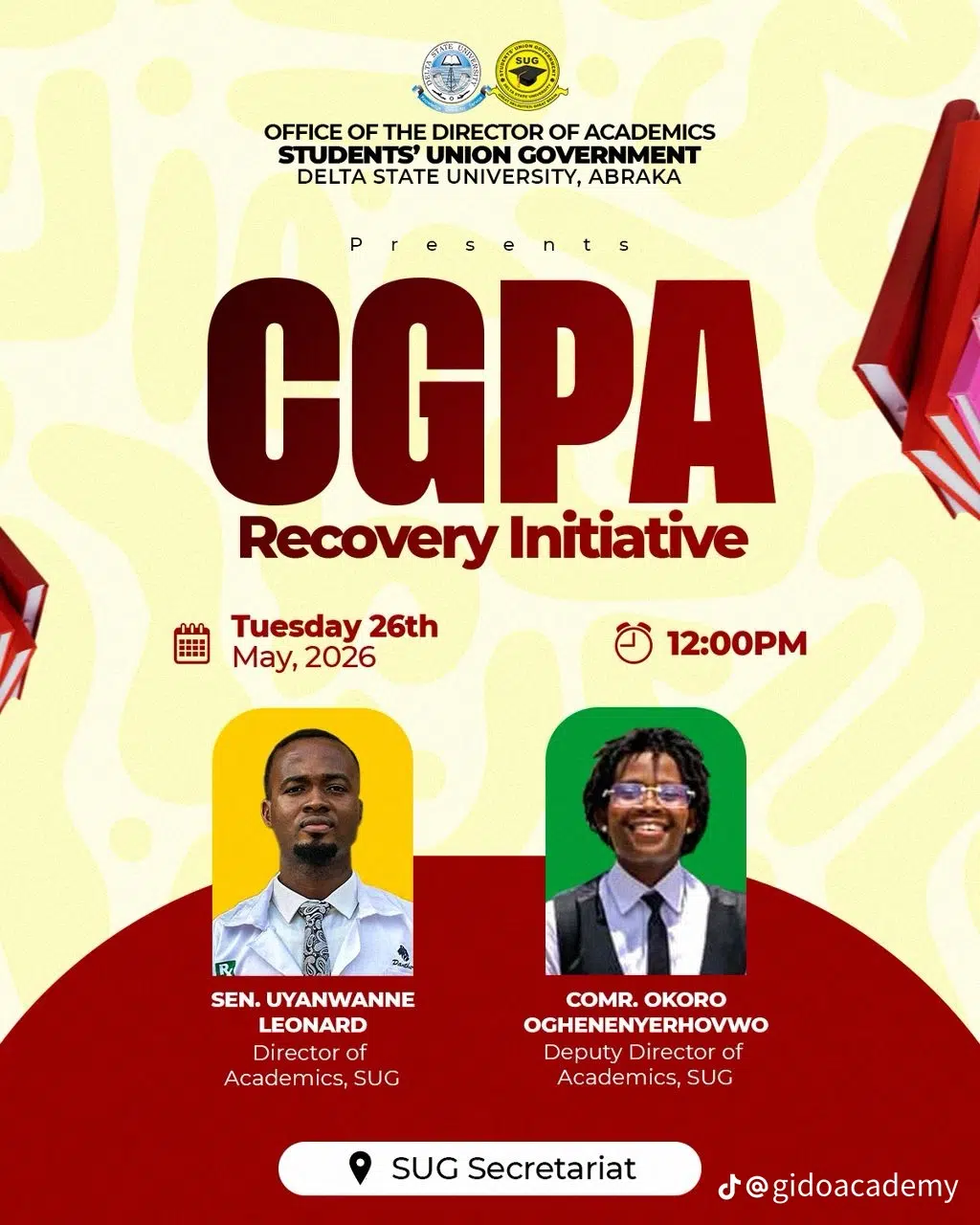
DELSU SUG Tackles Academic Decline with ‘CGPA Recovery Initiative’ for Junior Students
-
 Abraka Metro2 weeks ago
Rising House Rents Put Pressure on DELSU Students in Abraka
-
 Education2 weeks ago
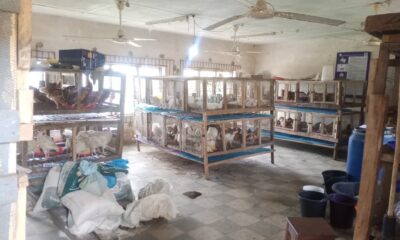
Challenges Persist at DELSU Agricultural Farm Despite Student Training
-

 Education2 weeks ago
DELSU-SUG Begins Week-Long Celebration, Targets Campus Inclusiveness
-
 Education4 weeks ago
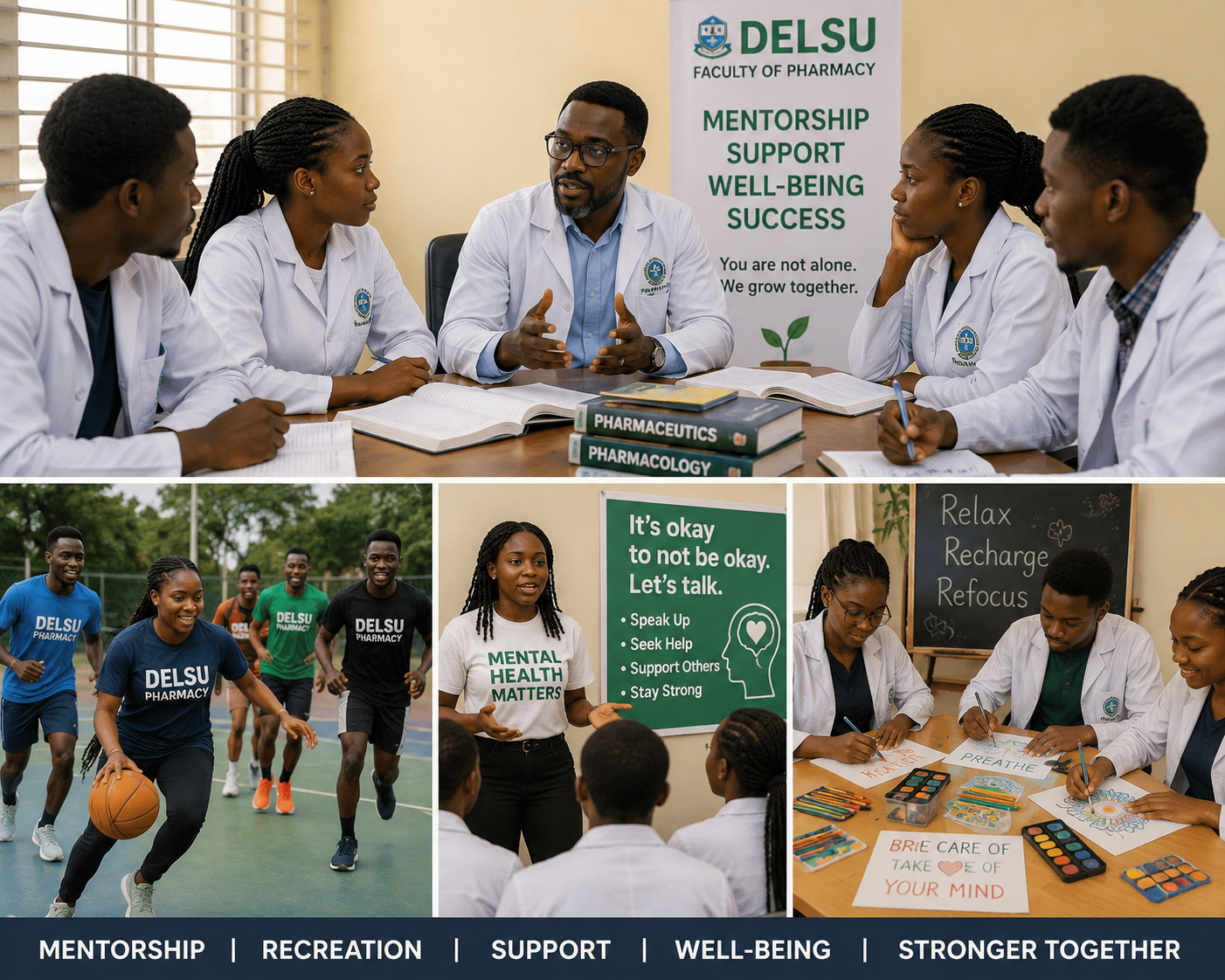
DELSU: Pharmacy Students Embrace Mentorship, Recreational Programmes to Combat Mental Health Challenges
-
 Abraka Metro4 weeks ago
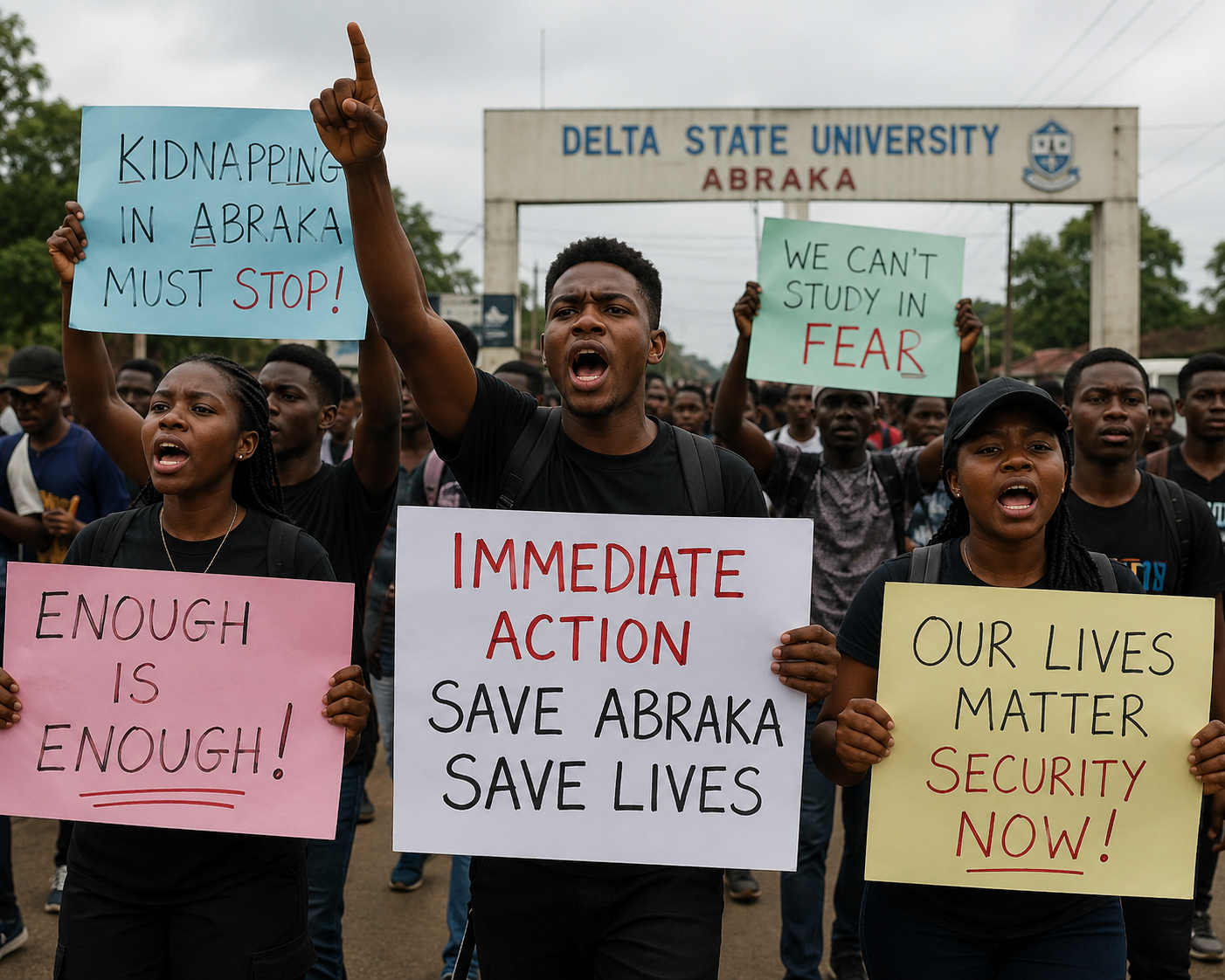
Students demand Immediate Action As Kidnapping Spree Returns In Abraka
-

 Trending News1 week ago
Abraka Residents Advocate Entrepreneurship, Warn Against Gambling Amid Economic Hardship
-

 Abraka Metro3 weeks ago
DELSU-SUG Moves To Tame Growing Social Vices On Campus
-
 Abraka Metro4 weeks ago
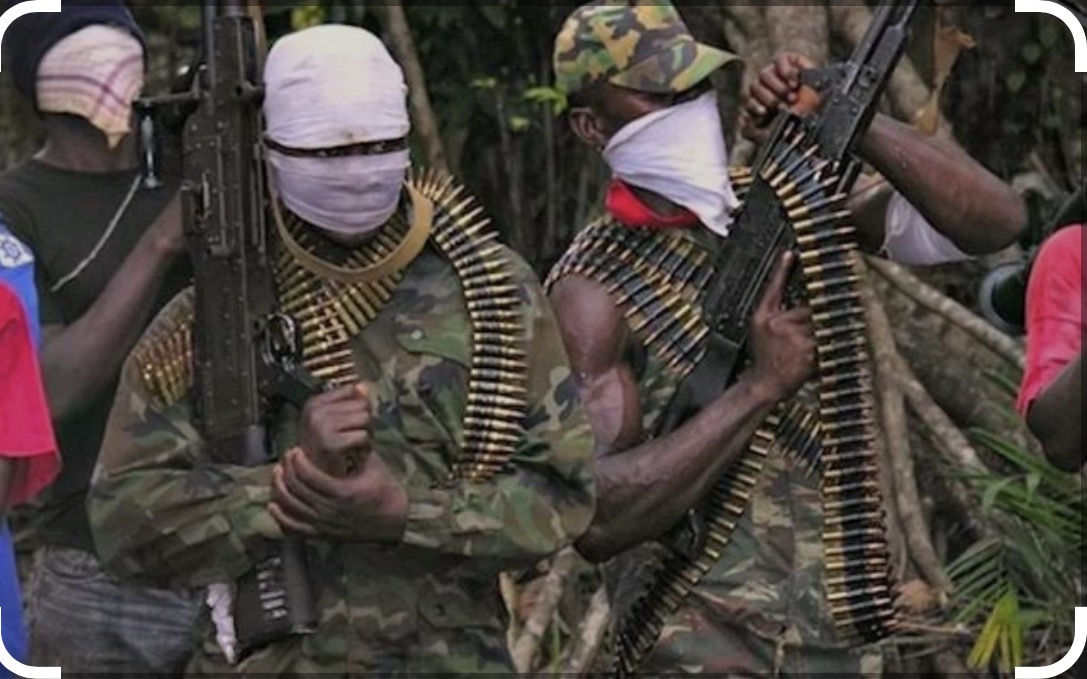
Students Express Worries Over Worsening Insecurity Ahead Of 2027 Polls
-
 Abraka Metro3 weeks ago
Fiber Optic Installation Begins At DELSU Site 2 As Students Seek Improved Service


