Education
When School Stops Being Enough: The Struggle of Nigerian Graduates in a Tough Labour Market

By Blessing Obodo
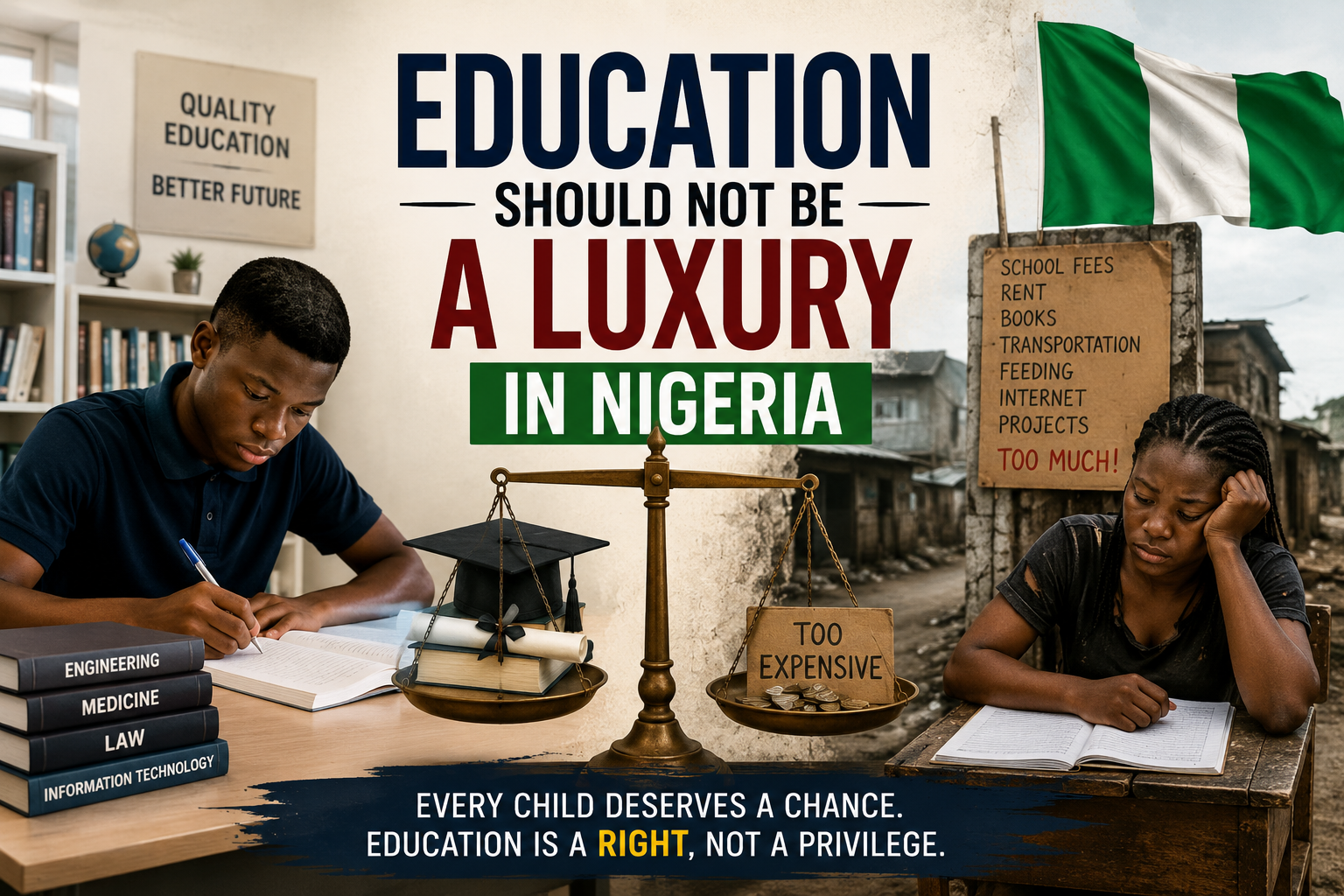
For years, the message to Nigerian children was straightforward: go to school, study hard, obtain a university degree and get a good job. It was a promise built into the Nigerian dream. But for a growing generation of graduates, that promise has become increasingly difficult to fulfil.
Across the country, young men and women leave universities and other tertiary institutions carrying certificates that represent years of study, sacrifice and family investment. Yet, instead of walking into stable employment, many find themselves confronting a labour market with limited opportunities and intense competition.
Some spend months or years searching for jobs. Others accept positions unrelated to their qualifications. Some work for salaries that barely cover transportation and feeding expenses. Others turn to entrepreneurship, freelancing, digital work or migration.
The problem is not that Nigerian graduates lack ambition. It is that the economy does not consistently create enough decent employment opportunities for the growing number of people entering the labour market.
This creates a painful paradox. Nigeria has millions of educated young people, but education alone does not guarantee economic security.
Employers increasingly demand practical experience, digital skills, communication abilities, analytical competence and other skills that may not have been adequately developed in the classroom.
This has produced a growing emphasis on employability. A graduate may have a degree in a particular discipline but still need additional training in data analysis, digital marketing, coding, graphics, project management, content creation or other areas before becoming competitive.
The problem is that acquiring these skills often costs money. For a young person who is unemployed, paying for professional certifications and specialised training can be difficult.
Then comes the demand for experience. Many employers ask applicants for years of experience even for entry-level positions. The graduate is therefore trapped in a familiar question: how does one obtain experience without first getting an opportunity?
Internships can help, but unpaid or poorly paid internships may be inaccessible to young people who cannot afford transportation, accommodation and daily expenses.
The situation has also changed the meaning of entrepreneurship. Entrepreneurship is often presented as the solution to unemployment, but starting a business requires capital, infrastructure, reliable electricity, markets and supportive policies.
Not every graduate can become an entrepreneur simply because there are not enough jobs. The growing popularity of migration reflects the depth of the problem. Many young Nigerians believe that their qualifications will provide better opportunities abroad. The “japa” phenomenon is therefore not simply about a desire to travel. For some, it represents an attempt to escape an economic system they believe offers limited prospects.
Yet migration also carries consequences. Families lose young professionals, businesses lose skilled workers and institutions lose experienced personnel. In sectors such as healthcare, education and technology, the loss of skilled manpower can have long-term implications.
The solution requires more than expanding university enrolment. Nigeria needs an education system that is better connected to the needs of the economy. Universities should strengthen practical learning, industry partnerships, internships, entrepreneurship programmes and digital skills. Employers, government agencies and educational institutions must collaborate to create clearer pathways from school to work.
There is also an urgent need to expand productive industries. A country cannot educate millions of young people without simultaneously creating opportunities for them to contribute meaningfully to the economy.
Manufacturing, agriculture, technology, creative industries, renewable energy and other sectors can absorb significant numbers of young people if properly supported. The private sector has an important role, but government must provide the infrastructure and policy environment that enables businesses to grow.
Ultimately, the goal should not simply be to produce graduates. It should be to produce graduates who can find meaningful opportunities to apply what they have learned. Education remains one of the most powerful tools for social mobility. But education cannot carry the entire weight of economic development.
For today’s Nigerian graduate, a certificate may open the door, but increasingly, additional skills, networks, experience and sheer persistence are required to walk through it. The challenge for Nigeria is to ensure that young people’s dreams do not end at the university gate. A generation should not spend its formative years preparing for a future that never arrives.




By Ese Umukoro
Delta State University (DELSU), Abraka, has inducted its 14th set of professional teachers.
In his speech during the induction ceremony which took place recently at the 750 Lecture Theatre A, Site III, the Vice-Chancellor of DELSU, Prof. Samuel Asagba, charged the inductees to be truly professional in the discharge of their duties as teachers.
Represented by the Deputy Vice Chancellor (Administration), Prof. Edmund Atakpo, the VC also advised the inductees to be ambassadors of ethics, integrity, and the right attitude as they approach the work space.
He equally admonished them to embrace digital technologies as the present day students are digital natives who are smart.
READ ALSO: ‘No Increase in School Fees Schedule’, DELSU SUG Assures Students
Asagba encouraged the new inductees to carry themselves in high esteem and serve humanity dutifully.
Earlier in her speech, the Dean of Faculty of Education in the institution, Prof. Florence Ugoji, had welcomed guests at the ceremony and informed the inductees that they were the vanguards of the nation’s education who would shape minds and influence destinies, urging them to teach with diligence and integrity.
The Dean further told the new teachers to carry the spirit of excellence and make their students believe in their dreams.
She appreciated parents of the inductees for their sacrifices and the university management for its role in the training of the new teachers.
Ugoji, who recently delivered the 123rd in the series of DELSU inaugural lectures, informed the inductees that their Teachers Registration Council of Nigeria’s (TRCN) license was a public trust that they would teach with integrity and professionalism.
On her part, the Registrar and Chief Executive of the TRCN, Dr Ronke Soyombo, congratulated the inductees and charged them to be good teachers who will make their subjects easy for their students.
Represented by Mr. Nsima Edet, the TRCN Director of Public and Private Partnership, appreciated DELSU management for sustaining the professionalisation of its graduate teachers.
She told the inductees that teaching was not just a job but a national assignment as the Federal Government (FG) has placed the professionalisation of teachers at the centre of its education policy.
The Registrar challenged the new inductees to embrace digital technologies which has become part of their teaching environment.
Soyombo thereafter administered the oath taking and inducted the new graduate teachers.
Other dignitaries present at the event included the Deputy Vice Chancellor (Academic), Prof. Hilary Owamah, Deputy Vice Chancellor (Research and Innovation), Prof. Douglasson Omotor, represented by the Director of Research and Innovation, Prof. Anthony Ojieh, DELSU Registrar, Mrs Rufina Ufiofio, represented by Mrs Peace Irogbo, DELSU Bursar, Mrs Otimeyin Ekakitie-Omajuwa, represented by Mr. Martins Denedo, University Librarian, Dr. Josephine Onohwakpor, Dean of DELSU Postgraduate School, Prof. Christian Ewhrudjakpor, Dean of Faculty of the Social Sciences, Prof. Sam Ogege, Director, Ceremonials, Information and Public Relations (CIPR), Prof. Enajite Ojaruega, represented by the Deputy Director, CIPR, Dr. Ese Umukoro, Associate Dean, Faculty of Education, Prof. Eric Oghonu, DELSU Public Relations Officer (PRO), Mr. Henry Eseka, staff and students of the Faculty of Education.
Others were the State Coordinator of TRCN, Mrs. Paulina Adjarho, Education Officer of TRCN, Mr. John Ukah, Faculty of Education representative to TRCN, Dr. Patience Okoro, Faculty of Education Officer, Mr. Frank Ineneji, the inductees, family and friends of the inductees.
In a public noticed obtained by Media Conversation, the university said the initiative is designed to provide an alternative pathway for candidates seeking admission into their courses of choice without waiting endlessly for JAMB.

By David Amogbokpa
The Students Union Government (SUG) of Delta State University, Abraka, has assured students that there will be no increase in the approved school fees following a meeting with the university management on Tuesday, November 3, 2026.
In a new statement released after the meeting, the SUG urged students to disregard rumours suggesting an increase in school fees, assuring them that the approved fees remain unchanged.
The union also announced that students can now apply for university accommodation without necessarily paying their school fees first, although room allocation will remain competitive.
Debunking the the rumours about the 70% school fees payments, they further clarified that the former 70/30 payment arrangement has been discontinued, but students who cannot afford to pay in the first semester will still be allowed to pay in the second semester and sit for their first semester examinations.
READ ALSO: DELSU VC Urges Parents To Supervise Adolescent Children as Ugoji Delivers 123rd Inaugural Lecture
Other resolutions include the introduction of a wallet feature on the student portal to help students save gradually towards their school fees.
The management also assured that students applying for the Nigerian Education Loan Fund (NELFUND) will be allowed to write their examinations without discrimination.
The SUG called on students to remain calm and rely on official information rather than unverified reports.
The situation started when students reportedly logged into their portals and discovered an additional mandatory fee of ₦13,300, alongside an increase in their school fees. The development has left many students worried about how to cope with the new charges, especially with the current economic situation in the country.
By David Amogbokpa
Students of Delta State University (DELSU), Abraka, have expressed concerns following an alleged increase in school fees, which has caused tension among students across the university.
The situation started when students reportedly logged into their portals and discovered an additional mandatory fee of ₦13,300, alongside an increase in their school fees. The development has left many students worried about how to cope with the new charges, especially with the current economic situation in the country.
Following the complaints from students, the Students’ Union Government (SUG) held a meeting with its executives, faculty presidents, and departmental presidents at 12 pm to discuss the issue.
After the meeting, the SUG released a statement explaining that some errors had been noticed in the school fees breakdown, including repeated charges for matriculation and other fees. The union also said it had taken the complaints to the school management for review and correction.
READ ALSO: DELSU SUG Demands Immediate Release Of Arrested Students, Warns Of Peaceful Protest
The SUG further explained that the Faculty Journal Fee is meant only for newly admitted students and that any increase in departmental or faculty fees must be properly communicated through the union.
However, the school’s fee portals have now been locked, leaving students uncertain about the next step.
This has continued to generate complaints among students, many of whom believe the increase will make things more difficult for parents and guardians who are already struggling with the country’s economic situation.
The announcement was made in the university’s Official Bulletin, Volume XXXV, Number 89, dated Wednesday, October 21, 2026.
-
 Education4 months ago
Breaking: DELSU Postpones Second Semester Examinations. See New Date
-
 Education4 months ago
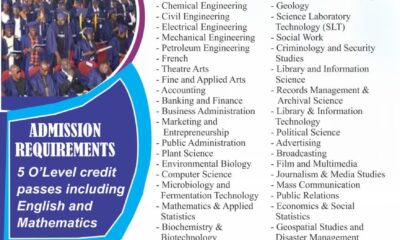
DELSU Announces Admission Into New Diploma Programmes For 2026/2027 Academic Session
-
 Views Point5 months ago
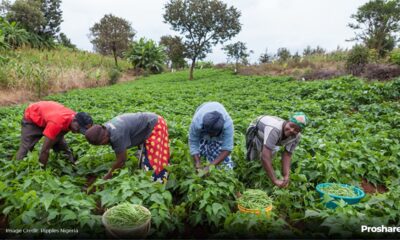
OPINION: Agriculture, Nigeria’s Fading Goldmine
-

 Abraka Metro5 months ago
Experts Urge Students To Embrace AI With Open Hearts
-

 Education4 months ago
Breaking: DELSU Bans “Sign Out” Parties, Threatens 2-Semester Rustication For Violators
-
 Education4 months ago
DELSU Begins Postgraduate Admission for 2026/2027 Academic Session
-

 Education5 months ago
28-Years-Old Man Swindles JUPEB Students, Diverts N15 Million School Fees
-

 Entertainment4 months ago
World Cup 2026: US-Iran Tensions, Local Travel Hurdles, Global Friction Shape Fan Atmosphere
-

 Education3 months ago
DELSU Exam Monitors Apprehend Student With Allegedly Stolen Phones, Wig
-
 Education4 months ago
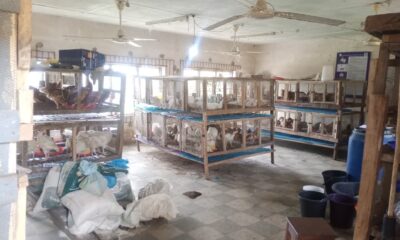
Challenges Persist at DELSU Agricultural Farm Despite Student Training
-

 Abraka Metro4 months ago
Rising Cost Of Living Forces Abraka Students To Adopt Survival Strategies
-
 Abraka Metro5 months ago
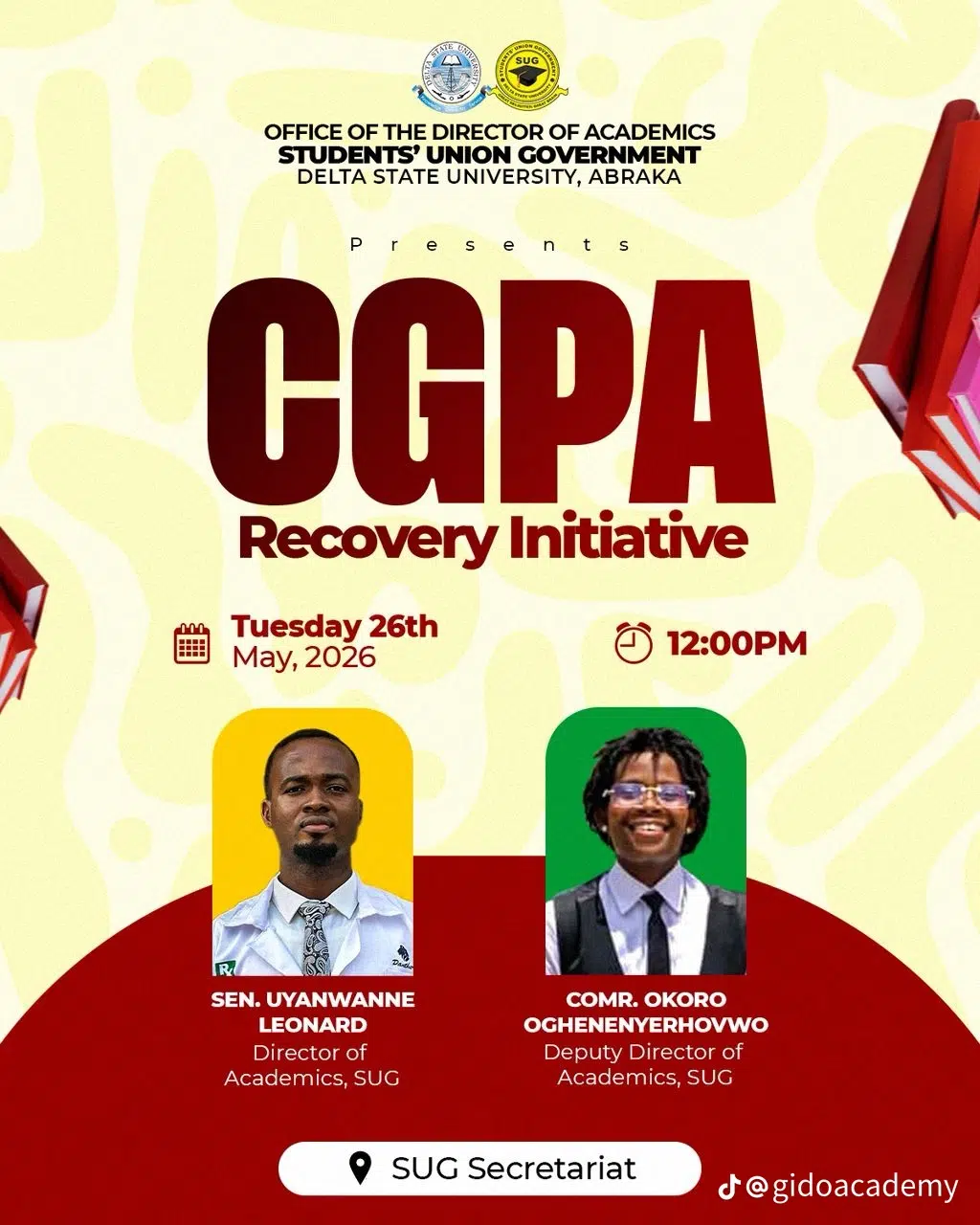
DELSU SUG Tackles Academic Decline with ‘CGPA Recovery Initiative’ for Junior Students
-
 Abraka Metro4 months ago
Rising House Rents Put Pressure on DELSU Students in Abraka
-

 Trending News4 months ago
Abraka Residents Advocate Entrepreneurship, Warn Against Gambling Amid Economic Hardship
-

 Abraka Metro4 months ago
Elozino Ogege: Lecturers React As Court Sentences Killers Of DELSU First-Class Student To Death


