
Abraka Metro
Traders, Consumers Decry Rising Cost Of Pepper, Tomatoes In Abraka

By Miracle Oghenekaro
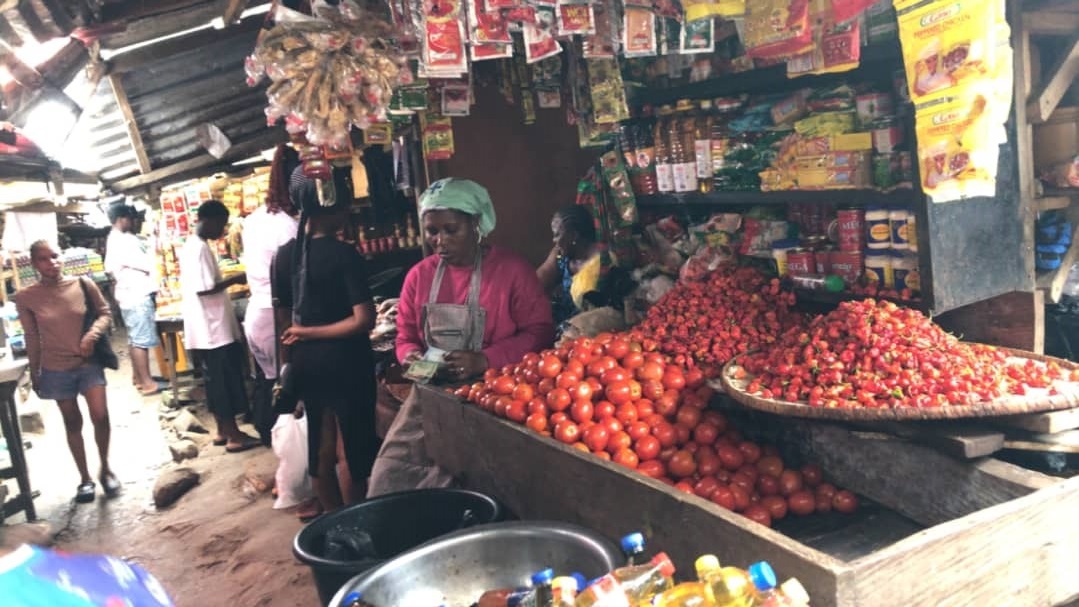
Fir many residents and students in Abraka, a visit to Abraka Main Market has become a frustrating and expensive experience.
The prices of pepper and tomatoes — two of the most essential ingredients in Nigerian cooking — have risen sharply in recent weeks, leaving both traders and consumers struggling to cope with the new reality.
Market women at Abraka Main Market have attributed the increases to a combination of factors, including fuel costs, rising transportation fares, seasonal scarcity, and the high cost of farming inputs in the north, where much of the produce is sourced.
Together, these pressures have pushed the cost of basic cooking ingredients far beyond what many Abraka residents can comfortably afford.
Mrs. Tracy Chovwe, a trader at the market, explained that a Hausa supplier who delivers tomatoes to her stall linked the spike directly to scarcity.
According to her, the supplier told her that farmers had just begun planting a new season’s crops, meaning the current supply on the market is limited.
“They just started planting new ones,” she said, adding that suppliers are managing what little stock remains by selling in small quantities rather than in bulk.
This rationing of supply, she explained, is a key reason prices have been driven upward.
The numbers tell a stark story. Mrs. Princess Jude, another trader, said a bag of pepper that once sold for ₦30,000 now goes for between ₦70,000 and ₦90,000 — more than double its former price.
She attributed part of the increase to seasonality, explaining that the pepper trade operates in cycles and that the variety currently available on the market is freshly harvested, which typically commands a higher price. Different types of pepper also carry different price points, she noted.
“Transportation is quite expensive,” she added, pointing to the long distance produce must travel from northern Nigeria to reach Abraka markets in Delta State.
Tomatoes have fared even worse than pepper. Mrs. Jude said a basket of tomatoes that previously cost ₦15,000 now sells for between ₦90,000 and ₦135,000 — nearly a ninefold increase that has left many buyers in disbelief.
She pointed to transportation as the single biggest driver of the tomato price surge, explaining that the cost of moving perishable goods across long distances has risen alongside fuel prices nationwide.
Mrs. Jennifer, another trader, placed much of the blame squarely on the rising cost of fuel. “Fuel is just too expensive,” she said.
“If fuel keeps increasing, the price of things will keep going up — not just tomatoes or pepper.” She painted a broader picture of the crisis, explaining that it does not begin at the market but at the farm level.
Farming inputs such as fertilisers, chemicals, and labour have all become more expensive, making it costlier to cultivate crops in the first place.
By the time the produce is harvested and loaded onto trucks headed south, the price has already begun climbing.
As the goods travel from the north toward Abraka, she said, the price increases gradually along the route, and the trucks finally arrive, some of the tomatoes are already spoiled, further shrinking the available supply and pushing prices even higher. A crate of pepper that once cost between ₦25,000 and ₦30,000 now sells for between ₦85,000 and ₦90,000, she said.
For consumers, the reality is hitting particularly hard. Sunday Success Oghale, a student who recently returned to Abraka for the new semester, said she was visibly shocked when she went to the market to buy pepper after resumption.
Initially convinced that a seller was trying to cheat her, she walked through the entire market comparing prices from stall to stall — only to confirm that the increases were consistent and real.
“Last semester, pepper and tomatoes was okay,” she said. “I did not believe that I would resume school to see they have increased price.”
Her experience reflects a wider frustration among students and low-income residents in Abraka, many of whom depend on affordable produce to manage their daily feeding costs.
The situation points to a deeper and more systemic problem. Nigeria’s food supply chain remains heavily dependent on long-distance transportation from northern farming communities to southern markets, making it extremely vulnerable to fuel price fluctuations.
When the cost of diesel rises, everything connected to it — from farm inputs to truck haulage — rises with it, and it is ordinary consumers at the end of the chain who feel it most.
Traders at Abraka Main Market warn that unless fuel prices stabilise and the new planting season produces a strong harvest, consumers and students in the Abraka community should brace themselves and expect little relief in the weeks ahead.






A former Vice-Chancellor of Delta State University, Abraka, Prof. Victor Peretomode, has proposed a tripartite governance model to sustain excellence in the institution.
Peretomode proposed the model at DELSU’s 12th valedictory lecture held on Thursday, September 24, 2026, at the university’s 750 Lecture Theatre, Site III.
The lecture was titled, “DELSU and the Burden of Expectation: The Challenges of Being Delta State’s Premier University and Rethinking Governance for Sustainable Excellence.”
He said as the state’s premier university, DELSU carries triple burdens — aspirational, political and operational — which translate into expectations such as expanding access to university education for Deltans, accommodating qualified indigenes, advancing state-specific development priorities and producing morally sound and employable graduates.
READ ALSO: DELSU Exam Monitors Apprehend Student With Allegedly Stolen Phones, Wig
Peretomode, a Professor of Educational Administration and Higher Education, said the challenges could be addressed through his proposed “Peretomode Tripartite Model of Governance for Sustainable Excellence,” anchored on three pillars: Leadership Integrity, Funding Predictability and Quality Assurance.
He observed that DELSU has come far, but its journey is far from complete, adding that the burden of expectation it carries is not a weight to be feared, but a responsibility to be fulfilled.
In his remarks, Governor Sheriff Oborevwori, Visitor to the university, described Peretomode as an academic who contributed immensely to the development of university education in the state.
Oborevwori, who was represented by the Commissioner for Higher Education, Prof. Nyerhovwo Tonukari, said the state would still need Peretomode’s wealth of experience as he bows out of service and assured of continued support for DELSU.
On his part, the Vice-Chancellor of DELSU, Prof. Samuel Asagba, lauded Peretomode’s achievements as former VC, noting that his policies, though considered harsh at the time, have placed the university in its present enviable state.
Asagba wished the valedictory lecturer the best in his future endeavours.
Highlights of the event included the launch of two books authored by the valedictory lecturer and a musical rendition by the Department of Music.
Peretomode joined DELSU in 1992 as Senior Lecturer in the Department of Educational Management and Foundations, became a Professor in 1996 and served as its 7th substantive Vice-Chancellor from 2014 to 2019.
The lecture was attended by the Vice-Chancellor of University of Delta, Agbor, Prof. Eric Eboh, Vice-Chancellor of Southern Delta University, Ozoro, Prof. Sunny Awhefeada, DELSU Deputy Vice-Chancellor (Administration), Prof. Edmund Atakpo, DELSU Deputy Vice Chancellor (Academic), Prof. Hilary Owamah, DELSU Deputy Vice-Chancellor (Research and Innovation), Prof. Douglasson Omotor, Deputy Vice-Chancellor, University of Delta, Agbor, Prof. Patrick Ijeh, Provost of Oleh Campus, Prof. Augustine Atonuje, DELSU Registrar, Mrs Rufina Ufiofio, DELSU Bursar, Mrs Otimeyin Ekakitie-Omajuwa, DELSU Librarian, Dr Josephine Onohwakpor, Provosts, Deans, Directors, staff and students of the university.
Also in attendance were the Rector of Delta State Polytechnic, Otefe-Oghara, Prof. Emmanuel Ufuophu-Biri, Rector, Delta State Marine Polytechnic, Burutu, Prof. Emmanuel Okoro, Delta business tycoon, Chief Tunde Smooth, Executive Director of Project, DESOPADEC, Chief (Dr) Ebenezer Okorodudu, former DELSU Governing Council Chairman, Prof. Sam Oyovbaire, former Dennis Osadebey University Governing Council Chairman, Prof. Robert Ikomi, members of DELSU College of Chaplains, friends and family members of the valedictory lecturer, including his wife, Dr (Mrs) Otaroghene Peretomode.
The release comes barely 24 hours after the state-owned institution released its first batch of admission for the incoming session.

By Ese Umukoro
The serene community of Delta State University (DELSU), Abraka was thrown into mourning on Friday, 28th August, 2026, as the remains of Late Prof. Emmanuel Oghenebrorien Akarah, popularly known as, Don Spino, was committed to mother earth.
Speaking during the commendation service at Atscan Hall, Site II of the University, the Vice Chancellor of DELSU, Prof. Samuel Asagba, lamented that he received the sad news of the demise of the deceased on 8th of May, 2026 as a rude shock.
Asagba recalled the personal memories he shared with Akarah as a friend, eulogising his forthrightness, outspokenness and doggedness.
He stated that Don Spino contributed his quota to the growth of the University in different capacities since he was employed into the services of DELSU, adding that his legacy would not be forgotten in the history of DELSU because of his impact on both staff and students.
The Vice Chancellor thereafter led the University community to observe a minute’s silence in honour of the deceased.
READ ALSO: Students Adjust To Portal Upgrade Under DELSU VC Administration
In his commendation earlier, the Head of Department of Human Kinetics, Recreation and Sports Science, Prof. Ochuko Nabofa, eulogised Don Spino, calling him a colleague, a friend, a scholarly collaborator and ultimately an in-law.
Nabofa recollected how himself and the late Don Spino shared ideas, challenged each other intellectually and worked together in the pursuit of knowledge.
Nabofa concluded that Don Spino’s death has left a void in the Department of Human Kinetics, Recreation and Sports Science, in DELSU and in the lives of those who knew him.
He said the bond was further strengthened when in February this year, Don Spino’s cousin, Hon. (Double Chief) Godday Ewenuvie, got married to his younger sister whom he raised as a daughter, thus making them in-laws.
In her oration, the Dean of Faculty of Education, Prof. Florence Ugorji, said Don Spino was a man of the people whose life impacted positively on all who came across him.
Represented by Prof. Canice Ikeorji, the Dean further lamented that the deceased was an asset to the faculty and prayed for the repose of his soul.
Chairman of the Academic Staff Union of Universities (ASUU-DELSU), Comrade Paul Opone, bemoaned the loss of Don Spino.
In his tributes, Opone recalled the contributions of Don Spino during congresses and how he fought for the Union during its period of crisis.
The union Chairman stated that the passing of Don Spino was a challenge to him and the Union as it would be difficult to get his replacement.
Opone thereafter led members of the Union in singing the solidarity song for a fallen comrade.
The commendation service also witnessed the filing past the casket of Don Spino led by the Vice Chancellor before the remains of Don Spino were taken to Uruekpo Quarters in Evwreni kingdom for interment.
Late Professor Emmanuel Oghenebrorien Akarah joined the services of DELSU in 1995 as Graduate Assistant and rose to the rank of Professor in 2021.
Earlier, a Service of Songs in his honour was held at the DELSU’s Sports Complex on Wednesday, 26th August, 2026.
Dignitaries present at the commendation service included the Vice Chancellor of DELSU, Professor Samuel Ogheneovo Asagba who was represented by the Deputy Vice Chancellor (Administration), Prof. Edmund Atakpo, the University Registrar, Mrs Rufina Ufiofio, represented by Mr Emmanuel Okoro, the University Librarian, Dr (Mrs) Josephine Onohwakpor, Director of Ceremonials, Information and Public Relations, Prof. Enajite Ojaruega, Chairman of ASUU-DELSU, Comrade Paul Opone, Deans of Faculties, Heads of Departments, the University Public Relations Officer, Mr Henry Eseka, family members of the deceased, Professors, staff, students, and others from within and outside the university community.
Those present during the funeral at Evwreni kingdom included the Vice Chancellor of Southern Delta University, Ozoro, Prof. Sunny Awhefeada, Deputy Vice Chancellor (Administration), Prof. Edmund Atakpo, immediate past Provost of Oleh campus, Prof. Elo Ibagere, Directors including the Director of Centre for Entrepreneurial Studies (CES), Prof. Onoriode Emoyan, Deans of Faculties including the Dean of Arts Faculty, Prof. Nelson Edewor, Heads of Departments, politicians, business moguls, friends, family members of Don Spino and other mourners.
By God’stime Oyeh
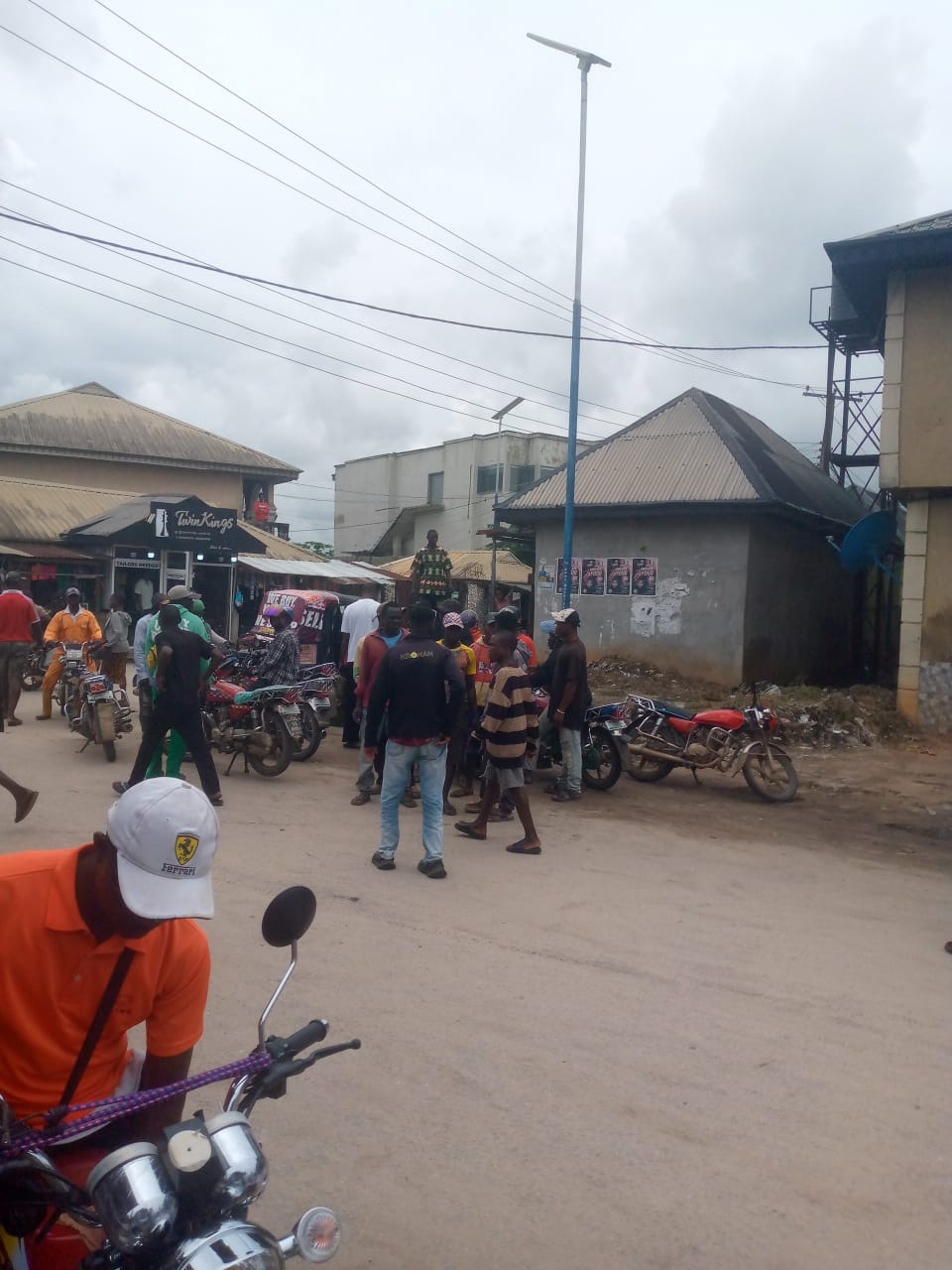
An accident involving a GLK 350 and a commercial motorcyclist happened around 11:30 a.m., reportedly after a case of wrong-lane driving.
According to eyewitnesses, the motorcyclist, popularly known as an “Aboki” bikeman, was coming from the Campus 2 area when he was allegedly hit by the GLK 350 car.
The little damage to the car caused some tension at the scene as both parties tried to explain what happened.
Eyewitnesses said the motorcyclist seemed to be at a disadvantage during the confrontation with the car driver- who was clearly trying to oppress the motorcyclist which led vigilantes and other bystanders to step in and calm things down before it got out of hand.
Things reportedly got more heated when some area boys arrived and tried to help settle the issue. The GLK 350 driver defended himself and shared his version of events, but some witnesses felt his explanation didn’t quite match what they saw happen.
As arguments continued and tempers rose,and with the car driver still wanting to oppress the motorcyclist, the Vigilantes took it upon themselves to caution him since he wasn’t trying to make peace…the matter was eventually taken to the police station for proper investigation and resolution.
-
 Education2 months ago
Breaking: DELSU Postpones Second Semester Examinations. See New Date
-
 Education3 months ago
DELSU Announces Admission Into New Diploma Programmes For 2026/2027 Academic Session
-
 Views Point3 months ago
OPINION: Agriculture, Nigeria’s Fading Goldmine
-

 Abraka Metro3 months ago
Experts Urge Students To Embrace AI With Open Hearts
-

 Education2 months ago
Breaking: DELSU Bans “Sign Out” Parties, Threatens 2-Semester Rustication For Violators
-
 Education3 months ago
28-Years-Old Man Swindles JUPEB Students, Diverts N15 Million School Fees
-
 Education2 months ago
DELSU Begins Postgraduate Admission for 2026/2027 Academic Session
-

 Entertainment3 months ago
World Cup 2026: US-Iran Tensions, Local Travel Hurdles, Global Friction Shape Fan Atmosphere
-
 Abraka Metro3 months ago
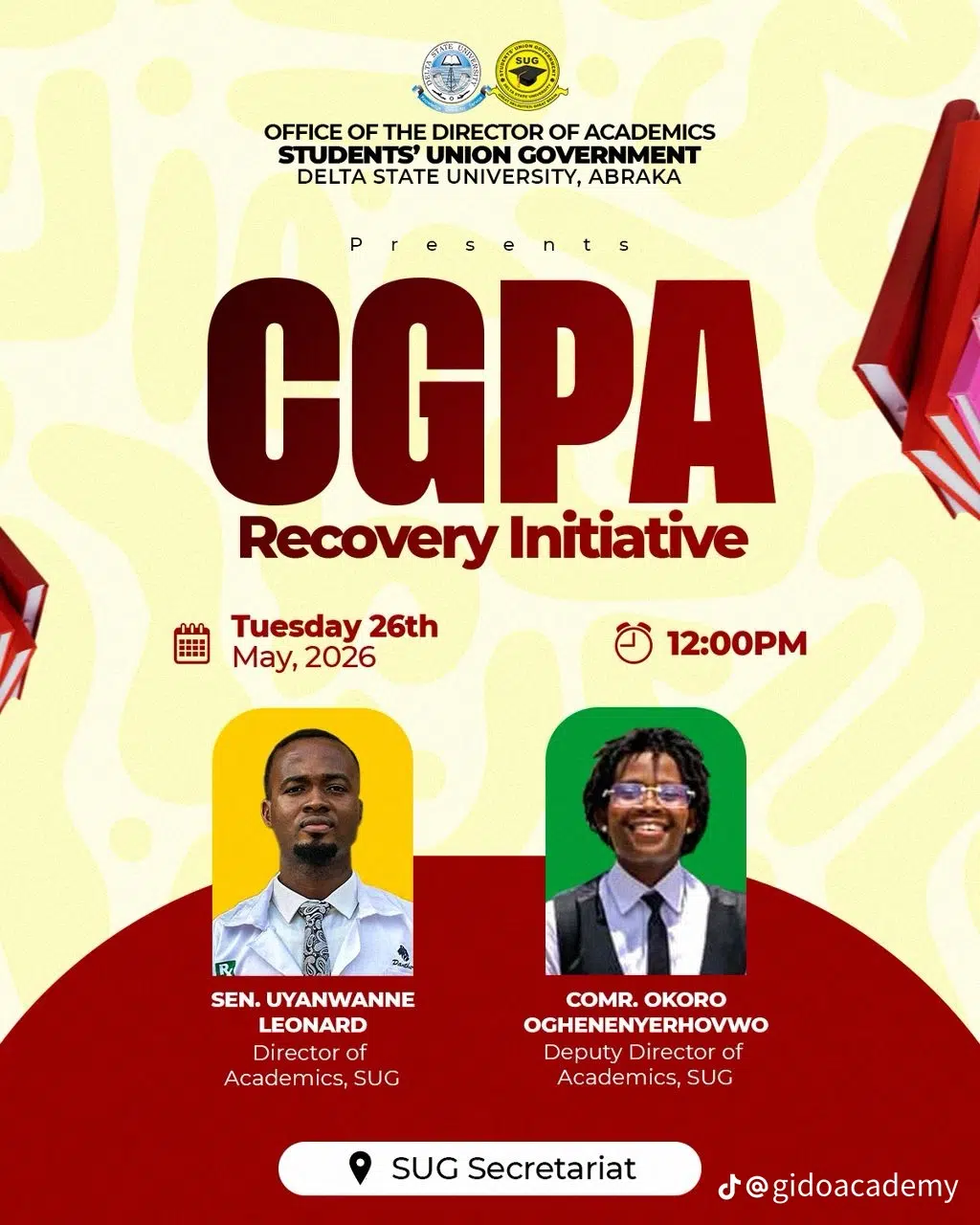
DELSU SUG Tackles Academic Decline with ‘CGPA Recovery Initiative’ for Junior Students
-

 Abraka Metro3 months ago
Rising Cost Of Living Forces Abraka Students To Adopt Survival Strategies
-
 Education2 months ago
DELSU Exam Monitors Apprehend Student With Allegedly Stolen Phones, Wig
-
 Abraka Metro3 months ago
Rising House Rents Put Pressure on DELSU Students in Abraka
-

 Abraka Metro2 months ago
Elozino Ogege: Lecturers React As Court Sentences Killers Of DELSU First-Class Student To Death
-
 Education3 months ago
Challenges Persist at DELSU Agricultural Farm Despite Student Training
-

 Trending News3 months ago
Abraka Residents Advocate Entrepreneurship, Warn Against Gambling Amid Economic Hardship


