Trending News
Certificate Without Jobs: The Struggle Of Nigerian Students


By Elijah-Ofovwe God’scarring Tejiri
Lecture halls are crowded, libraries remain busy, and examination halls are filled with students pursuing a common dream—earning a university degree and securing a better future. Yet, for many Nigerian students, that dream is increasingly overshadowed by a troubling reality: a university certificate no longer guarantees employment.
Across campuses in Nigeria, students invest years of hard work, sacrifice, and financial resources in higher education. However, as graduation approaches, many are confronted with uncertainty about what awaits them beyond the school gates.
For Esther Olue, a 200-level student of Journalism and Media Studies, the challenge is obvious. She believes that many Nigerian graduates complete their education only to find themselves struggling to secure meaningful employment.
“Having a degree alone does not always guarantee employment,” she said. “There are limited job opportunities, many employers ask for experience, and more graduates enter the labour market every year.”
According to her, the situation places enormous pressure on young people who had hoped education would provide a pathway to financial stability. She noted that unemployment often leads to financial hardship, delayed personal goals, and discouragement after years of academic effort.
Sharing a similar concern, Favour Efenure, also a 200-level Journalism and Media Studies student, identified unemployment as one of the greatest challenges facing graduates.
“There are not enough job opportunities for the increasing number of graduates each year,” she explained. “Many employers now demand experience even for entry-level positions, making it difficult for fresh graduates to secure employment.”
Beyond the challenge of finding jobs, students are also struggling to cope with the rising cost of obtaining a university education. Tuition fees, accommodation, transportation, and food expenses continue to increase, placing heavy financial burdens on students and their families.
Francisca Unutame, a 200-level student of Delta State University, described the growing financial strain on students.
“Rising school fees, accommodation costs, transportation fares, and food prices have made education increasingly expensive,” she said. “Many students depend on parents or guardians who are also struggling with the high cost of living.”
She added that the combined pressures of academics, financial difficulties, and uncertainty about the future have contributed to anxiety, depression, and burnout among students. According to her, many students also lack access to adequate mental health support, making the situation even more challenging.
“After graduation, we worry about finding jobs that match our qualifications, making the sacrifices of higher education feel even more daunting,” she added.
For graduates who have already completed their studies, the concerns remain the same. Rachel Edafe, a graduate of Delta State University, believes the problem extends beyond unemployment alone.
“Nigerian graduates face a combination of economic, educational, and social challenges,” she said. “Addressing these issues requires collaborative efforts from government, educational institutions, employers, and graduates themselves through skills development, entrepreneurship, and continuous learning.”
The consequences of graduate unemployment extend far beyond the inability to secure a job. Many graduates remain financially dependent on their families despite spending years in school. Others are forced to accept low-paying jobs unrelated to their fields of study, while some postpone important life goals such as further education, marriage, and financial independence.
The situation has also contributed to the growing desire among young Nigerians to seek opportunities abroad, leading to a loss of skilled professionals who could otherwise contribute to the country’s development.
As students continue to pursue their academic ambitions, one question remains: What value does a university certificate hold if it cannot open the door to meaningful employment? Until sustainable solutions are implemented, many Nigerian students will continue to pursue degrees while carrying the burden of uncertainty about their future.
For thousands of young Nigerians, the struggle is no longer just about earning a certificate—it is about ensuring that the certificate leads to opportunities, dignity, and a chance at a better life.
Elijah-Ofovwe God’scarring Tejiri is a Journalism and Media Studies student.




By Chidinma Okeibunor
A 300-level student of the Department of English and Literary Studies at Delta State University (DELSU), Abraka was on Wednesday apprehended after she was allegedly caught with seven stolen mobile phones and a wig while writing a carryover course in the Faculty of Arts.
The incident occurred during the ongoing 2025/2026 second semester examinations at the university’s Faculty of Arts, when the student, whose name is yet to be officially released, was reportedly found in possession of the items.
According to an eyewitness who spoke on condition of anonymity, the exact details of how she was caught remain unclear. However, upon a search, seven phones and a wig were allegedly recovered from her.
READ ALSO: Students Adjust To Portal Upgrade Under DELSU VC Administration
“She came to write [a] carryover [course] and when she was caught; students immediately brought out their phones to record her,” the witness said.
Campus security and faculty officials were said to have been alerted immediately, and the suspect was taken in for questioning.
As of the time of filing this report, the university management was yet to release an official statement on the matter. Efforts to reach the Head of Department and the Dean of Faculty of Arts proved abortive.
The incident has sparked reactions among students on campus, with many calling for tighter security during examinations.
Media Conversation reports that DELSU maintains a strong stance against stealing and other inappropriate behaviours among students.
If found guilty, the suspect could face multiple sanctions ranging from rustication to expulsion.
In a video shared on TikTok under the handle @dge_redoii, the lady, who appeared distressed and was speaking from what she said was a hospital, recounted that the incident occurred on the day she went out to get kegs for her business in Ugele.
By Christabel Adigbo
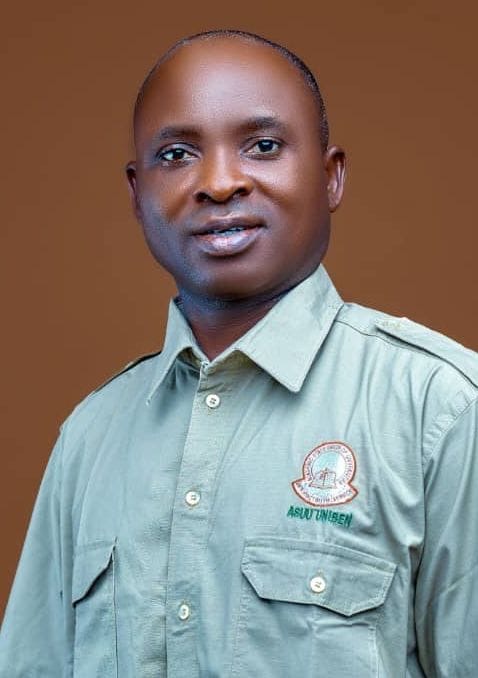
The Academic Staff Union of Universities (ASUU), Delta State University, Abraka Branch, has elected new executives to run the affairs of the Union for the next two years.
The elections which took place on Wednesday, August 12, 2026 at the Large Lecture Theatre of the Faculty of Education, Site III of the University saw the emergence of Comrade Paul Oshagwu Opone as the Branch Chairman for a second term after polling 90% of the total votes.
Other elected executives were Comrade Emmanuel Oghenekparobor Emama who emerged as Vice Chairman after polling 100% of the total votes, Comrade Festus Omosor who emerged as Secretary after polling 97% of the total votes, Comrade Frank Oris Ebiaghan who emerged as Treasurer after polling 99% of the total votes, as well as Comrade Nicholas Onyemechi Alumona who emerged as Financial Secretary after polling 97% of the total votes.
The remaining elected executives were Comrade Paul Otujevwe Ogbe who emerged as Investment Secretary after polling 99% of the total votes, Comrade Abigail Oghenekevwe Ohwo who emerged as Internal Auditor after polling 94% of the total votes and Comrade Onome Norah Ekoko who emerged as Welfare Officer after polling 100% of the votes.
READ ALSO: Normalcy Returns To Campus As Striking Staff Suspend Action
Chairman of the Electoral Committee, Professor Emmanuel Mitaire Tarurhor, while speaking prior to the elections told members of Congress that the electoral process had been fair and transparent acknowledging the peaceful conduct of members throughout the process.
Professor Tarurhor, then read out the guidelines of the voting exercise.
Also, Coordinator of Benin Zone of ASUU, Comrade Monday Igbafen, who led the ASUU National Delegation, appreciated ASUU-DELSU members for the manner the electoral process went as they was no petition against the process or any aspirant.
READ ALSO: Technology Is Transforming Agriculture Says DELSU Lecturer
Comrade Igbafen thereafter informed Congress that their role as national delegation was to monitor the elections and report to ASUU’s national secretariat the outcome of the elections.
Speaking after the elections on behalf of the elected executives, the newly elected Chairman of ASUU-DELSU, Comrade Paul Oshagwu Opone, expressed appreciation to members of Congress for the peaceful elections.
He also told Congress members that his second tenure would consolidate on the gains of his first tenure.
Comrade Opone in conclusion pledged to continue to work for the welfare of members and promote the ideals of ASUU.
In another development, the management of Delta State University, Abraka has approved an extension of the sales of 2026/2027 Post-UTME and Direct Entry screening forms.
The university also extended the deadline for change of course on the university portal.
By Olayinka Oritsesan
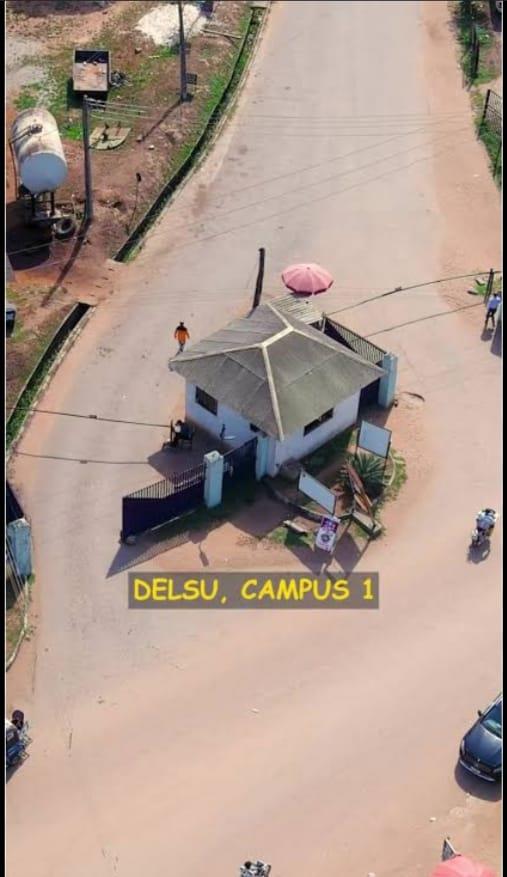
The deteriorating condition of some buildings at Delta State University (DELSU) Site 1, Abraka, coupled with a noticeable decline in student presence, has raised concerns about the changing state of one of the university’s oldest academic locations.
Several buildings and facilities within the campus show visible signs of ageing and inadequate maintenance, while student activities appear considerably lower than in the past. The situation has left parts of Site 1 unusually quiet and scanty outside the areas still occupied by academic departments and other essential facilities.
Site 1 remains home to several university facilities, including the Institute of Education, sports facilities, staff schools, Works and Services and Physical Planning departments, as well as the university’s printing press and other DELSU Investment Limited facilities.
However, beyond these facilities, the campus now records relatively limited student movement compared with the larger concentration of students found in other parts of the university.
Richard Ometie, a 100-level Music student who receives lectures and participates in other academic activities at Site 1, said the condition of the campus has become noticeable to students who regularly use the location.
According to Ometie, there has been a massive drop in the number of students visiting Site 1, leaving large portions of the campus quiet and sparsely populated.
He observed that apart from students and workers associated with the printing press, a few faculties and departments, users of the sports facilities and pupils and staff of the university’s schools, the campus is often relatively dry.
The situation has contributed to the perception of Site 1 as a less active part of the university, particularly when compared with areas where academic and administrative activities attract larger numbers of students.
The physical condition of some of the buildings adds to the concern. Ageing walls, worn surfaces and other visible signs of deterioration are evident in parts of the campus, giving some structures an appearance that reflects years of use without sufficient refurbishment.
For students like Ometie, who still attend lectures at Site 1, the condition of the environment is more than an issue of aesthetics. It forms part of their everyday academic experience.
The reduced student population in the area also raises questions about the future use and maintenance of existing facilities. With fewer students regularly moving through some sections of the campus, some facilities and spaces appear to have lost the level of activity associated with a busy university environment.
DELSU’s own historical documents show that Site 1 was developed originally to accommodate academic programmes, administrative buildings, sports and recreational facilities, as well as staff and student accommodation. As the institution expanded, additional facilities were developed at other sites to meet growing space requirements.
The gradual shift of major university activities to other locations has therefore changed the character of Site 1 over time.
Despite this, the site continues to support important academic and institutional activities. Music students and other students still use facilities there for lectures and related academic work, while the sports facilities and staff schools continue to attract members of the university community.
The need for maintenance and rehabilitation is particularly significant against the backdrop of wider infrastructure development at DELSU. Government budget documents have included major infrastructure projects for the university, including a multipurpose lecture theatre and a Faculty of Science building at the Abraka campus.
While the construction of new facilities can help address the university’s expanding needs, students and other users of Site 1 may also expect attention to be given to existing structures.
Regular maintenance, renovation of ageing buildings and improvement of facilities could help restore the appearance and functionality of the campus while making it more attractive for academic and extracurricular activities.
For Site 1, the challenge is therefore not simply about old buildings. It is also about the gradual reduction in activity around a campus that once accommodated a much broader range of university operations.
As DELSU continues to develop its infrastructure, giving attention to Site 1 could help preserve its existing facilities, improve the experience of students who still use the campus and potentially restore some of the activity that has gradually declined.
For students such as Ometie, who continue to attend lectures there, the hope is that Site 1 will not remain a forgotten part of the university’s development story.
-
 Education3 weeks ago
Breaking: DELSU Postpones Second Semester Examinations. See New Date
-
 Education1 month ago
DELSU Announces Admission Into New Diploma Programmes For 2026/2027 Academic Session
-
 Views Point1 month ago
OPINION: Agriculture, Nigeria’s Fading Goldmine
-

 Abraka Metro1 month ago
Experts Urge Students To Embrace AI With Open Hearts
-

 Education2 weeks ago
Breaking: DELSU Bans “Sign Out” Parties, Threatens 2-Semester Rustication For Violators
-
 Education1 month ago
28-Years-Old Man Swindles JUPEB Students, Diverts N15 Million School Fees
-

 Entertainment1 month ago
World Cup 2026: US-Iran Tensions, Local Travel Hurdles, Global Friction Shape Fan Atmosphere
-
 Education3 weeks ago
DELSU Begins Postgraduate Admission for 2026/2027 Academic Session
-
 Abraka Metro2 months ago
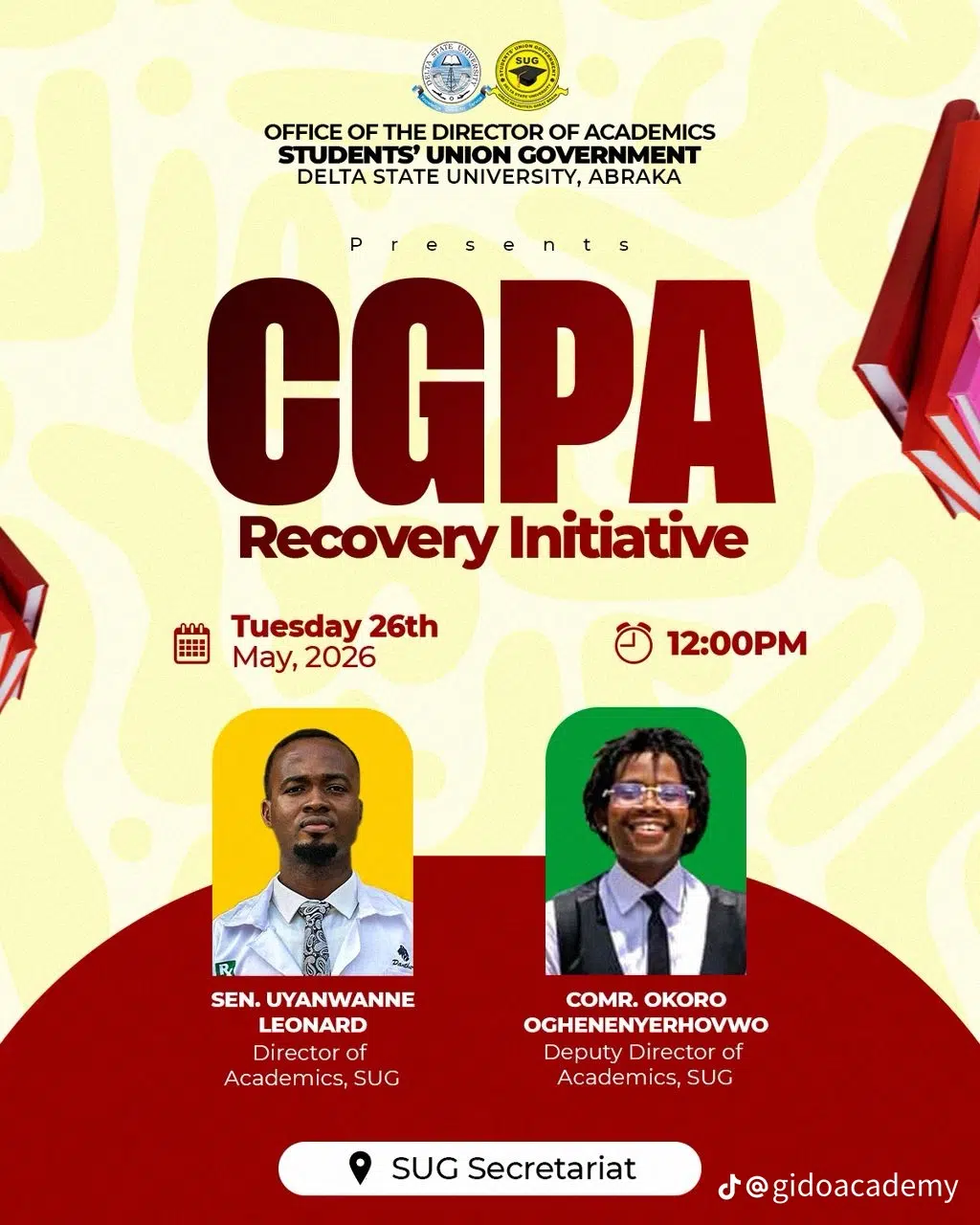
DELSU SUG Tackles Academic Decline with ‘CGPA Recovery Initiative’ for Junior Students
-
 Abraka Metro1 month ago
Rising House Rents Put Pressure on DELSU Students in Abraka
-

 Abraka Metro2 weeks ago
Elozino Ogege: Lecturers React As Court Sentences Killers Of DELSU First-Class Student To Death
-
 Education1 month ago
Challenges Persist at DELSU Agricultural Farm Despite Student Training
-

 Trending News1 month ago
Abraka Residents Advocate Entrepreneurship, Warn Against Gambling Amid Economic Hardship
-

 Education1 month ago
DELSU-SUG Begins Week-Long Celebration, Targets Campus Inclusiveness
-
 Education2 months ago
DELSU: Pharmacy Students Embrace Mentorship, Recreational Programmes to Combat Mental Health Challenges


