Politics
Peter Obi Unveils Phase Two of “New Nigeria” Economic Roadmap, Centres Education and Healthcare


By Efe Totoh
Peter Obi, presidential candidate of the Nigeria Democratic Congress (NDC), has released the second phase of his policy blueprint for a “New Nigeria,” positioning education and healthcare as twin engines of economic transformation and national security.
The July 2026 document follows the first phase of his national renewal agenda unveiled earlier in the month and expands his proposals for rebuilding Nigeria’s human capital as the foundation for a productive, globally competitive economy.
In an interview, Comrade Borobo Jurist, Coordinator of OK 2027 for Burutu LGA in Delta State, said Obi’s “track record of financial prudence, careful management of resources, cost-effective governance model, human empowerment, educational reform, and the protection of human life and dignity stands out.”
Asked whether Obi could achieve these sweeping reforms without additional debt, Jurist replied: “It’s very possible.
“You can use Governor Alex Otti of Abia State as a case study.
“The governor is driving development without any borrowing.
“Obi will do far beyond that, moving the nation from a consumption economy to a production economy.”
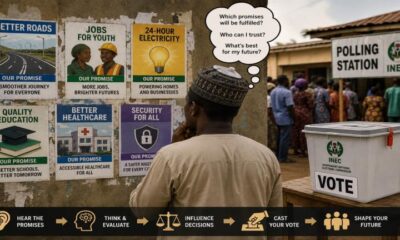
Obi argues that no nation can achieve lasting prosperity without aggressive investment in its people, insisting that quality education and accessible healthcare are indispensable to breaking the cycle of poverty, expanding opportunities and reducing the social conditions that fuel insecurity.
In his words, investing in education would ensure that “a son of nobody can become somebody,” while equipping young Nigerians with skills to avoid recruitment into criminality and violent extremism.
He stressed that rebuilding these two sectors is not merely social policy but core economic strategy.
According to him, a healthier, better-educated workforce is more productive, more innovative and more attractive to investment.
Key Proposals in phase two includes primary education driven largely at community and local government levels with active parental participation, curricula redesigned to reflect local economic realities and productive value chains.
He proposes more federal support for states to expand Technical and Vocational Education and Training (TVET), improve secondary education, and equip youths with skills demanded by a modern economy.
Part of his plans to standardise tertiary education in Nigeria is for universities to be repositioned through greater specialisation in-teaching and research so Nigerian institutions can compete globally and produce graduates with industry-relevant competencies.
Emphasis was also laid on healthcare access being treated as a parallel pillar to education, as it is essential for a secure, productive, and prosperous Nigeria. It was also stated by Obi that the roadmap will be released in phases, with subsequent editions to focus on other critical sectors of the economy and governance.
The education-and-healthcare focus explains Obi’s wider economic narrative of shifting Nigeria from a consumption-based economy to a production-driven one.
In recent interviews, he has emphasised agriculture, manufacturing, and support for small businesses as the foundation for growth, arguing that economic expansion, job creation, and poverty reduction depend on increasing local production rather than relying on imports.
He contends that Nigeria has the land, resources, and human capital to become a leading food producer and exporter, but has failed to harness this potential.
Agriculture alone, he says, must be linked to manufacturing to provide raw materials for local industries, strengthen exports, and create millions of jobs.
Obi maintains that the government should create conditions for businesses to thrive rather than become a producer itself, noting that small businesses remain major employers in successful economies.
He has previously proposed replacing the monthly revenue allocation “sharing formula” with a “production formula” to incentivise states and localities to generate value rather than depend on central transfers.
His earlier seven-point economic master plan also highlighted a private sector–driven economy, blocking leakages, overhauling security architecture, putting idle government assets to productive use, and pursuing industrial revival and foreign policy reforms to restore Nigeria’s global relevance.
Comrade Jurist believes that Peter Obi will not face frustration in executing his reforms because he will first unite the nation.
“It’s the same thing he did as governor. The majority of the assembly members were from different political parties, yet he still united them to work for the service of the state and its citizens” he said.
Phase two of Obi’s roadmap comes as he campaigns under the NDC banner, presenting detailed policy documents in a bid to differentiate his platform through concrete, sector-by-sector plans.
By leading with education and healthcare, he is signalling that his economic model begins with people: building capabilities first, then leveraging those capabilities to drive production, exports, and sustained growth.







By Christabel Adigbo
The Academic Staff Union of Universities (ASUU), Delta State University, Abraka Branch, has elected new executives to run the affairs of the Union for the next two years.
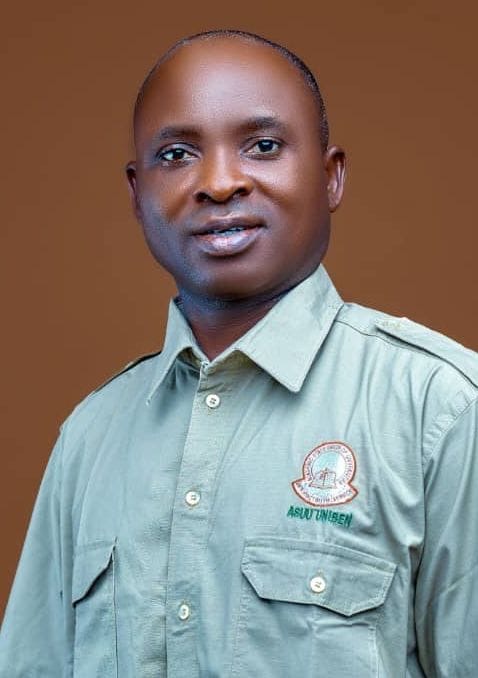
The elections which took place on Wednesday, August 12, 2026 at the Large Lecture Theatre of the Faculty of Education, Site III of the University saw the emergence of Comrade Paul Oshagwu Opone as the Branch Chairman for a second term after polling 90% of the total votes.
Other elected executives were Comrade Emmanuel Oghenekparobor Emama who emerged as Vice Chairman after polling 100% of the total votes, Comrade Festus Omosor who emerged as Secretary after polling 97% of the total votes, Comrade Frank Oris Ebiaghan who emerged as Treasurer after polling 99% of the total votes, as well as Comrade Nicholas Onyemechi Alumona who emerged as Financial Secretary after polling 97% of the total votes.
The remaining elected executives were Comrade Paul Otujevwe Ogbe who emerged as Investment Secretary after polling 99% of the total votes, Comrade Abigail Oghenekevwe Ohwo who emerged as Internal Auditor after polling 94% of the total votes and Comrade Onome Norah Ekoko who emerged as Welfare Officer after polling 100% of the votes.
READ ALSO: Normalcy Returns To Campus As Striking Staff Suspend Action
Chairman of the Electoral Committee, Professor Emmanuel Mitaire Tarurhor, while speaking prior to the elections told members of Congress that the electoral process had been fair and transparent acknowledging the peaceful conduct of members throughout the process.
Professor Tarurhor, then read out the guidelines of the voting exercise.
Also, Coordinator of Benin Zone of ASUU, Comrade Monday Igbafen, who led the ASUU National Delegation, appreciated ASUU-DELSU members for the manner the electoral process went as they was no petition against the process or any aspirant.
READ ALSO: Technology Is Transforming Agriculture Says DELSU Lecturer
Comrade Igbafen thereafter informed Congress that their role as national delegation was to monitor the elections and report to ASUU’s national secretariat the outcome of the elections.
Speaking after the elections on behalf of the elected executives, the newly elected Chairman of ASUU-DELSU, Comrade Paul Oshagwu Opone, expressed appreciation to members of Congress for the peaceful elections.
He also told Congress members that his second tenure would consolidate on the gains of his first tenure.
Comrade Opone in conclusion pledged to continue to work for the welfare of members and promote the ideals of ASUU.
In another development, the management of Delta State University, Abraka has approved an extension of the sales of 2026/2027 Post-UTME and Direct Entry screening forms.
The university also extended the deadline for change of course on the university portal.
Entertainment
“They Were touching Me Everywhere”: Lady Alleges Gang Assault In Delta Community Festival, Begs For Police Action


By Annabella Esiri/David Akpovwa
A young lady has gone public with allegations that she was assaulted and nearly gang-raped by a group of men in Otor-Iyeded community in Isoko North Local Government Area of Delta State, during a local festival.
In a video shared on TikTok under the handle @dge_redoii, the lady, who appeared distressed and was speaking from what she said was a hospital, recounted that the incident occurred on the day she went out to get kegs for her business in Ugele.
According to her account, she entered a commercial motorcycle to Otor-Iyede, which she identified as her father’s village.
She alleged that upon arrival, a group of more than 20 men surrounded her.
“I was minding my business and then about four immediately dragged me out and dragging my hair, using stick to beat me,” she said in the video.
She further alleged that the men touched her inappropriately and attempted to take her to a hotel.
The woman said she was rescued after calling her mother, who then contacted relatives.
She stated that her uncles and the police were alerted and she was taken to her uncle’s house.
She expressed frustration over the response she received from community members, alleging that she was told “this is the tradition” and that “they are not going to do anything.”
“I don’t have evidence because I could not video it… but they should do something about it,” she said, appealing for authorities to investigate.
As of the time of filing this report, the Delta State Police Command has not released an official statement on the allegation.
Efforts to reach community leaders in Otor-Iyede for comment were ongoing.
Human rights advocates have urged the police to investigate the claims thoroughly and ensure the safety of the alleged victim.
The video has since sparked reactions online, with many calling for justice and protection for women and girls during cultural festivals.
Editor’s Note: The allegations in this report are based on the account given by the individual in a public video. Delta State University, Abraka, and other authorities have not yet confirmed the details. Victims of sexual assault are advised to seek medical attention and report to the nearest police station or support organizations.
If you or someone you know has experienced sexual violence, you can contact the Nigeria Police Force, NAPTIP, or local support centers for assistance.
“When the rain falls heavily, it is the poor man’s roof that leaks first.” This old African proverb speaks directly to the reality many Nigerians face today. Economic policies may be designed in government offices and defended by experts on television, but their true impact is felt in homes, markets, classrooms, hospitals, and on the streets where ordinary people struggle daily to make ends meet.
Few government policies in recent years have generated as much debate, concern, and controversy as the removal of fuel subsidy. Since President Bola Ahmed Tinubu announced on May 29, 2023, that “fuel subsidy is gone,” Nigerians have experienced one of the most dramatic shifts in the nation’s economic landscape. Fuel prices rose almost immediately, transportation costs soared, food prices skyrocketed, and the cost of living reached levels many households had never experienced before.
For some economists and policymakers, the removal of fuel subsidy was a bold and necessary decision. They argue that subsidy payments had become a huge financial burden on the government, consuming trillions of naira that could have been used to improve infrastructure, healthcare, education, and other critical sectors. They also point to years of corruption, fraudulent claims, and fuel smuggling that turned the subsidy regime into a system that benefited a few powerful individuals more than the average Nigerian.
On paper, these arguments appear convincing. A nation cannot continue spending beyond its means indefinitely. No economy can thrive when public funds are repeatedly drained by an inefficient system. The idea behind subsidy removal was to free up resources, attract investment, encourage competition, and ultimately create a stronger and more sustainable economy.
However, while the policy may make economic sense in theory, its practical consequences have raised an important question: Who is really bearing the burden of this reform?
READ ALSO: Fuel Subsidy Removal: A Necessary Reform, But Poorly Managed
The answer is becoming increasingly clear. The greatest burden is being carried not by politicians, oil marketers, or economic advisers, but by ordinary Nigerians whose daily lives have become significantly more difficult since the policy was introduced.
The first and most visible impact of subsidy removal was the sharp increase in fuel prices. Petrol, which once sold for less than ₦200 per litre, suddenly rose to over ₦500 and later climbed even higher. This increase did not affect fuel alone. Because transportation is the foundation upon which many economic activities depend, the rise in fuel prices triggered a chain reaction across virtually every sector of the economy.
Today, transport fares have become a major source of concern for millions of Nigerians. Workers who commute daily spend a significant portion of their salaries on transportation. Students traveling to and from school face higher costs. Traders transporting goods from farms and warehouses to urban markets pay more for logistics. Even short journeys that once seemed affordable have become expensive.
For many Nigerians, transportation costs have become a daily reminder of the economic hardship caused by subsidy removal.
The impact is particularly severe in the food sector. Farmers must pay more to transport produce from rural communities to urban markets. Food vendors and retailers pass these additional expenses on to consumers. The result is visible in every market across the country. The prices of rice, beans, yam, garri, vegetables, bread, and other staple foods have increased significantly.
Families that once managed to provide three meals a day now struggle to afford two. Parents are forced to reduce household expenses, often sacrificing nutritional quality in order to survive. The rising cost of food has become one of the most painful consequences of subsidy removal because it affects every Nigerian regardless of age, occupation, or social status.
READ ALSO: Fuel Price Hike Turns Basic Meals into Luxury for DELSU Students
Small businesses are also feeling the pressure. Across Nigeria, countless enterprises rely on petrol and diesel-powered generators because of the country’s unstable electricity supply. Barbers, welders, tailors, cybercafés, restaurants, and other small business owners now spend far more on energy than they did before.
For many entrepreneurs, profit margins have shrunk dramatically. Some have increased the prices of their goods and services to stay afloat, while others have reduced their workforce or shut down entirely. The consequences extend beyond business owners themselves. Employees lose jobs, families lose income, and communities lose economic opportunities.
In a country where small and medium-sized enterprises contribute significantly to employment and economic growth, the pressure on businesses represents a serious challenge to national development.
The education sector has not been spared either. Students in tertiary institutions face increasing financial difficulties due to higher transportation costs, rising accommodation fees, and more expensive food. Parents already struggling with inflation find it difficult to meet educational expenses.
Some students now combine their studies with multiple side jobs to support themselves. Others rely heavily on friends and relatives for assistance. In extreme cases, some students have been forced to suspend their education because their families can no longer afford the associated costs.
This situation raises concerns about the long-term impact of economic hardship on access to education and human capital development.
Healthcare has become another area affected by the ripple effects of subsidy removal. Hospitals and clinics face higher operational costs due to increased fuel and transportation expenses. The prices of medicines and medical supplies have also risen because of higher logistics costs and exchange rate challenges.
For low-income families, accessing quality healthcare has become increasingly difficult. Many postpone medical treatment, self-medicate, or avoid hospital visits altogether because of financial constraints. This creates a dangerous situation where economic hardship translates into poorer health outcomes for vulnerable citizens.
Despite these challenges, supporters of subsidy removal maintain that the policy should be judged by its long-term benefits rather than its immediate consequences. They argue that reforms of this magnitude are often painful at the beginning but necessary for sustainable growth. According to this view, the savings generated from subsidy removal can help fund infrastructure projects, reduce fiscal deficits, improve public services, and attract foreign investment.
Indeed, the government has introduced several measures intended to cushion the impact of the policy. These include conditional cash transfers, student loan programmes, wage awards, compressed natural gas initiatives, and infrastructure investments. Government officials have repeatedly assured Nigerians that the savings from subsidy removal are being redirected toward projects that will benefit the country in the future.
However, many citizens remain unconvinced.
The challenge is not simply whether government interventions exist. The challenge is whether those interventions are reaching enough people and whether they are sufficient to offset the hardship being experienced across the country. For many Nigerians, the promised benefits remain distant and difficult to see.
A worker struggling to pay transport fares, a mother unable to afford food for her children, or a student battling rising living expenses may find little comfort in promises of future economic gains. Economic reforms succeed when citizens can see tangible improvements in their quality of life. When hardship continues without visible relief, public confidence inevitably weakens.
Another important issue is transparency. Nigerians deserve clear and regular information about how subsidy savings are being utilized. Citizens should be able to see measurable improvements in roads, hospitals, schools, power supply, and public transportation systems. Transparency not only builds trust but also strengthens public support for difficult reforms.
If citizens are expected to make sacrifices, they must be confident that those sacrifices are producing meaningful results.
It is also important to recognize that fuel subsidy removal alone cannot solve Nigeria’s economic challenges. Other structural problems continue to affect the country’s development. Poor electricity supply, insecurity, inadequate infrastructure, unemployment, and currency instability all contribute to economic hardship.
Without addressing these broader issues, subsidy removal may simply transfer financial pressure from government accounts to the pockets of ordinary citizens.
This is why complementary reforms are essential. Investments in public transportation can reduce commuting costs. Stable electricity can lower business expenses. Increased local refining capacity can reduce dependence on imported petroleum products. Agricultural support programmes can improve food production and stabilize prices. Job creation initiatives can increase household incomes and strengthen economic resilience.
Such measures are necessary if the benefits of subsidy removal are to be widely shared.
As Nigerians continue to adjust to life after subsidy removal, one reality remains undeniable: the ordinary citizen is carrying the heaviest burden. The civil servant whose salary has remained unchanged, the trader struggling to restock goods, the farmer transporting produce, the student pursuing an education, and the small business owner fighting to survive all bear the weight of this economic reform every day.
READ ALSO: Grassroots Developments, Warri North LGA And The Hon. Ashima’s Magic Wand
This does not necessarily mean the policy was wrong. Economic reforms are often necessary and sometimes unavoidable. However, necessity does not eliminate responsibility. Government must ensure that the burden of reform is not borne disproportionately by those least able to afford it.
A successful economic policy should not only balance national accounts but also improve the welfare of citizens. Growth should be reflected not only in statistics and economic reports but also in the everyday experiences of ordinary people.
The debate over fuel subsidy removal is therefore no longer about whether the policy should have happened. It has already happened. The more pressing issue is whether the promised benefits will eventually justify the sacrifices being made today.
Until inflation falls significantly, transportation becomes more affordable, jobs become more available, electricity becomes more reliable, and living standards improve, many Nigerians will continue to ask a simple but powerful question:
If fuel subsidy removal was meant to rescue the economy, why does it feel as though ordinary Nigerians are the ones paying the highest price?
The answer to that question may ultimately determine how history judges one of the most significant economic reforms in modern Nigeria.
The author, Pius Ashima, is a-200 Level student of Journalism and Media Studies at Delta State University, Abraka. Email: ashimapius@gmail.com
-
 Education3 weeks ago
Breaking: DELSU Postpones Second Semester Examinations. See New Date
-
 Education4 weeks ago
DELSU Announces Admission Into New Diploma Programmes For 2026/2027 Academic Session
-
 Views Point1 month ago
OPINION: Agriculture, Nigeria’s Fading Goldmine
-

 Abraka Metro1 month ago
Experts Urge Students To Embrace AI With Open Hearts
-

 Education1 week ago
Breaking: DELSU Bans “Sign Out” Parties, Threatens 2-Semester Rustication For Violators
-

 Education1 month ago
28-Years-Old Man Swindles JUPEB Students, Diverts N15 Million School Fees
-

 Entertainment1 month ago
World Cup 2026: US-Iran Tensions, Local Travel Hurdles, Global Friction Shape Fan Atmosphere
-
 Education3 weeks ago
DELSU Begins Postgraduate Admission for 2026/2027 Academic Session
-
 Abraka Metro2 months ago
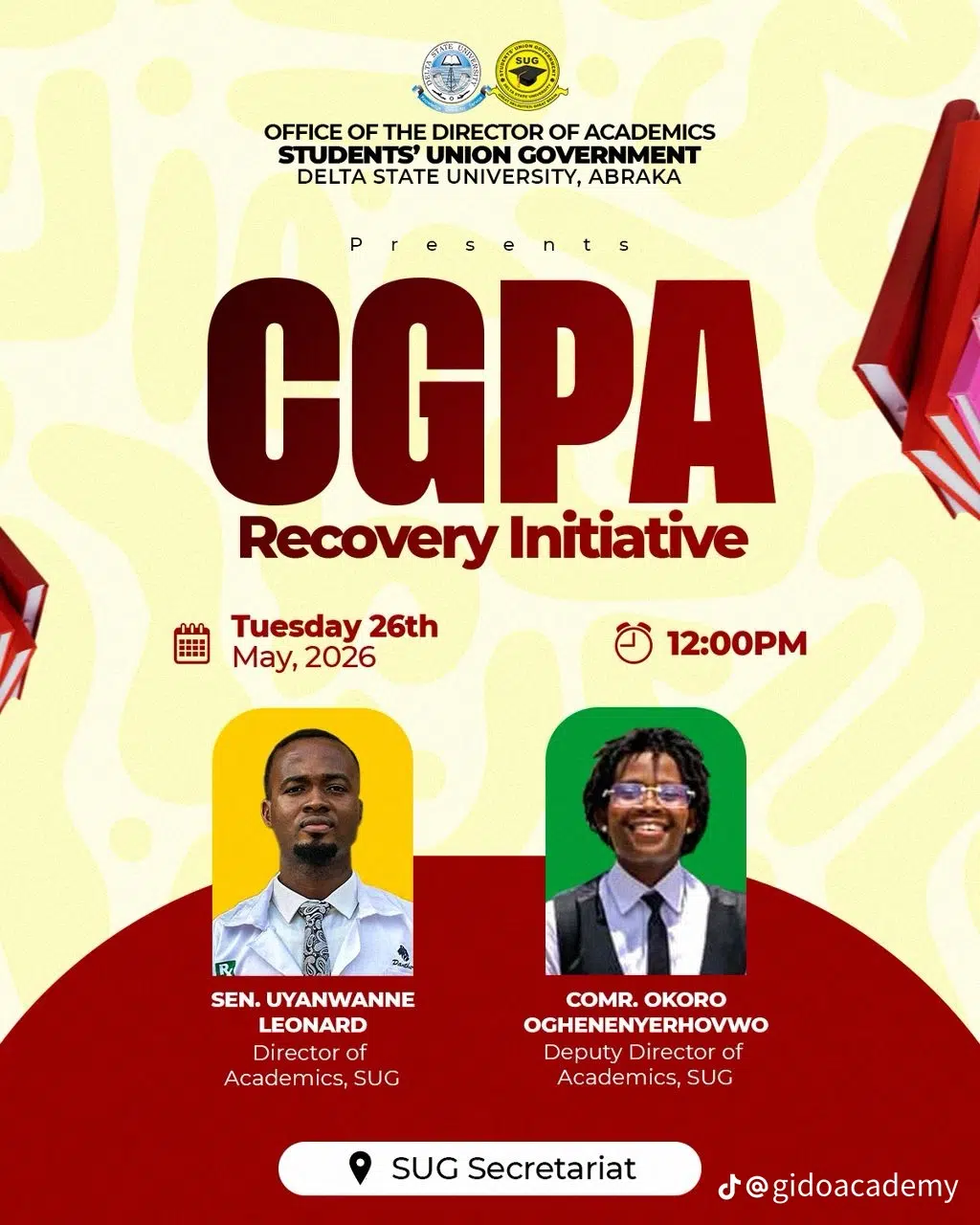
DELSU SUG Tackles Academic Decline with ‘CGPA Recovery Initiative’ for Junior Students
-
 Abraka Metro1 month ago
Rising House Rents Put Pressure on DELSU Students in Abraka
-

 Abraka Metro2 weeks ago
Elozino Ogege: Lecturers React As Court Sentences Killers Of DELSU First-Class Student To Death
-
 Education1 month ago
Challenges Persist at DELSU Agricultural Farm Despite Student Training
-

 Trending News1 month ago
Abraka Residents Advocate Entrepreneurship, Warn Against Gambling Amid Economic Hardship
-

 Education1 month ago
DELSU-SUG Begins Week-Long Celebration, Targets Campus Inclusiveness
-
 Education2 months ago
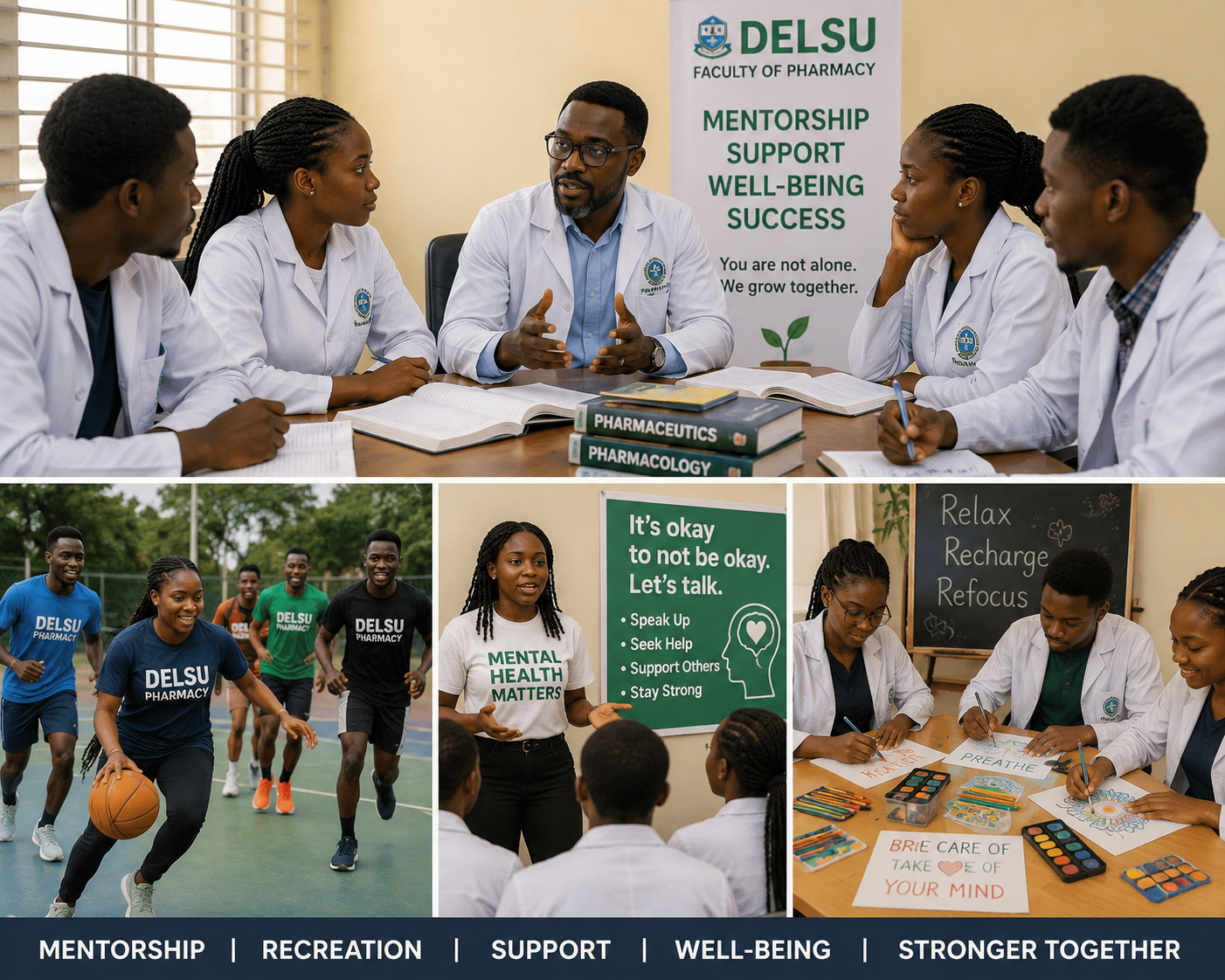
DELSU: Pharmacy Students Embrace Mentorship, Recreational Programmes to Combat Mental Health Challenges


